Cutting Copper Pipes to Install Water Shut Off Valves

Cutting Copper Pipes to Install Water Shut Off Valves

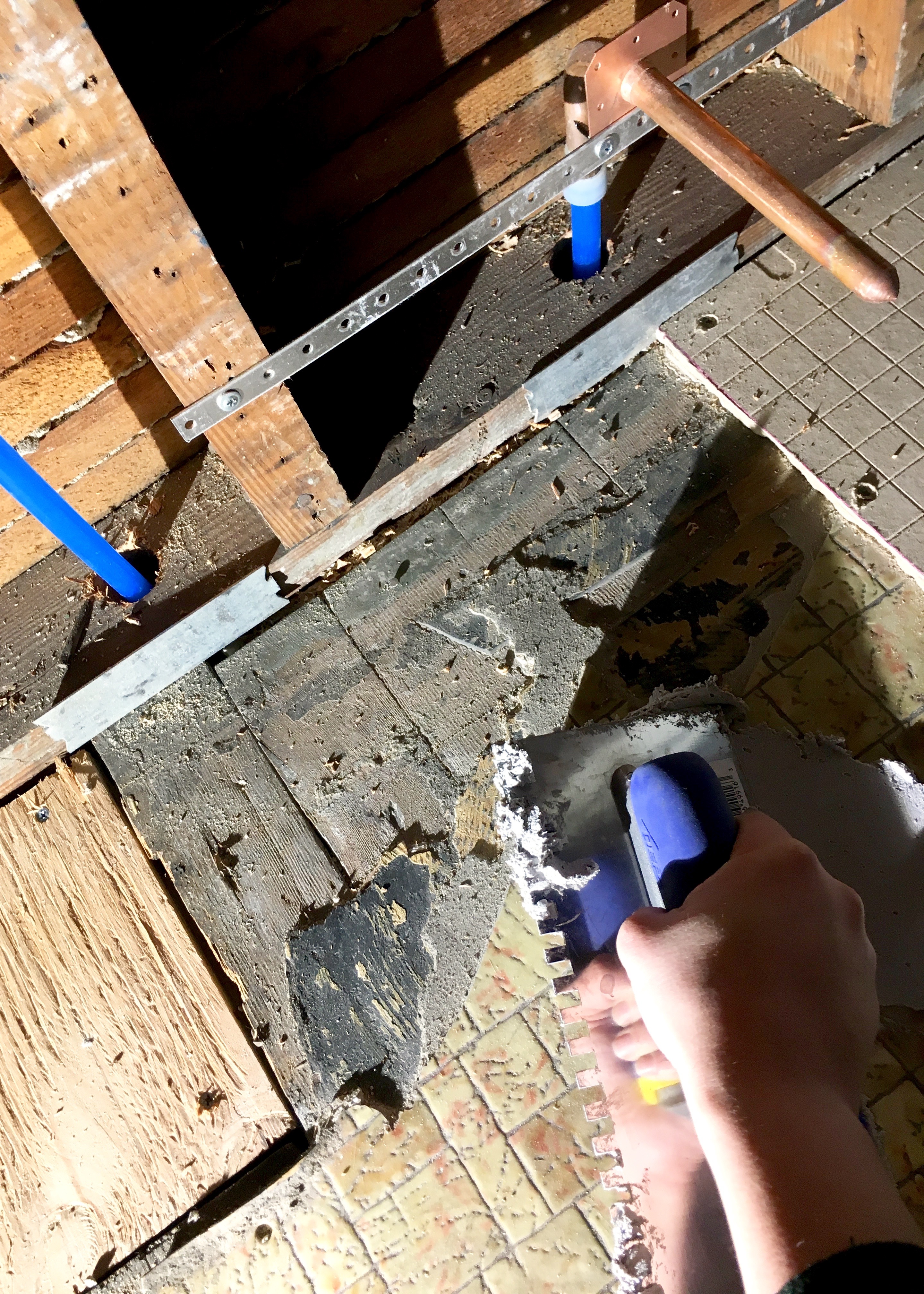
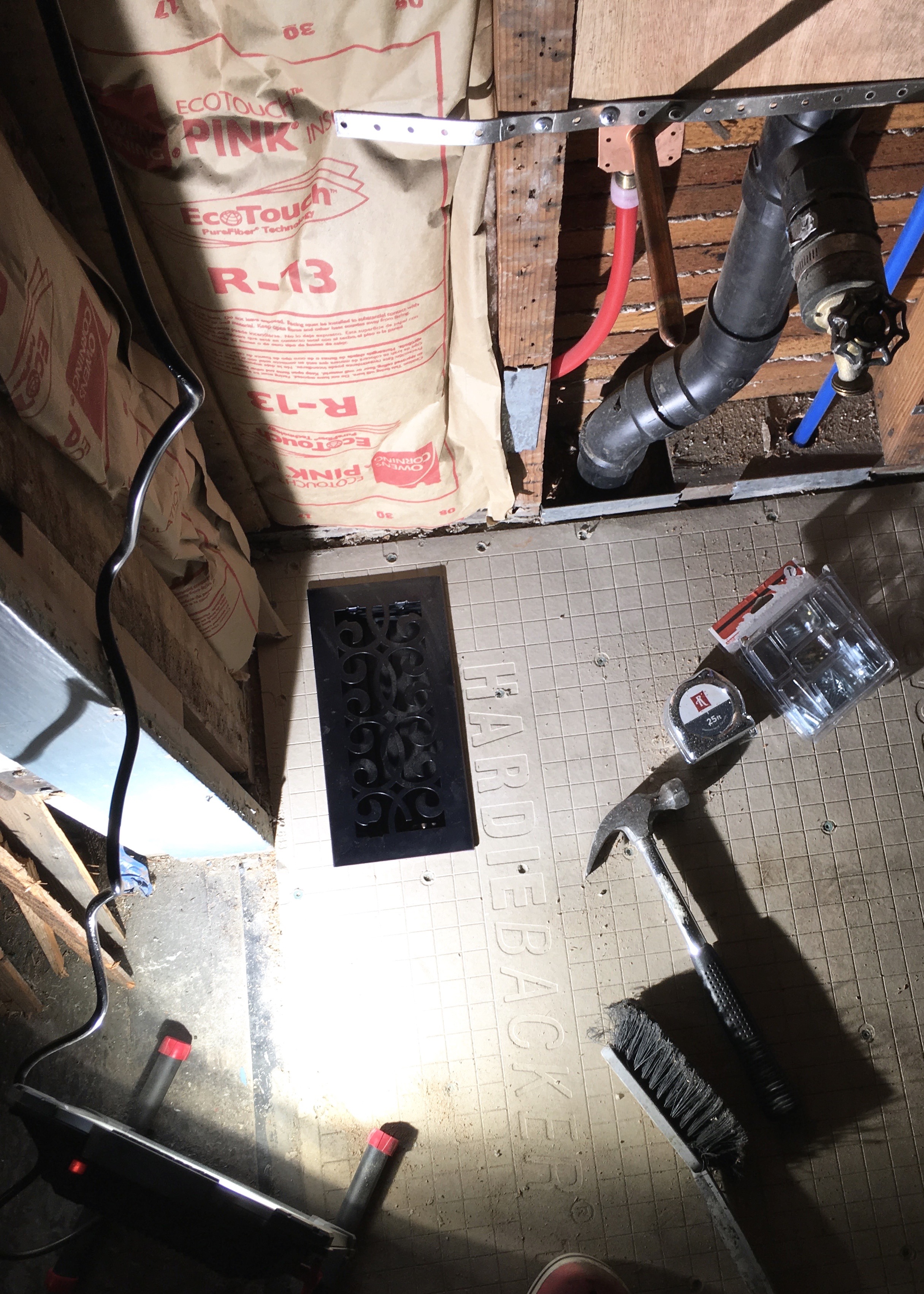
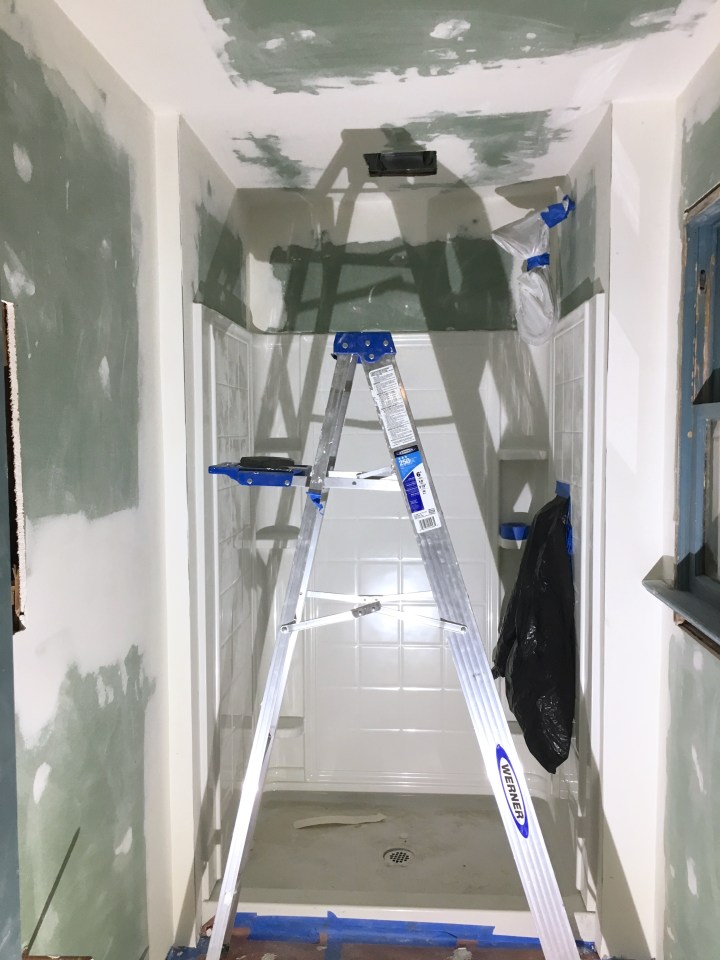
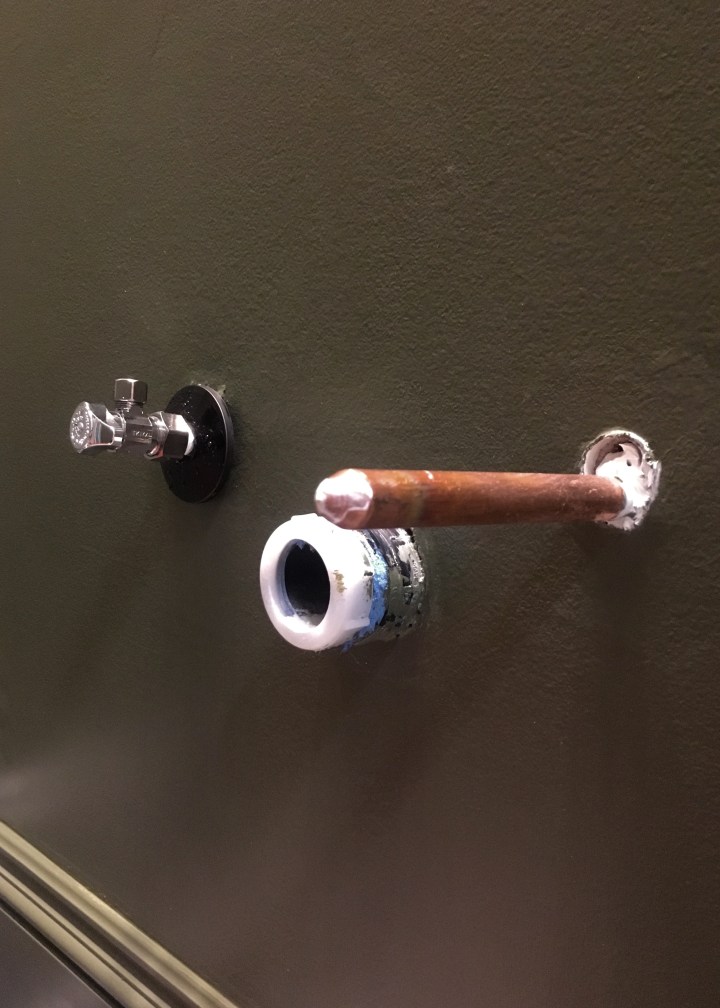
So after the bathroom was painted I was pretty excited to be at the stage where things were really looking good. I was dying to get the toilet and sink installed and finally have a full working bathroom! To do that, I first needed to install some shut-off valves. When I first contracted my plumber to do the rough in plumbing, I definitely thought that would include water shut off valves and then I’d just hook in the fixtures. I don’t know why I thought that…. because what I actually got was copper stubs sticking out of the walls. It was a bit daunting, but I watched this youtube video where a very reassuring lady told me I’d be able to do this just fine. I took one last look at this room with it’s copper stubby left wall and headed to Home Depot for supplies.

Continue reading “Cutting Copper Pipes to Install Water Shut Off Valves”

Priming and Painting the New Bathroom

Priming and Painting the New Bathroom

Happy 2019 y’all! I’m so excited for this new year and I definitely have quite a few goals for the year! I’m hoping to get this blog caught up to the current renovation stages over the next few months and then dig into some fun new stuff. I definitely want to hear more from those of you who read this blog too! Let me know who you are by commenting on this post! Or share with friends and family who might be tackling similar projects. I’d love to continue to grow the readership of this blog so I can continue to put more effort into posting for you guys. And trust me I have a lot to show you!

When we last left the bathroom it was looking like this with a newly tiled and grouted floor and fully drywalled walls! This felt like a huge amount of progress considering just a few weeks earlier it had been gutted down to the studs.

Continue reading “Priming and Painting the New Bathroom”

2019: Here We Go!

2019: Here We Go!

Right after I moved into Berrybrier I made a list of a ton of things I wanted to accomplish here! Now a ton of it has been completed and I’m really looking forward to sharing more and more of this with you as the weeks go by. I’m making a commitment to start posting weekly on Tuesdays at 10am and am hoping to catch you up to the latest happenings here at Berrybrier! I will occasionally be posting little posts like this on other days and will take weeks off for the occasional holiday or when I’m totally swamped. But truly, I’m trying to hold myself to posting every Tuesday!

Continue reading “2019: Here We Go!”

A Scary Night and My New Emergency Backpack

A Scary Night and My New Emergency Backpack

So in a very dark irony to this recent post title about updating my electrical at Berrybrier, my neighbor’s house caught on fire in the middle of the night a few weeks ago. We still don’t know the cause of the fire, but it was an extremely terrifying experience and definitely had some lingering effects on me…

I’d gone to bed around 10pm that night and fell asleep quickly as after work, I’d spent all evening cutting beadboard for my master bathroom in the driveway. Around 1:30am I rolled over in my sleep and gained just enough consciousness to realize it was raining. The raindrops were relatively persistent. This actually made me wake up even more as I’d left some beadboard in the driveway and the rain could seriously ruin the MDF. Ugh! I was annoyed at myself for not putting it away like I knew I should have, but it wasn’t actually supposed to rain! These thoughts of frustration woke me up further and I could tell through closed eyes that the room was pretty light out so it must be morning. At the same time I realized the sound I was hearing wasn’t quite raindrops. I opened my eyes.

My entire room was lit up red orange. I thought the wood I left in the driveway had caught fire and then caught my house or the garage. I didn’t know how that was possible, but it was my first thought. As i bounded over the pile of tools I’d left next to my bed, I could hear movement above me, which meant Jackie my roommate was awake too. By the time I’d clambered over my bed and over the pile of tools, grabbing some PJ pants and a bathrobe, I could see properly out my bedroom window that it wasn’t my house at all, but the neighbor’s house kitty corner behind us. And the flames were already 30 feet high.

I sprinted out of my room throwing on clothes along the way and shouted “Jackie!” She responded immediately, “I know! I’m on the phone with 911, I’ll get Bronwyn!” I was grabbing shoes at that point and ran for the backdoor, “Good! I bet someone’s already done that! I’m getting the hose!” Jackie knew better, her conversation describing the fire and location of it with the 911 operator wasn’t going well. “I don’t know what the street name is! It’s the street behind ours! If you come to us you’ll see the fire!” “Your location information isn’t helpful.” “I know! But that’s all I’ve got!”

Meanwhile I grabbed the hose from the front yard and sprinted through the brambles in my backyard to the far corner. The house from my perspective was hidden by 30 foot flames which were sneaking around the corner of the house towards a shed which was next to the fence line that backed on to my neighbor Erik’s property which also had a shed: squished on to the 12′ of space between the fence line and his garage full of 12 years of wood he’s collected from job sites. Erik and I shared a fence and that fence continued along the side of my garage. As I sprayed the corner of the fence line, I hoped my soaking would delay the violent, crackling flames by seconds, maybe a minute. I knew that if the fire continued to lick the side of their house and caught their shed, the whole fence line could go up, catching an exponential number of other things on fire.

As I soaked the corner of the fences, Jackie grabbed Bronwyn from her room and they both ran out of the house. Jackie grabbed some water bottles, asked Bronwyn to check on me, and walked briskly around the corner to the street behind ours. It wasn’t until Bronwyn was out of the house that she knew what was going on. The thirty foot flames were obvious from the front steps, whereas her street facing window hadn’t provided any context to the house behind ours. Jackie reached the neighbor’s street and thankfully they were all out of the house!

Bronwyn came to make sure I was a safe distance from the fire (which I was). Then she headed to Erik’s house which he rents to three young people, one of whom is our second cousin. No one appeared to be awake and if the fire caught the shed and fence line, Erik’s house wouldn’t be around for long. She pounded on their door, but no one answered. She quickly realized the front door was actually unlocked. She ran inside and up the stairs to pound on the bedroom doors, but still got no answer. Finally she screamed out our cousin’s name, “Carla!” And the three housemates woke up and realized someone wasn’t just messing around. Bronwyn got them all out of the house and that’s when the fire department arrived.

The fire department simultaneously arrived on both the street of our neighbor’s house and our street. Jackie met the first firefighter on the neighbor’s street and let him know the family was out of the house. They sent several fire fighters through the front gate to assess the fire. I was standing holding my hose by the fence when the first firefighters came through the neighbor’s yard. One of them yelled “Holy F***! That’s hot!” which was not exactly reassuring. The firefighters on our street thought the fire was at Erik’s house and started unloading ladders. Bronwyn was coming out of Erik’s house at this point and directed them to the 30 foot flames behind Erik’s house. They asked her to open his gate (she knew the padlock code) and she led them (and their hoses) around Erik’s house to the backyard where they sawzall’ed down the back fence between Erik’s property and our neighbor’s and opened up streams of water on the fire.

They arrived as the flames began licking at the shed and quickly forced the fire back. I turned off my hose and walked back to our house where I ran into Jackie who told me the neighbors were all safe. Thank goodness! There were four firetrucks on our street at this point and the firefighters directed the kids who live in Erik’s house to stand in front of our house as “people who are standing in front of their houses when they catch fire have a tendency to go back inside to get something.” They also told us to get any pets out of our house and to wait outside.

The firefighters arrived within 3-5 minutes of Jackie’s 1:38am call with seven total firetrucks and at least 30 firefighters. They had the fire under control within minutes of arriving, though it took them several hours to get out all embers and call it a night. I was extremely impressed by their response time and quick action against the fire. We were able to return to our house around 3:30am and Jackie, Carla, Bronwyn, and I sat upstairs in Jackie’s bed watching the firefighters walk the neighbors property, roofline, and house checking for hidden embers. We were completely hyped up on adrenaline. By 4:30am though, we called it a night and set up a bed for Carla on our living room sofa. We just wanted to all be together. The firefighters finished their work around the house by about 5am and most of the firefighters left before that.

The devastation of the house is obviously apparent, but more importantly, no one was hurt in the fire. The experience is one I hope to never go through again and I cannot even imagine what the family underwent. Thanks to a recent permit finalizing of the dormer, I had freshly installed carbon monoxide and smoke detectors throughout all three levels of Berrybrier. I feel good about that and I know the house is a lot safer now that the electrical is updated. I learned later that you typically only have 2 minutes to evacuate in house fires since homes are so flammable. This makes me want to run fire drills!

But, I wanted something else, something I could grab in an emergency when the fire department tells me to grab my pets and clear my house.  I know I should also put together a supply of emergency water in the basement soon too (we have plenty of food that could be eaten in an emergency) in case of an earthquake type emergency. My 13 years of girl scouting has taught me to be prepared if nothing else! My friend Claudia had an emergency backpack in college and I decided to make my own.

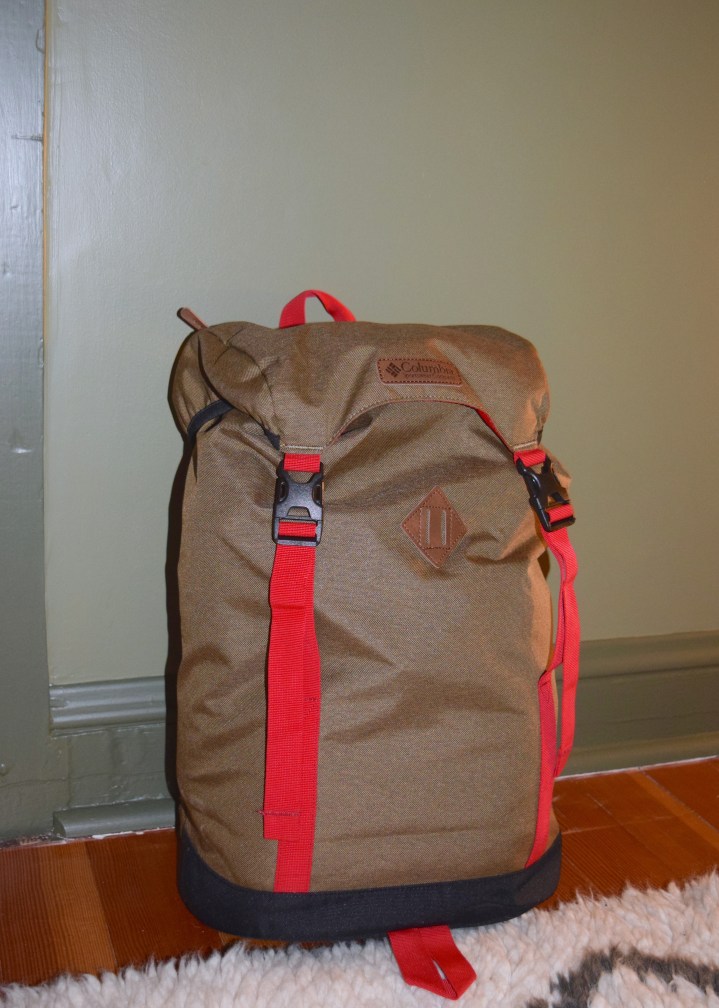
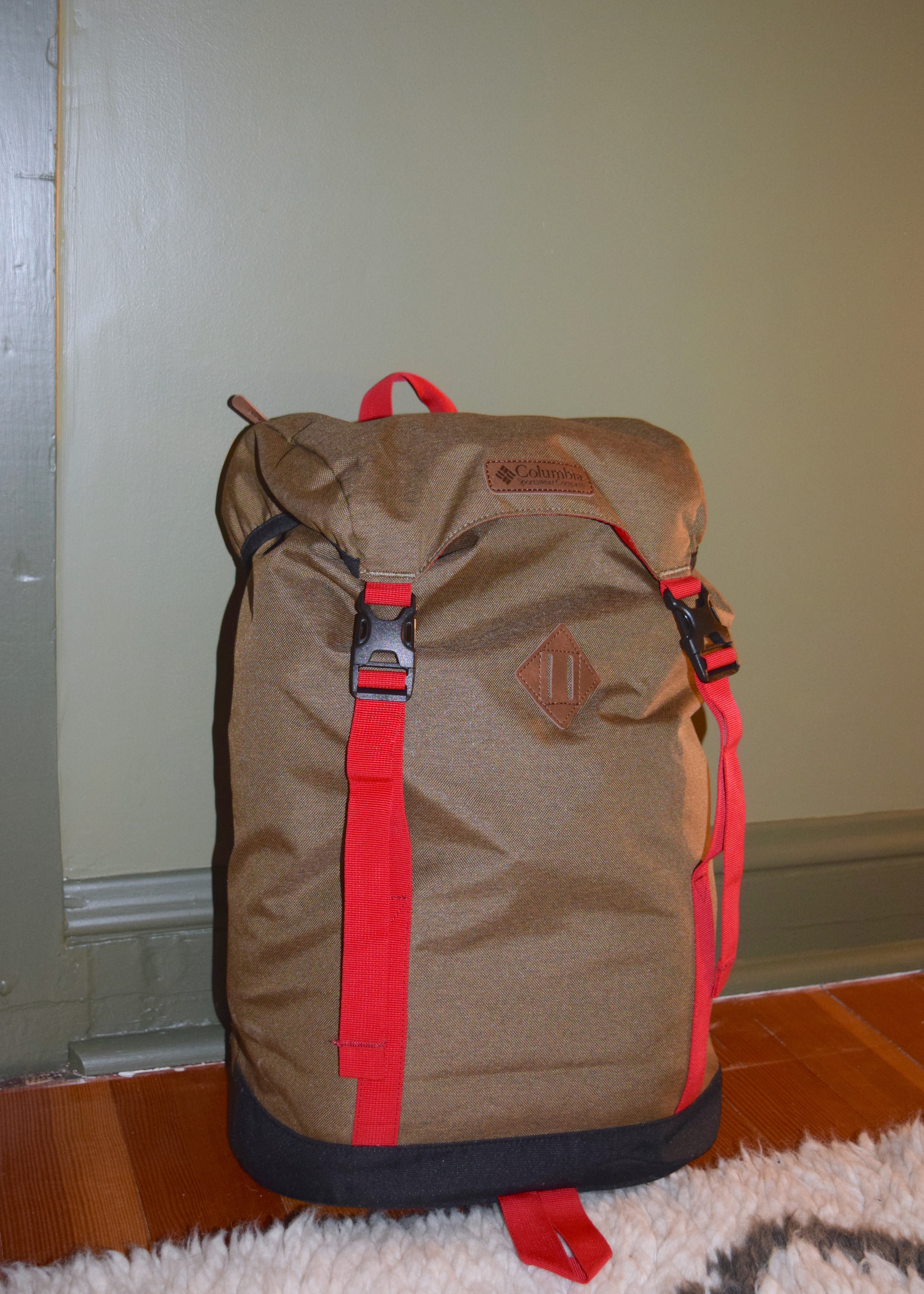
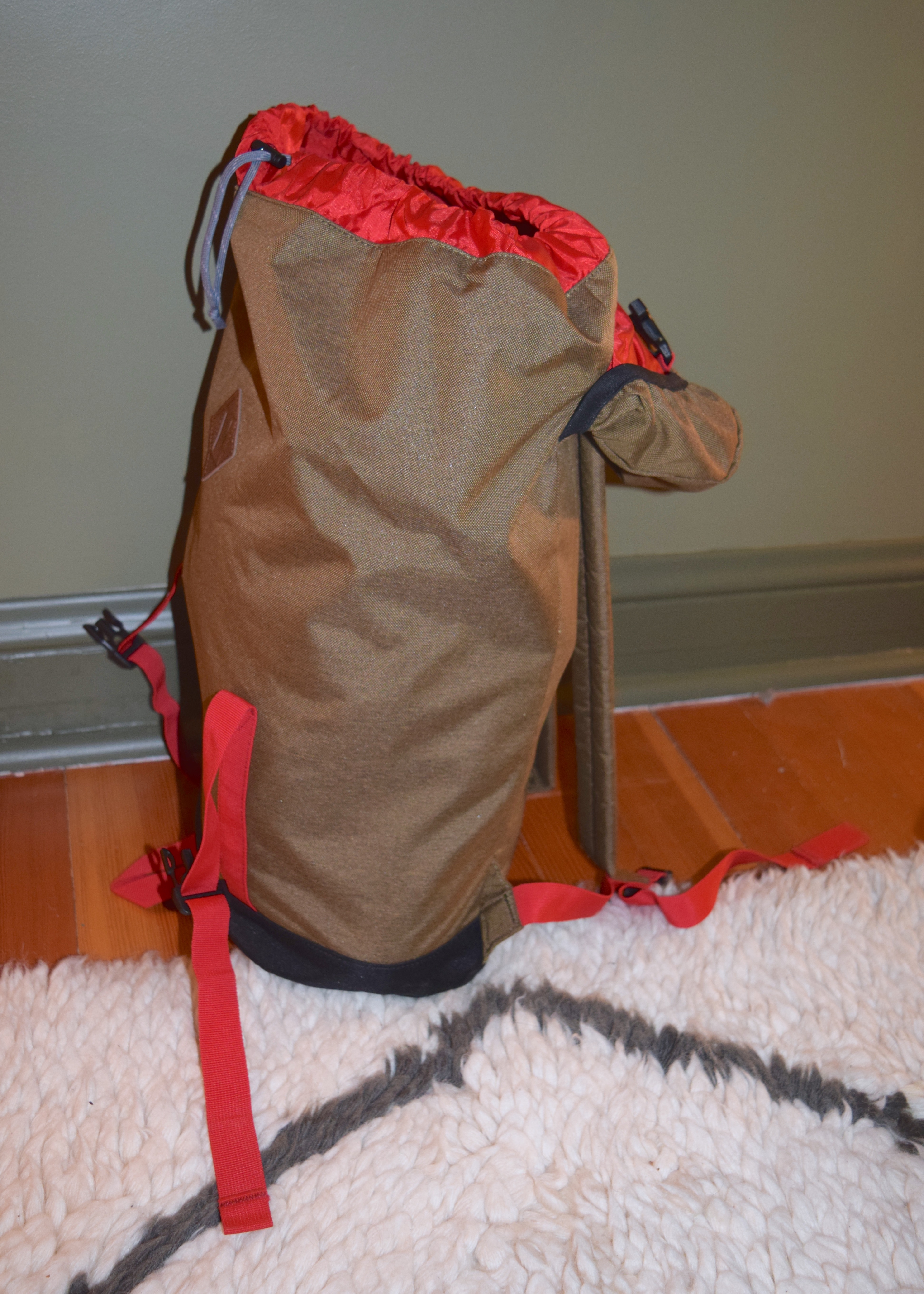
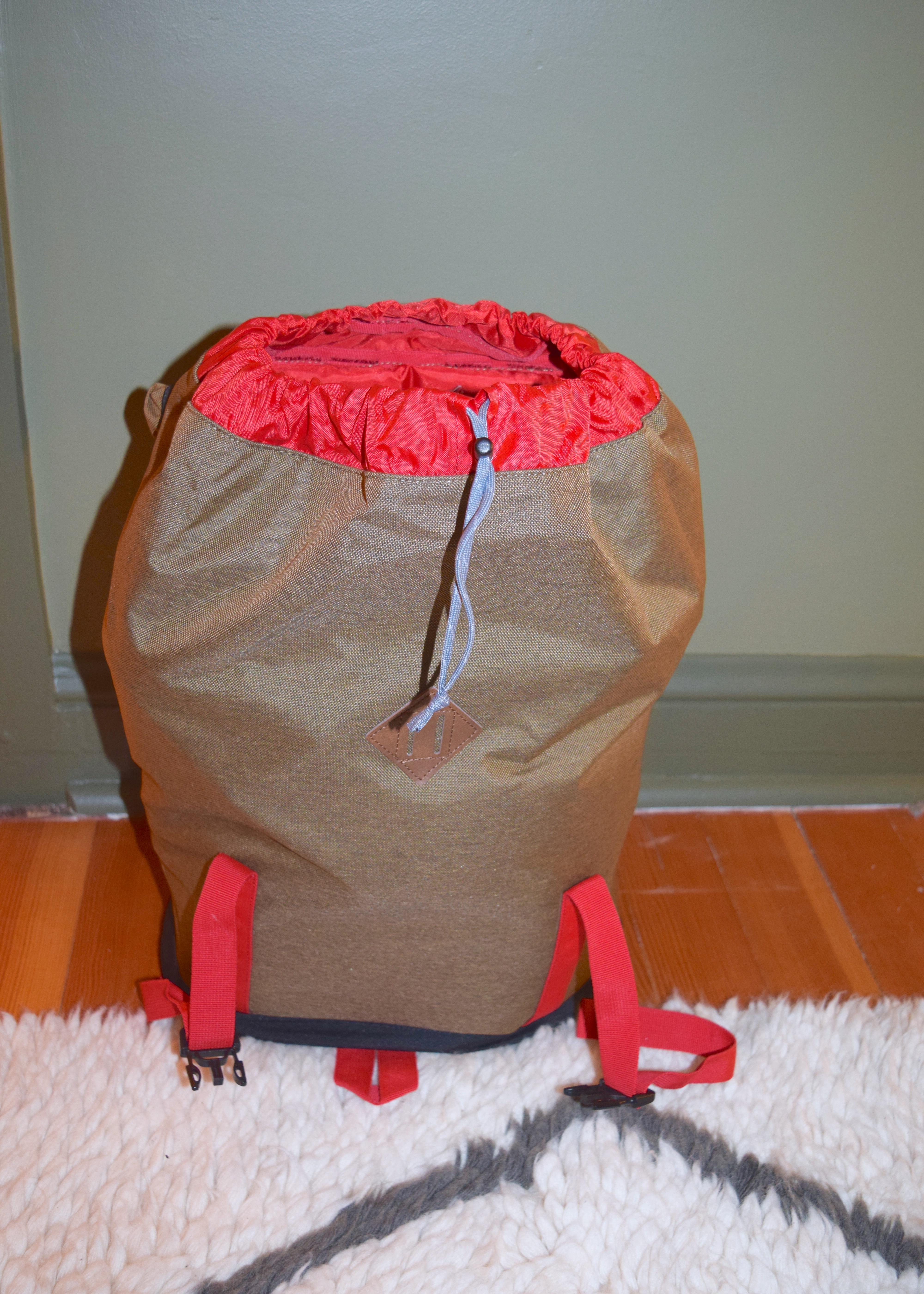
This is a just in case backpack, I hope to never need to grab. Ironically I’d donated an extra backpack I had lying around a few days before the fire, so I ended up buying a new backpack at the Columbia Employee Store. This one has a much larger capacity though, so that’s probably worth the $25. Online, they don’t have the moss + red colorway I bought and it costs a bit more that I paid, but it’s a great 25L bag! Inside the backpack I placed supplies in three categories: personal supplies, first aid, important documents, survival goods.

Here’s broken down lists of what I included as well!

Personal Supplies:

  • Shirt
  • Leggings
  • Underwear
  • Socks
  • Sandals
  • Sweatshirt
  • Toothpaste
  • Toothbrushes
  • Contact Solution and Case
  • Bar of Soap

First Aid:

  • Antibacterial / Itch / Pain Ointment
  • Bandaides
  • Roll of Gauze
  • Ibuprofen
  • Ace Bandage

Important Documents:

  • Printed PDF copies of my important / identification documents

Survival Goods:

  • Protein Bars
  • Two 2 Liter Bottles of Water
  • Matches
  • Emergency Blanket
  • Fleece Blanket

Can you believe I managed to squeeze that all into a $25 backpack? I was impressed too! Now this bag lives where I can easily grab it while running out of the house and gives me a bit more peace of mind. What’s been your experience with emergency situations? Did it encourage you to get more prepared?

Have you ever had a run in with a fire? Or know someone who’s house caught? What was the cause? What did you do to make yourself feel better about it afterwards? Did you put together an emergency plan? Am I overthinking this?! Let me know in the comments below!

Unexpected Plumbing Repairs: Cutting Cast Iron Pipe and Repairing the Sewer Line

Unexpected Plumbing Repairs: Cutting Cast Iron Pipe and Repairing the Sewer Line

Nothing like a Thanksgiving dinner to clog the sink, right? That’s exactly what happened to me on Thursday evening! My sister and I were working on doing some dishes, she had a full sink of water and started to let it go down the drain. My sink is connected to my dishwasher which has an open pipe in the corner of the kitchen that the dishwasher then drains into. When Bronwyn let the water start going down the sink drain, the pipe for the dishwasher started gushing out water all over the floor! We quickly plugged the sink back up to prevent any more water from going down and called quits on dishes for the night. 

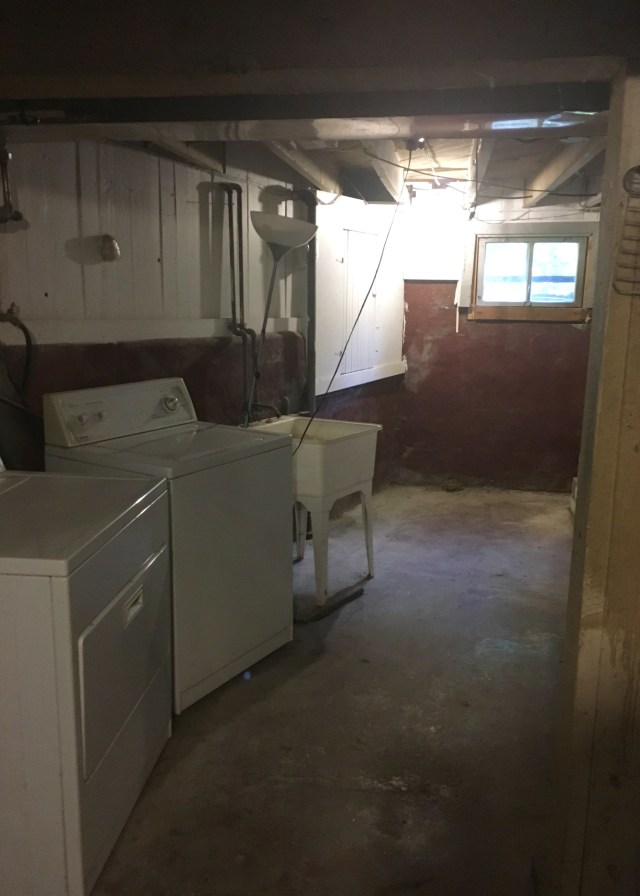
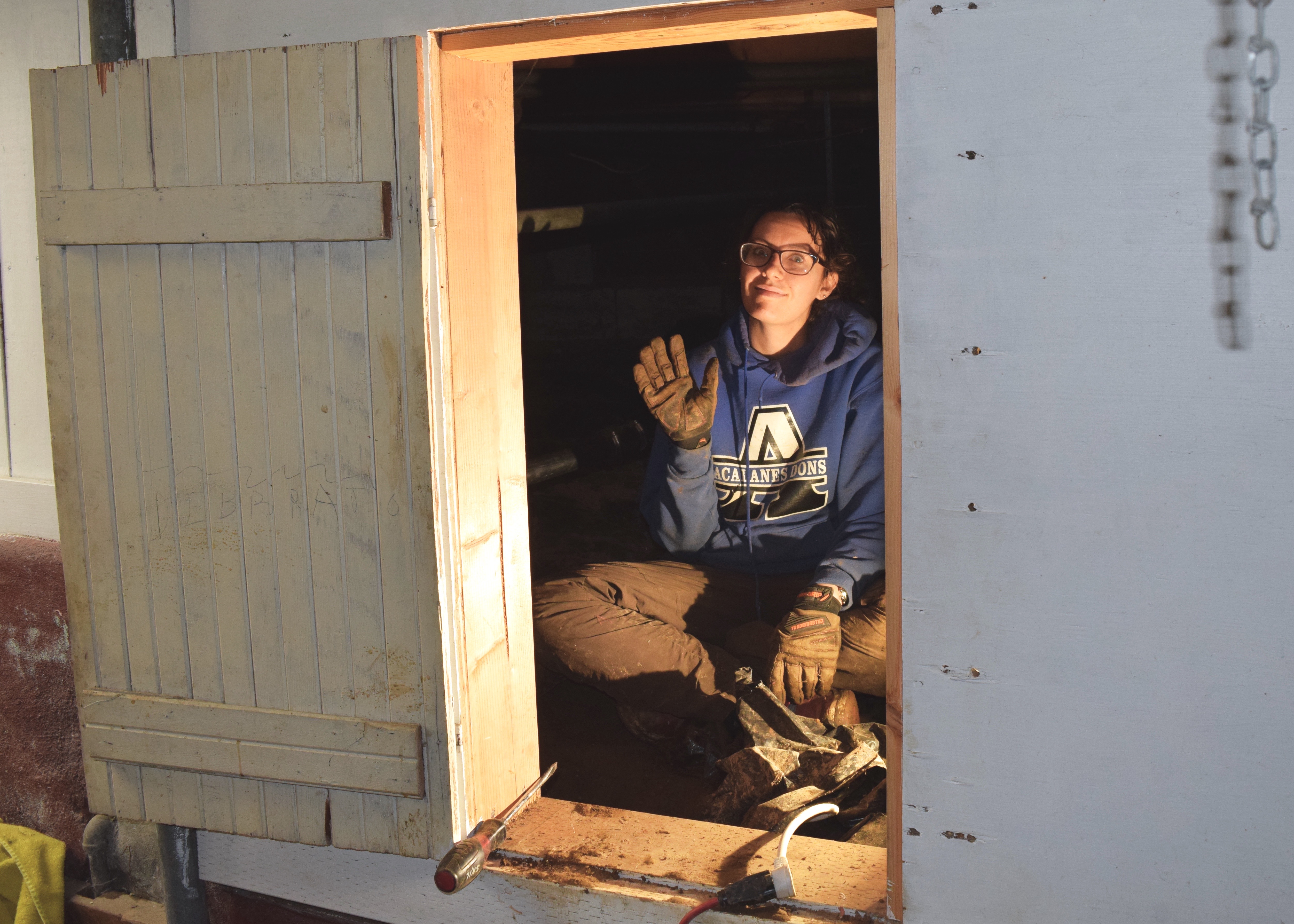
The next morning I saw that both the sink and the pipe had drained overnight. I tired flushing things out with baking soda and vinegar followed by boiling water to see if that would fix the clog. It did nothing and I could only get a few cups of water down the dishwasher pipe before the water rose to the top. Not a good sign. A little while later, I headed into the crawl space to see if I could figure out what was going on (a lofty idea for someone as naive as I am about plumbing!). I am not particularly fond of my crawl space. It’s damp and filled with spiders and there’s lingering molten tar that dripped down between the floor boards when I accidentally liquified the tar mastic in the kitchen . I should probably replace the plastic tarps that are affected by the latter… but that would just add more to my to-do list! So instead I leave it be and crawl through the grime. The crawl space is accessed through this half-door in the corner of the basement. You can see it here at the edge of this photo from when I first toured the house. 

So, I climbed into the crawl space and opened up the flexible coupling (this type) with a screw driver to see if I could identify the problem. It’s one of those rubber-like couplings with metal clamps on either end, so it’s easy enough to loosen the clamps and open the pipe. Of course, idiotically, I didn’t think my plan through. When I opened the clamp and pulled it up the pipe, the whole thing started gushing dirty dishwater in all directions! It started off by splashing right up into my face of course! Yuck!

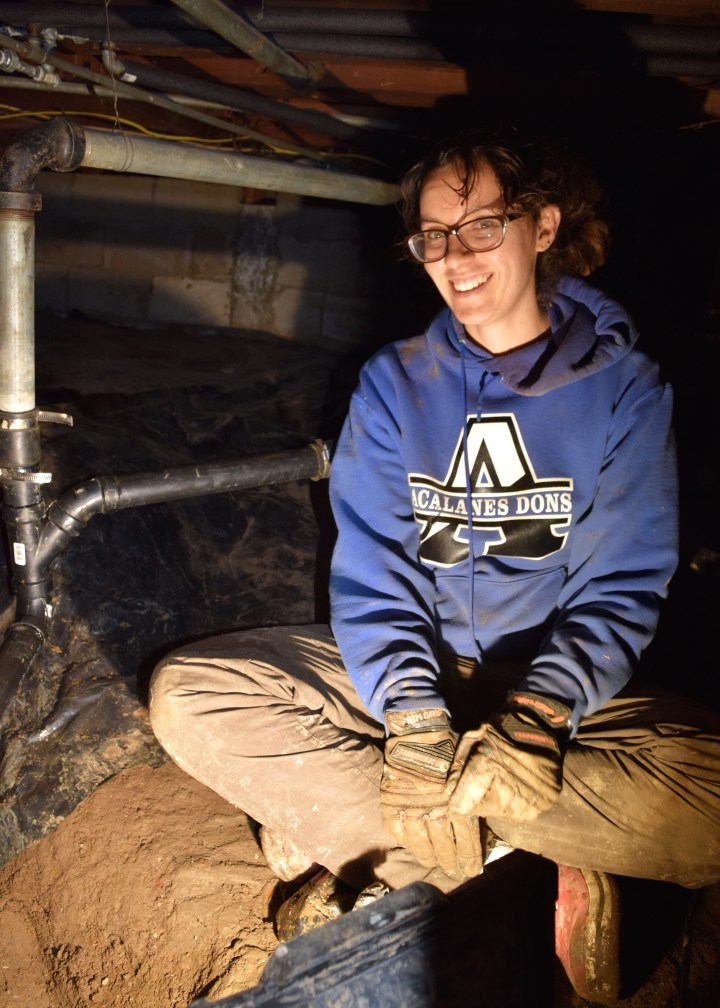
After I drained an unexpectedly large amount of water all over myself, I removed myself from the dark cavity that is my crawl space and texted my neighbor Erik. This was clearly over my head. He popped over shortly after with a snake and we stuck that into the pipe where I’d opened the coupling. After getting the snake in nothing seemed to be happening, but when Erik went to remove the snake, the whole pipe moved with it. Uh oh. I reached out to steady the pipe and realized it didn’t even matter! The whole pipe section had just snapped off. And snapped off not close to where we were snaking, but farther down the pipe. See the dirt in the picture above? That’s where it broke, buried down in that! So I slathered a smile on my face and pretended I loved the crawl space and got to work.

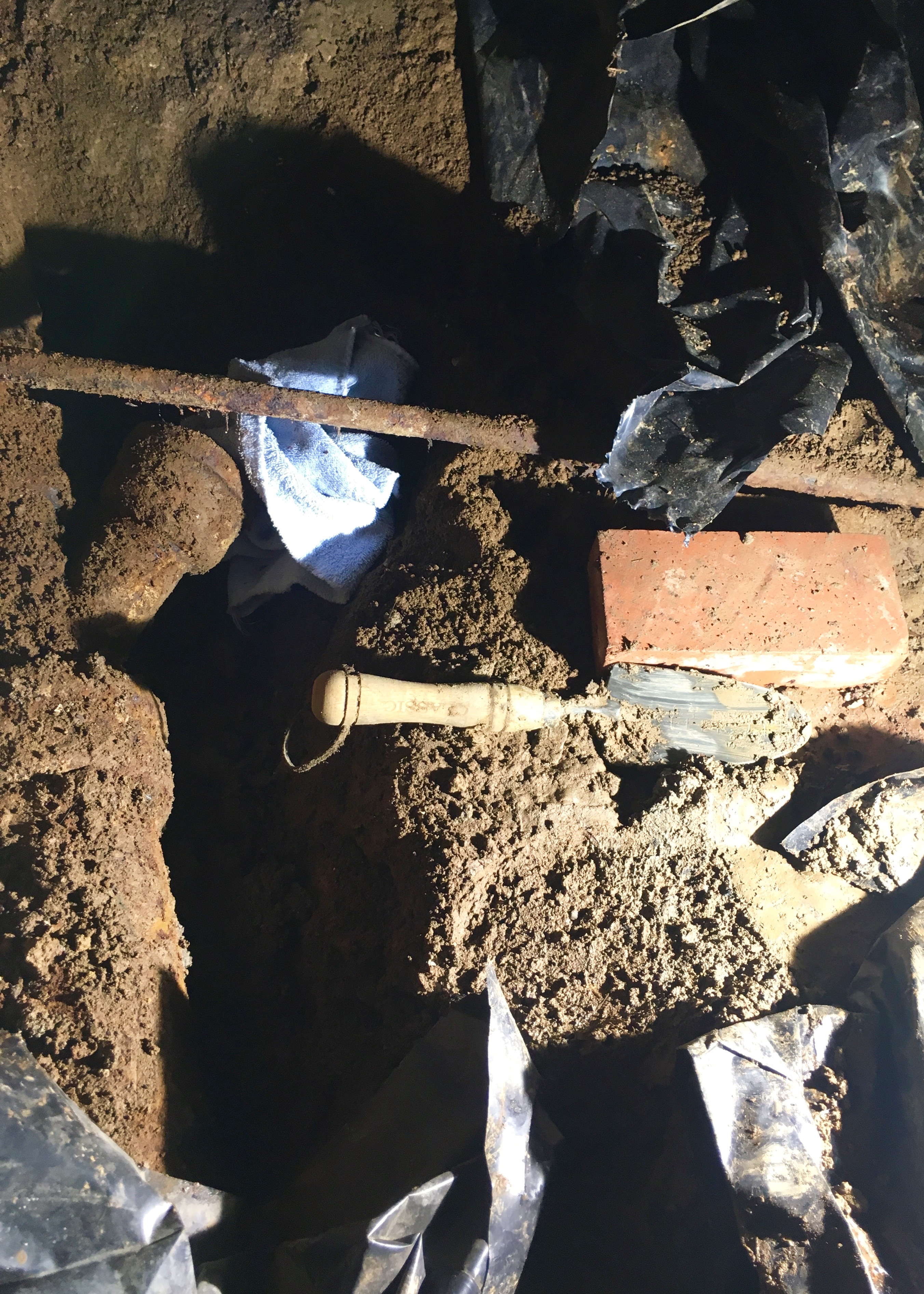
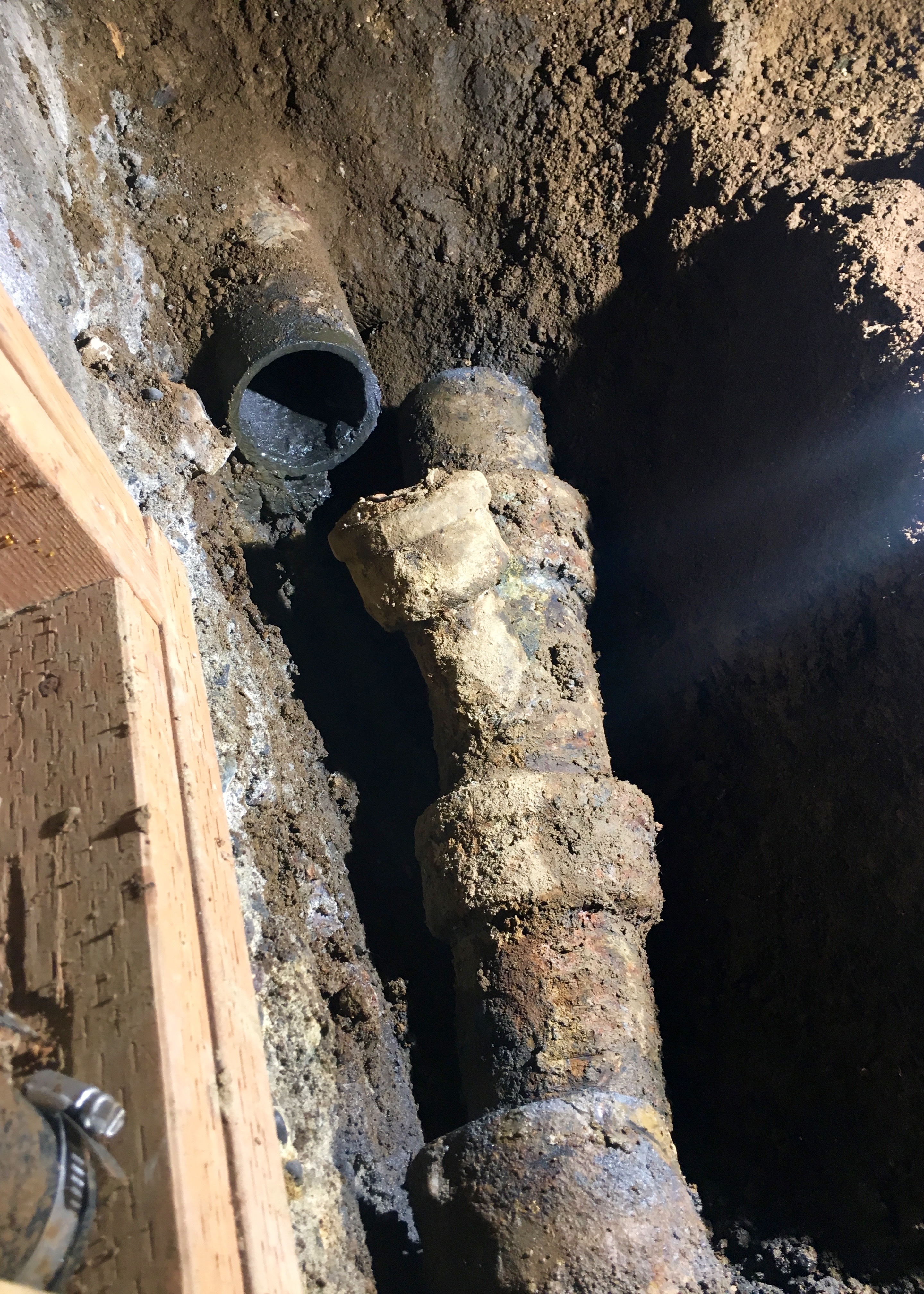
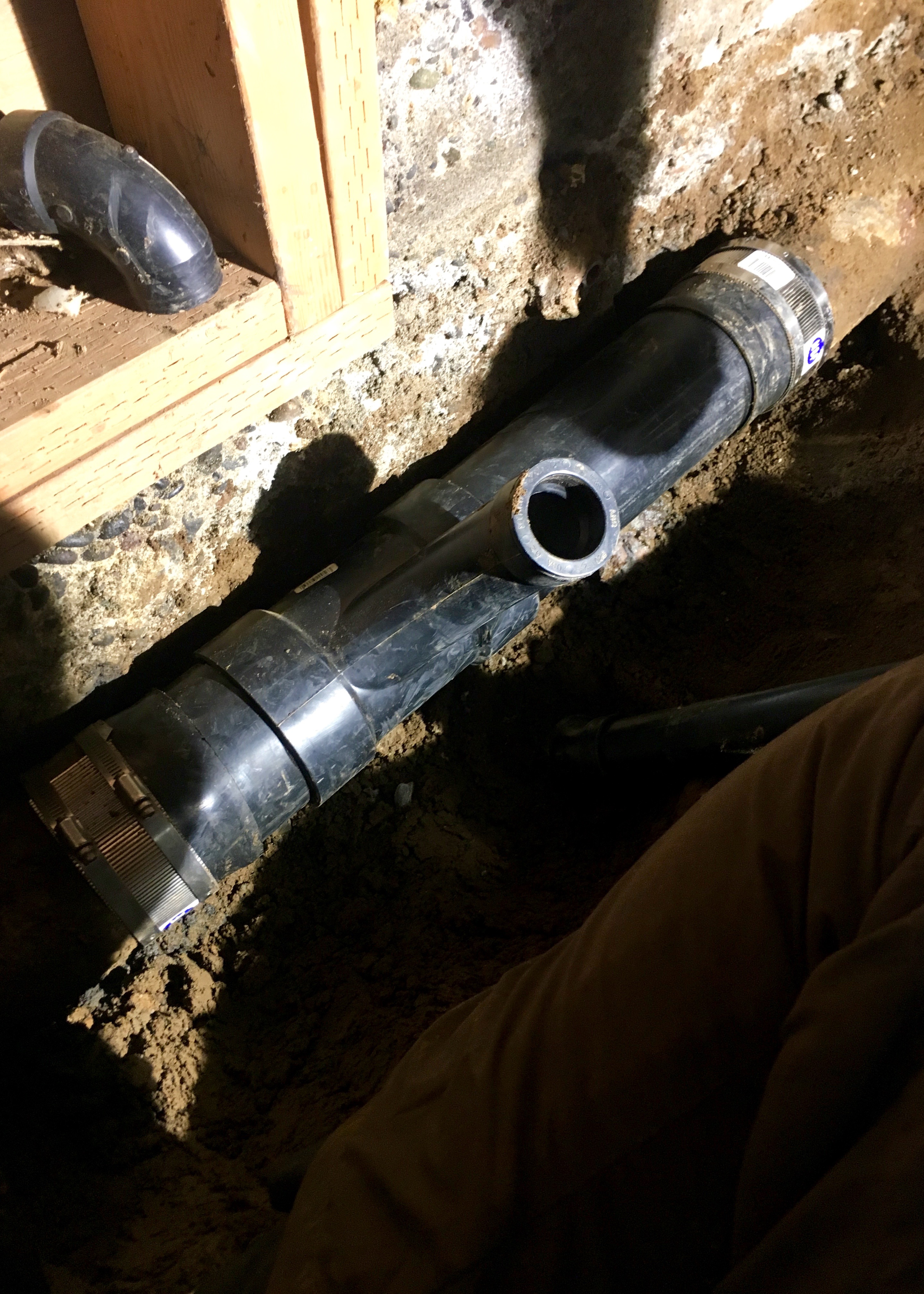
I took out a shovel and started digging in the dirt to figure out where the pipe had broken and found the house’s 4″ cast iron sewer line. The old galvanized pipe that connected the sink and dishwasher drains to the sewer had corroded away and the slight motion from snaking it, broke it off right where it connected to the sewer. Not good! Because it was broken, I couldn’t even get it out of the sewer line and simply sub in a new section of pipe. Nope, I had to get way more involved and replace a section of the sewer line itself! Erik headed out with the promise to help me tomorrow. After I finished digging out around the pipe I called it quits for the night and stuffed a rag in the broken off pipe to prevent the sewer gases from filling the basement. The only good thing about this clog is that it caused me to find this corroded (now broken) pipe. This pipe had been leaking into the soil hidden below where I’d be able to see it if I had not been digging!

The copper pipe that runs perpendicular to the sewer line above is a random pipe that does not connect to anything. Helpful vestiges of plumbings past! 

There’s a special tool that would have made cutting the cast iron sewer line quick and easy. It’s a ratcheting soil pipe cutter. You can buy one for about a billion dollars or rent one. Home Depot rents ’em, but the store closest to me didn’t have one so I went to a local tool rental. They pulled it out of the back and I took one look and teared up. There was no way this could work. My basement wall is oddly angled on this side. Guess why? Because the sewer line was built first. And when they carved out the basement, rather than moving the pipe and making a straight wall, the built the concrete wall about 1/2″ away from the sewer line. The ratcheting pipe cutter gears were about 1.25″. It wasn’t going to fit!

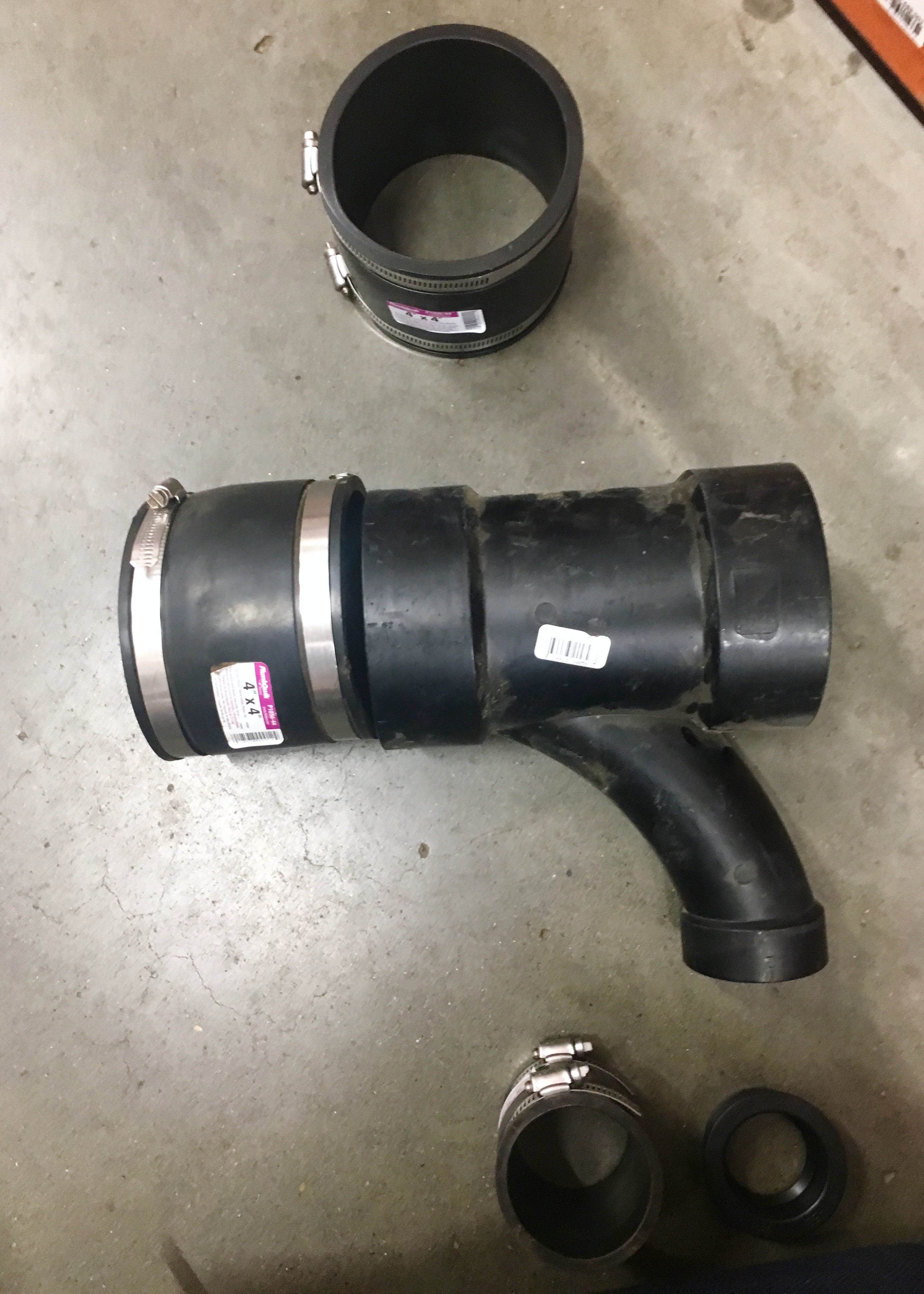
On to plan B! Sawzalling the cast iron pipe with diamond blades. I headed to Home Depot to grab that and the rest of the supplies needed. Two cast iron sawzall blades for $15 buck each was a lot better than paying a plumber. I also headed to the pipe section to look for the proper couplings and accoutrements. Of course, I have no idea what I’m doing so I just took out a ton of parts and put them on the floor and then texted pictures like this to Erik until my phone died and I was left to fend for myself in the plumbing section!

I ended up with a four inch wye pipe with a 2″ offshoot and then because I couldn’t remember if I needed a 2″ or 1.5″ pipe to connect to the sink and dishwasher lines, I just bought a bunch of parts for both sizes. I definitely prefer to err on the side of way too many things to return than oh hey let’s run back to Home Depot four times. So $200 later, I had everything I could possibly use. 

I bought Erik a bagel sandwich for lunch which is definitely not enough to repay him for the next several hours he spent helping me in the crawl space. I set up the light and then I clambered into the crawl space with my corded sawzall and Erik followed with his battery powered sawzall. We then spent the next fourty or so minutes crouched over simultaneously sawzalling at the cast iron pipe. It took a LOT of effort and was so very uncomfortable and not fun. And of course Erik did his section faster than me and then traded so he could finish off my cut. Apparently he’s stronger or something boring like that. Ugh!

But then the cast iron pipe was completely cut! It was a wonderful sight to see! 4 inches over 40 mins, but hey, who’s counting? Look at this glorious exposed sewage. Just delightful!

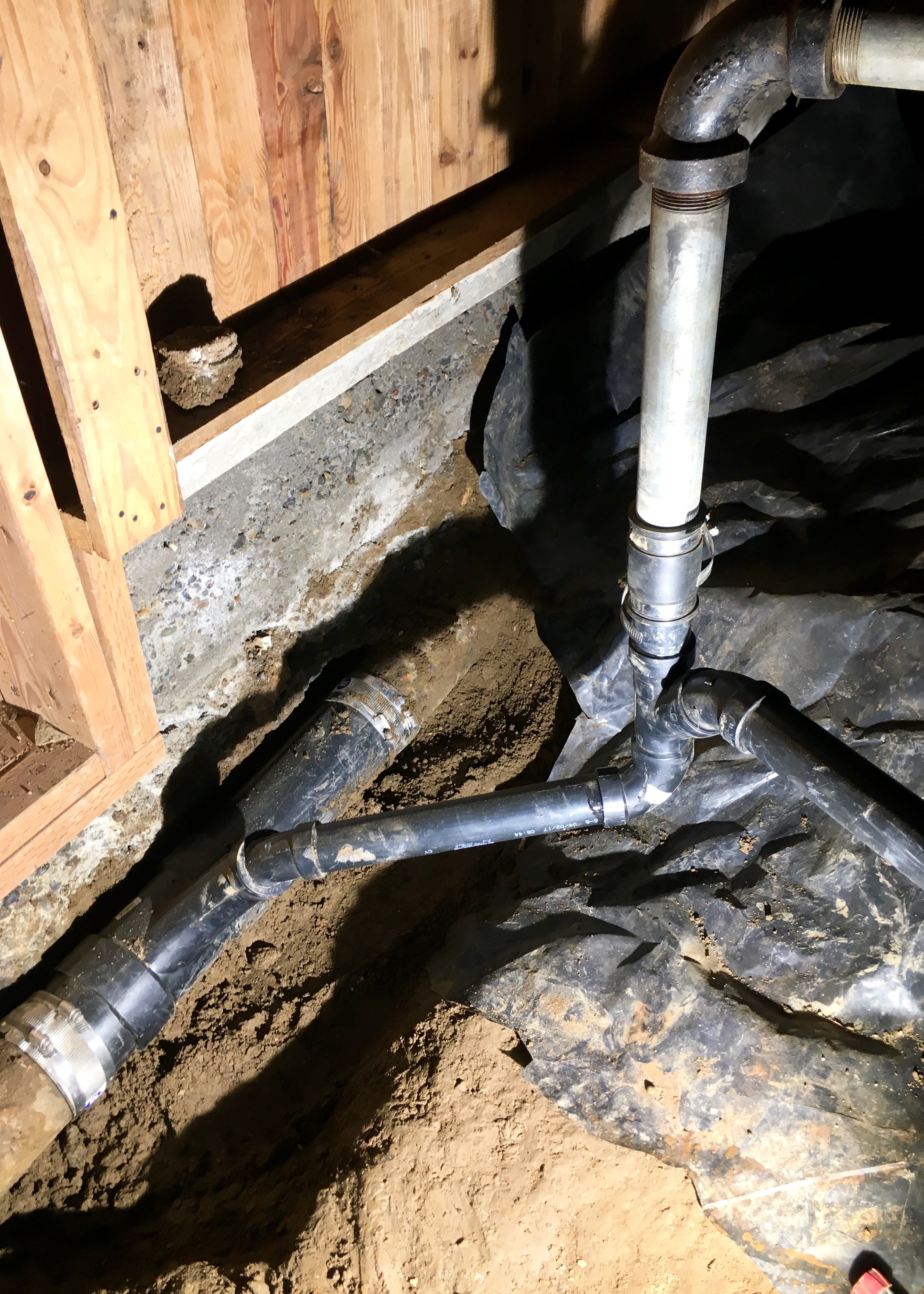
Then it was time to get the fittings together. Ugh. This was a gross project. First I got the special cast iron to ABS pipe couplings fit over both ends of the cast iron. That took some work to get the rubber fitting over and then I slid the double clamp over the rubber fitting and started lining up the rest of the pipes. Erik cut a short section of 4″ pipe to fit into the coupling. The wye went in next and then Erik cut another 4″ pipe section to fit the remaining part. 

Stuffing the section of pipe into the wye and then into the coupling was a bit of a challenge. But about 5 minutes of fanangling later and I made it work. But then, of course, I had to take everything apart to glue it all. I used ABS pipe glue stuff which smells disgusting and sticks to everything. It has a ball to apply and you put glue on both ends about as wide as the radius of the pipe. 

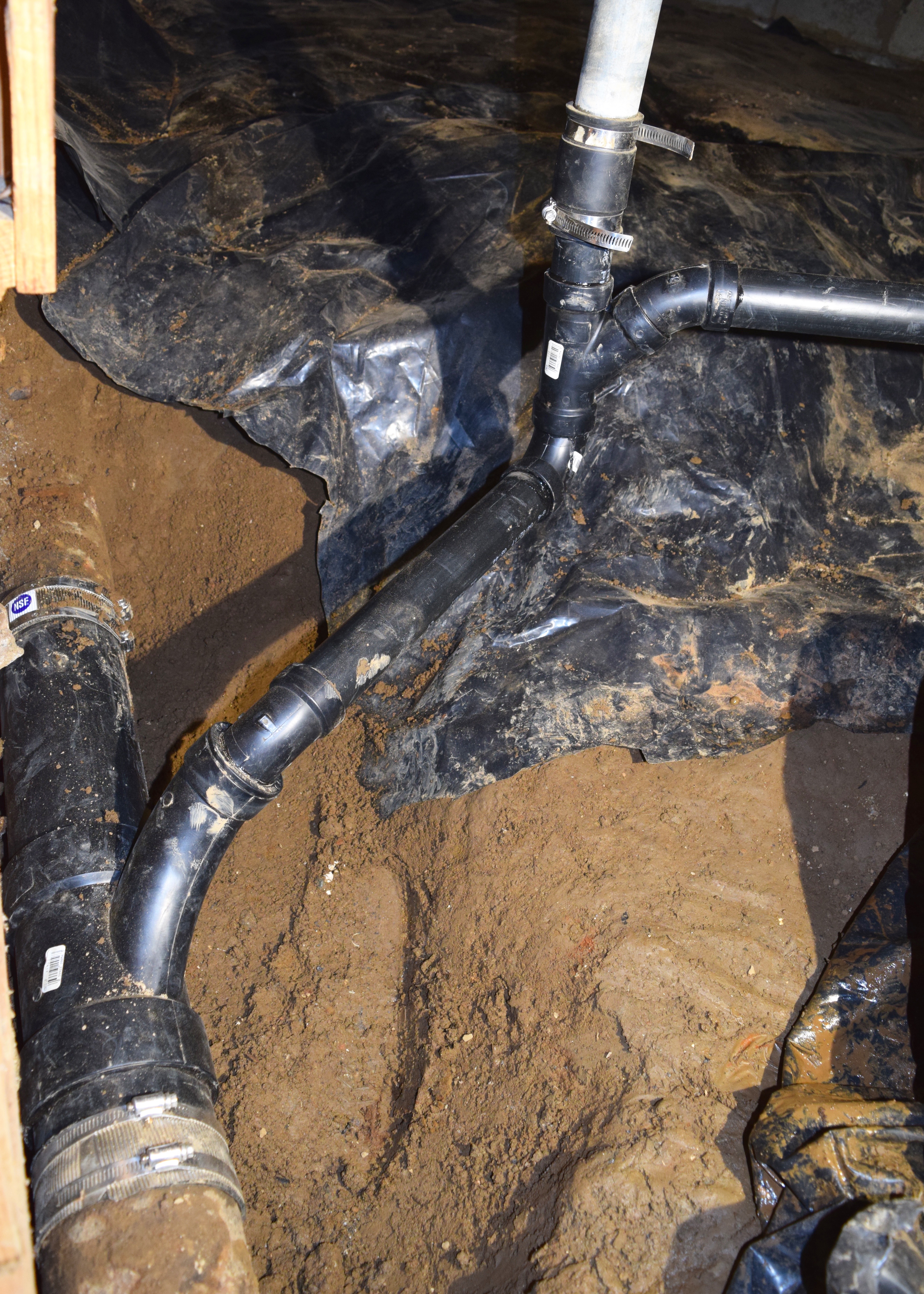
The rest of the pipe fit more easily together, it’s like highstakes marble races, but the marbles are sewage. Again, delightful! A 2″ to 1.5″ pipe converter went on the main wye first, then a 45° angle, then a section of 1.5″ pipe, then a 90° angle.

That then connected to another forked wye pipe, this one was 1.5″ all around. That allowed me to slip on the original pipes from the dishwasher and sink drains into the new wye with a couple short sections of 1.5″ pipe and a whole lotta glue. 

A bit of tightening of the coupling clamps later and the plumbing was all connected!

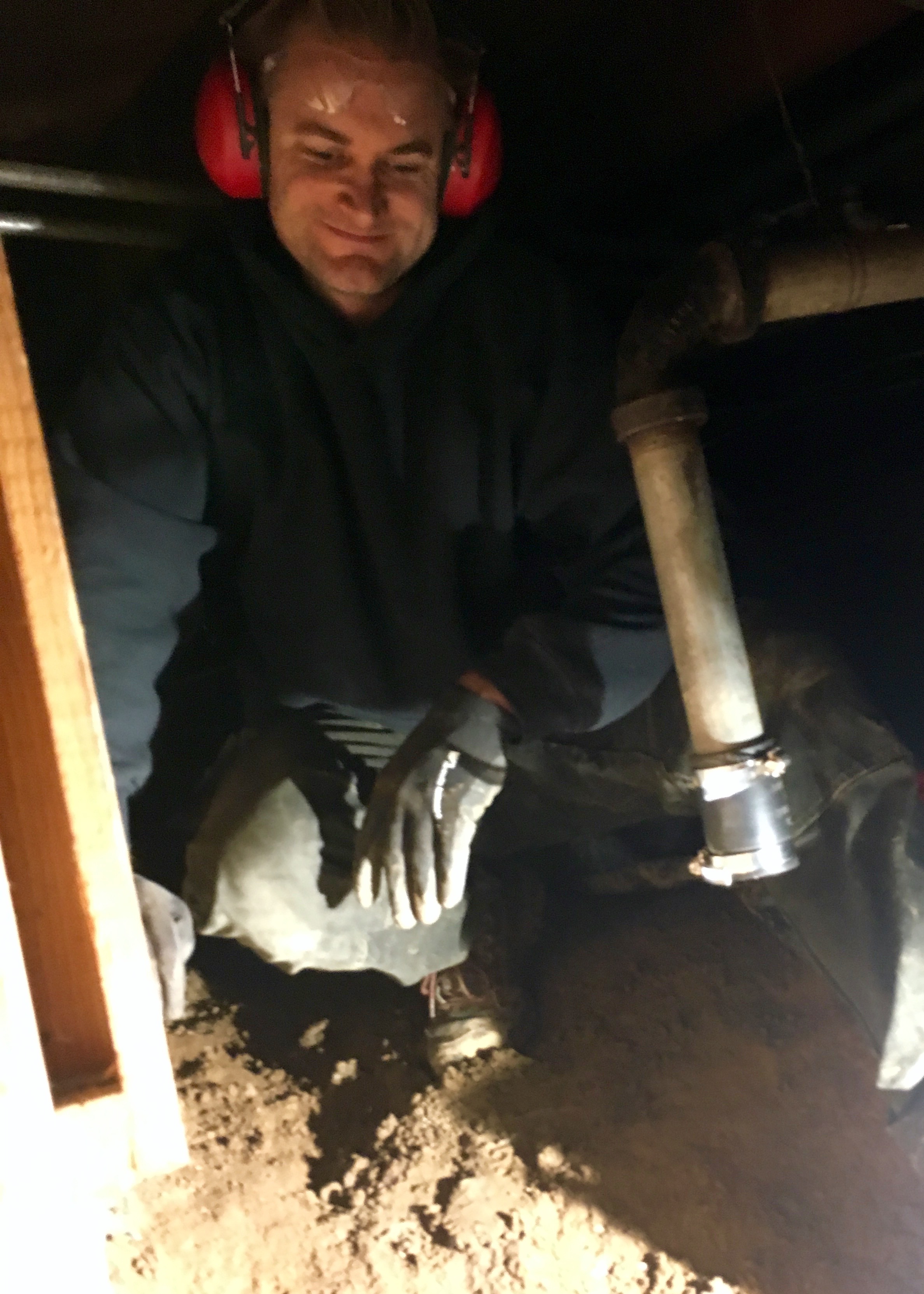
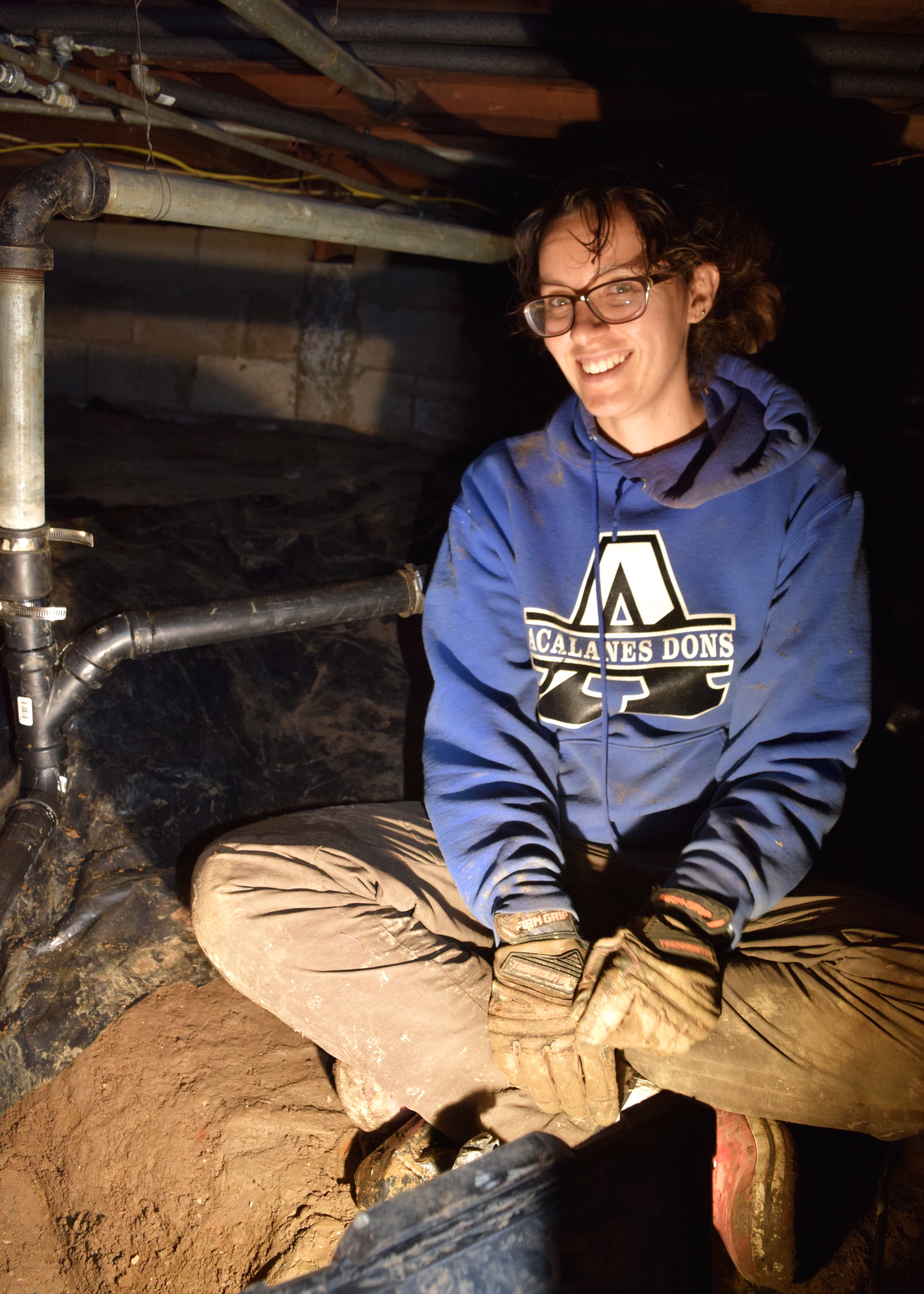
Erik ran upstairs to flush the toilets a couple times and run the shower to test the lines. A couple more rotations to tighten the clamps on the sewer line later, we were leak free and basically done! I threw the rest of the dirt back into the space and called it quits. Typing this took no time at all, but in reality I climbed into the crawl space at about 12:30pm that day and came out about 4:30 and then spent and hour and half cleaning up. Not too shabby, but it doesn’t count the couple hours of digging from the day before!

It’s funny how projects like these: gross and dirty, but quick can make you feel so accomplished. I could never have done this without my neighbor though. I simply wouldn’t have had the confidence to even try. But saving several hundred dollars sure feels good! Plus the more of these I do, the more confident I get to try this on the next round. Though I hope that next round is a long ways away!

In the meantime, I saved a whole lot of money. At least 4-6 hours of a plumber’s work so let’s call that $400-$600. And honestly, it wasn’t all that hard once I got going. I think I could do it again… if I wanted to! Has anyone else tried plumbing things? How’d your project go? Did your DIY job hold up over time? There’s one connection I’m a little nervous about…!

Laying 1″ Hex Tile in the Bathroom

Laying 1″ Hex Tile in the Bathroom

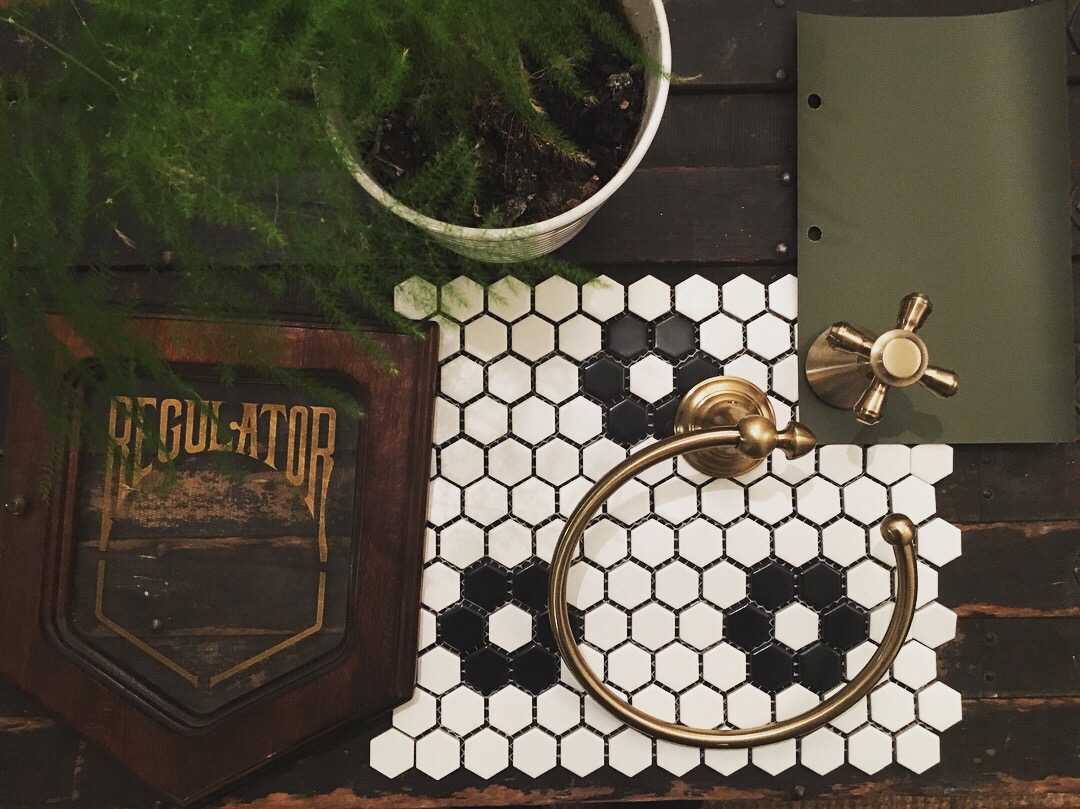
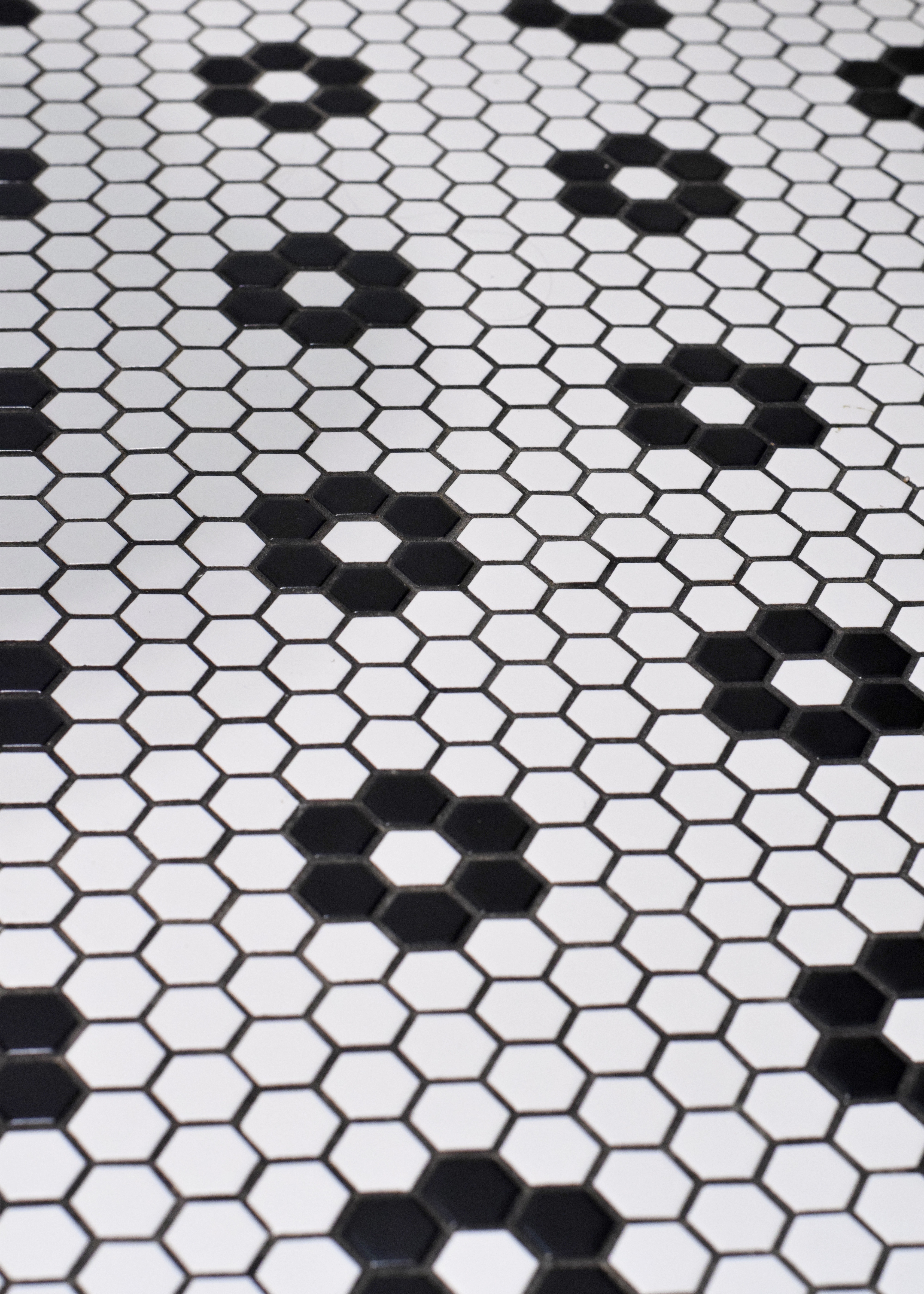
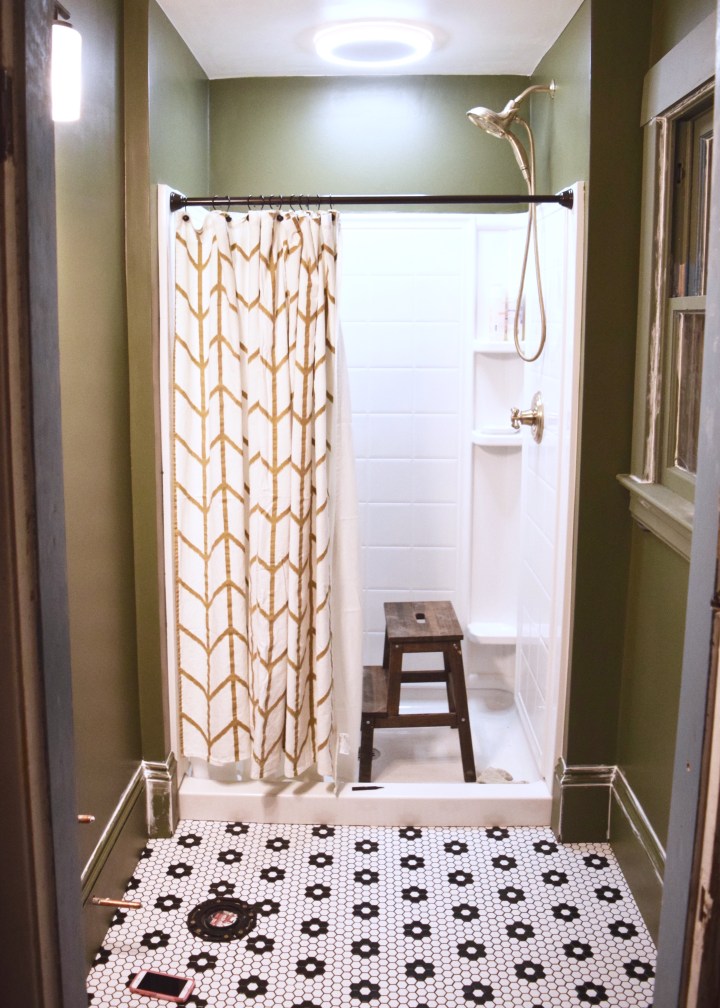
I thought walls were a huge step, but, baby, I’m falling head over heels for my tiled floors! The floors were something I’ve just been dying over for months. I found dozens of complicated multi-colored tile floor patterns that I wanted to try, before finally settling back down and going with a clean, classic, and readily available option from Home Depot (my home away from home). I’m still saving those ideas of fun multi-colored patterns for the future though! There’s still the upstairs dormer bathroom and that has got to take shape eventually… so finger’s crossed! My inspiration for this room just got me all kinds of giddy about the tile I’d picked, but seeing it finished is even better!

img_0129

I bought three cases of the tile at $53 bucks per case. I ended up returning an entire case of the tile in the end and only using the first two cases, or about 18 SF of tile. Saving that extra money was almost as exciting as the tile itself! And I’m allllll about my tile! I picked this tile for the spacing of the flowers. You can get options with more or less space between the flowers, but I preferred this since it had enough that you’d easily see the flowers in the small bathroom, but not enough that you’d feel dizzy! Here’s the shot from the website showing the tile in all it’s ungrouted professional photo glory.

matte-white-and-black-low-sheen-merola-tile-mosaic-tile-fdxmhmwf-64_1000.jpg

Including the tile, here was my short Home Depot shopping list compiled here for you. That’s it! Tiling isn’t so bad, y’all.

Once I gathered the supplies and completed the prep work in the bathroom I came home from work one night in mid-November ready to tile! I finally turned on my ancient furnace which helped keep the house above freezing, which was a refreshing change. After that, I went ahead and dry laid all my tile so I could assess how it would fit in the space. I used this dry lay to also take the tile nippers out and make all my cuts. Luckily with 1″ hex tiles, a quick nip will cut through the tile pretty neatly. Not every one was perfect, but plenty were good enough!

Then it was time to start setting the tile. I carefully picked up my dry laid tile and stacked it sheet by sheet in order of how I’d place the sheets. I made a pile of all my cut tiles I could pull from as needed. Then I popped open my thinset container and used the flat side of a thinset float to spread out a thin coat (about 1/8″) before making grooves with the v side. This is the same process I’d used to lay the HardieBacker during prep. Then I had to actually lay the tile! It all started off smoothly.

First, I spread my thinset about 14″ deep across the back end of the floor by the shower pan, made my grooves, and laid a sheet of tile. Then I back filled any cut tiles and moved on to the next sheet in the row. I did this for the first and second rows without issue. It started to get warmer in the bathroom as the furnace heated the house and as I worked my way across and down the bathroom floors, my thinset started drying at the edges before I could lay the next sheet. Not dry-dry, just drier… I tried working faster and faster, laying the tile as quickly as I could. The room felt hotter and hotter as my efforts increased in speed. By the time I finished I was sweating heavily and the last sheets had a couple spots where the spacing didn’t feel perfect. After tweaking them to make them better, I began to clean up and realized it wasn’t just the little bathroom that was hot. The whole house was oddly warm. I checked the newly installed thermostat: 86°F. Apparently the thermostat went rogue and decided it should feel like a tropical island in November in Portland, OR! So if the tile’s not perfect perfect, I blame the thermostat!

In all, the dry lay and then wet lay of the tile took most of the evening for even just this small room. I was pretty excited to return the next day and finish up with grout! I left the heater on at a more reasonable 70°F temperature to keep the tile and thinset warm enough to set fully overnight. but already things were looking pretty good! I wish I’d taken more pictures of the ungrouted tile, but I’m a terrible blogger and an undivided focus DIYer, so I only took this one overall shot when I finished.

Berrybrier | Ungrouted Tile.jpg

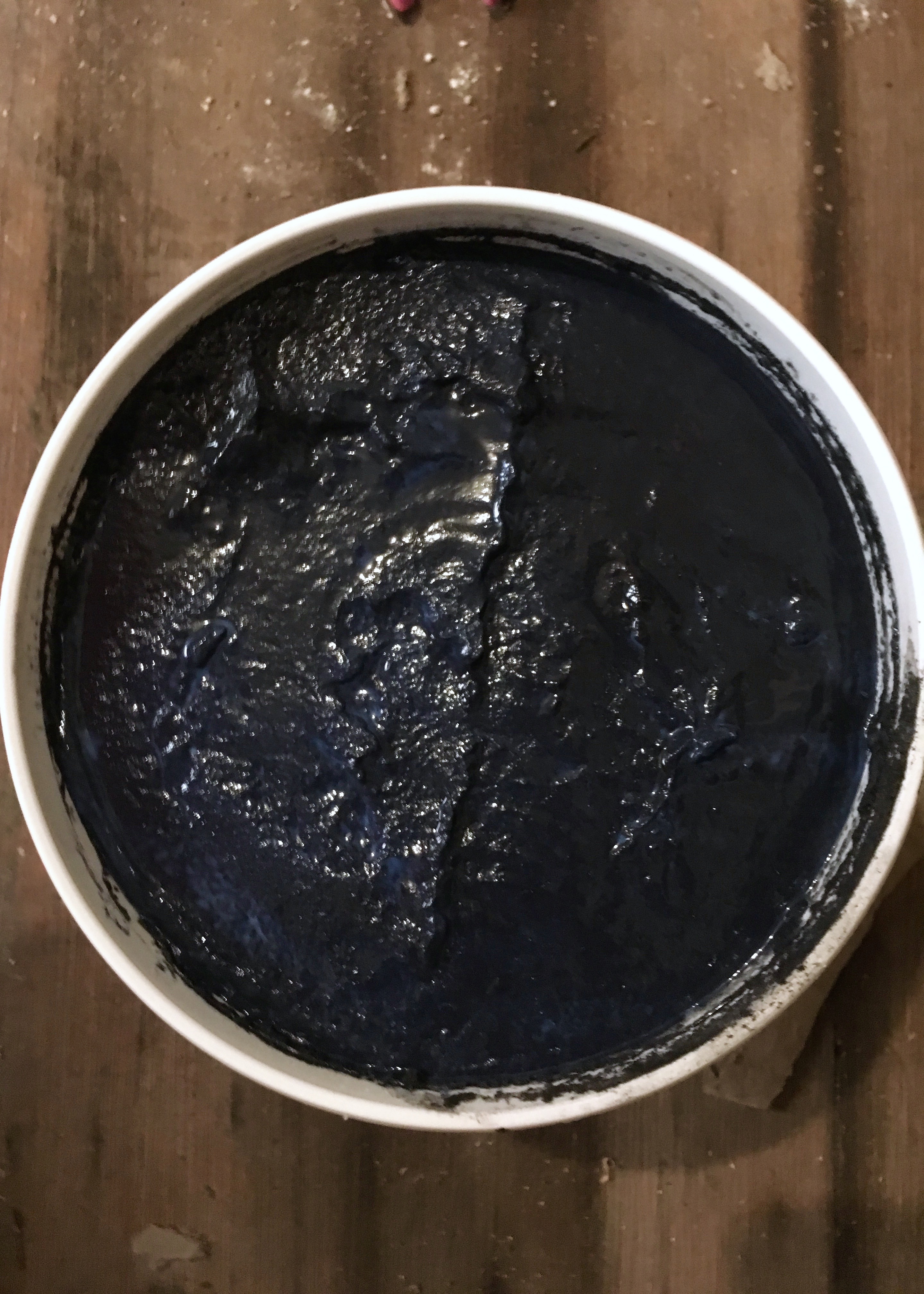
The next evening, grouting I was much better though! I poked any thinset to make sure it was fully set in place (it was!) and double checked the heater was at a more reasonable temperature (it was!), before cracking open my pre-mixed grout. You can get mixable grout for cheaper than the Fusion Pro stuff I used, but I didn’t want to worry about mixing multiple batches or making it the wrong consistency. I figured for my first time grouting, I’d take the easier approach. Also, I’m lazy. Ha! I debated white, grey, and black grout options, but ultimately, picked up a gallon of the charcoal which is the black Fusion Pro option. Black hides the most, I decided, and dingy grout is no one’s friend! I got a little nervous when I opened the container though, because it looked kinda blue! Also shout out to my filthy partially sanded kitchen floors photobombing below.

Berrybrier | Fusion Pro Grout in Charcoal

Once I actually started grouting, the grout looked more black. That was better! Whew!

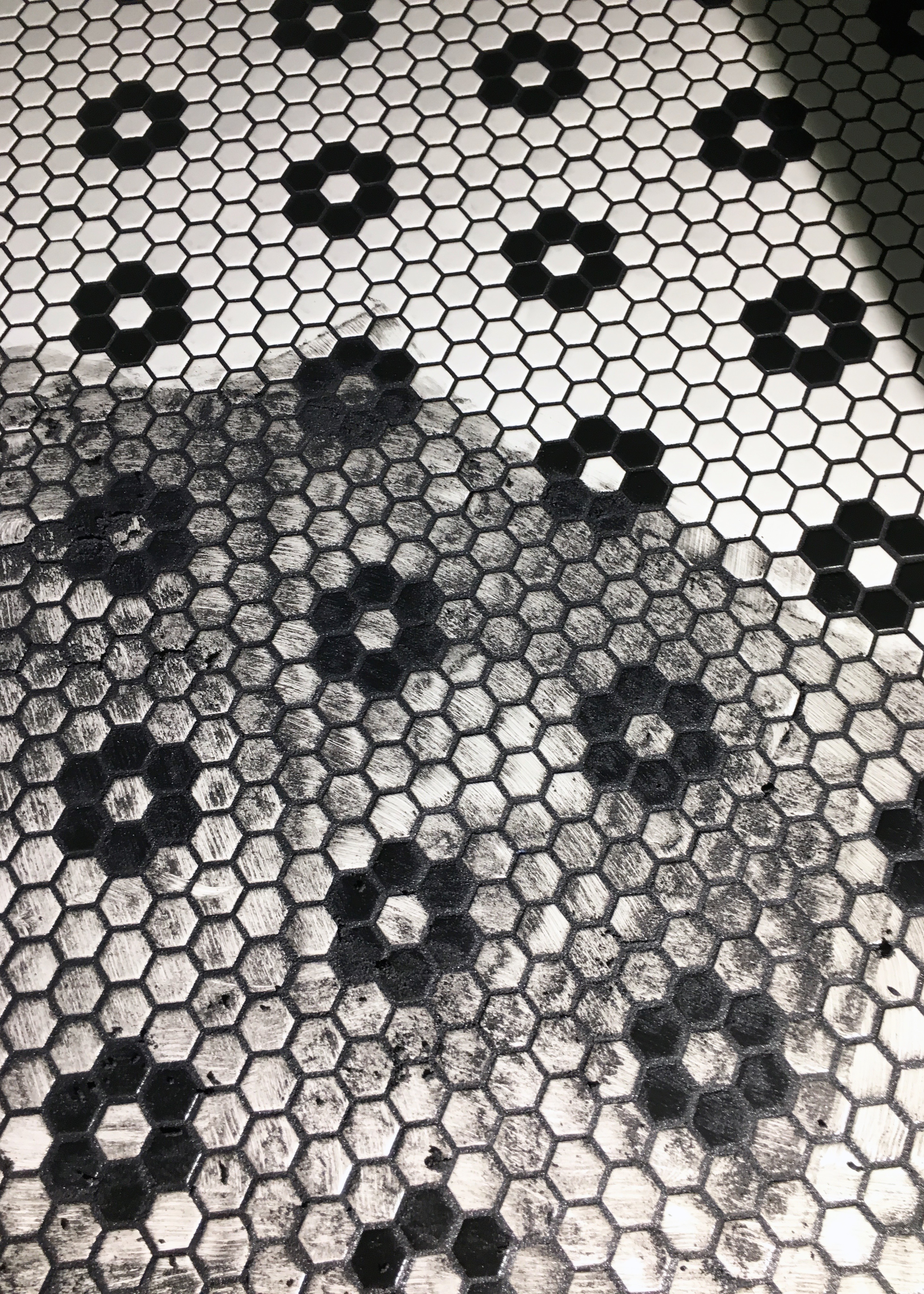
Grouting was easier than laying the tile, just take the grout float and smoosh grout into the open space between the tiles, smoosh over a few times to make sure the gaps are fully filled. After smooshing, wipe away the excess and you’re left with something that looks a little crazy. You have to let the grout set a minute or two before wiping up the excess though.

Berrybrier | Groat Float

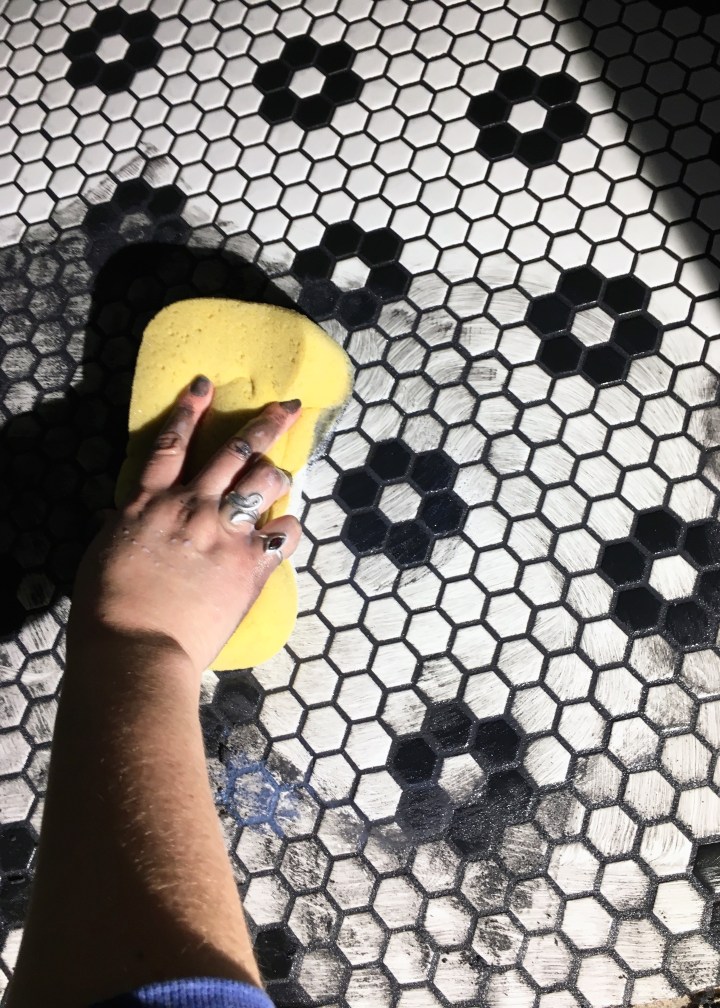
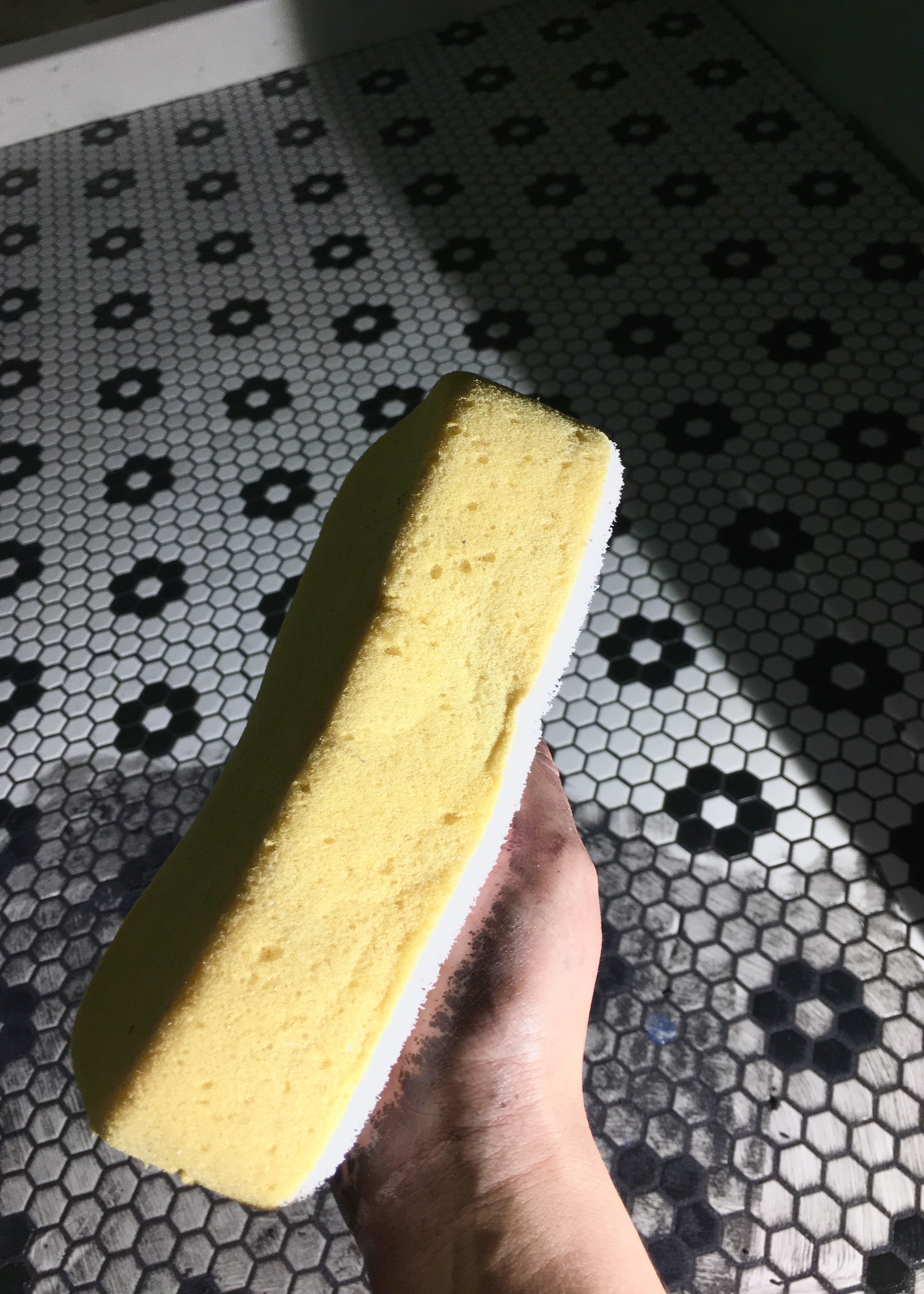
But then you just dip a sponge like this in some warm water and ring it out really well and wipe up the excess grout. This sponge helpfully had a more abrasive side I could work at any tough spots with.

Berrybrier | Grouting Sponge

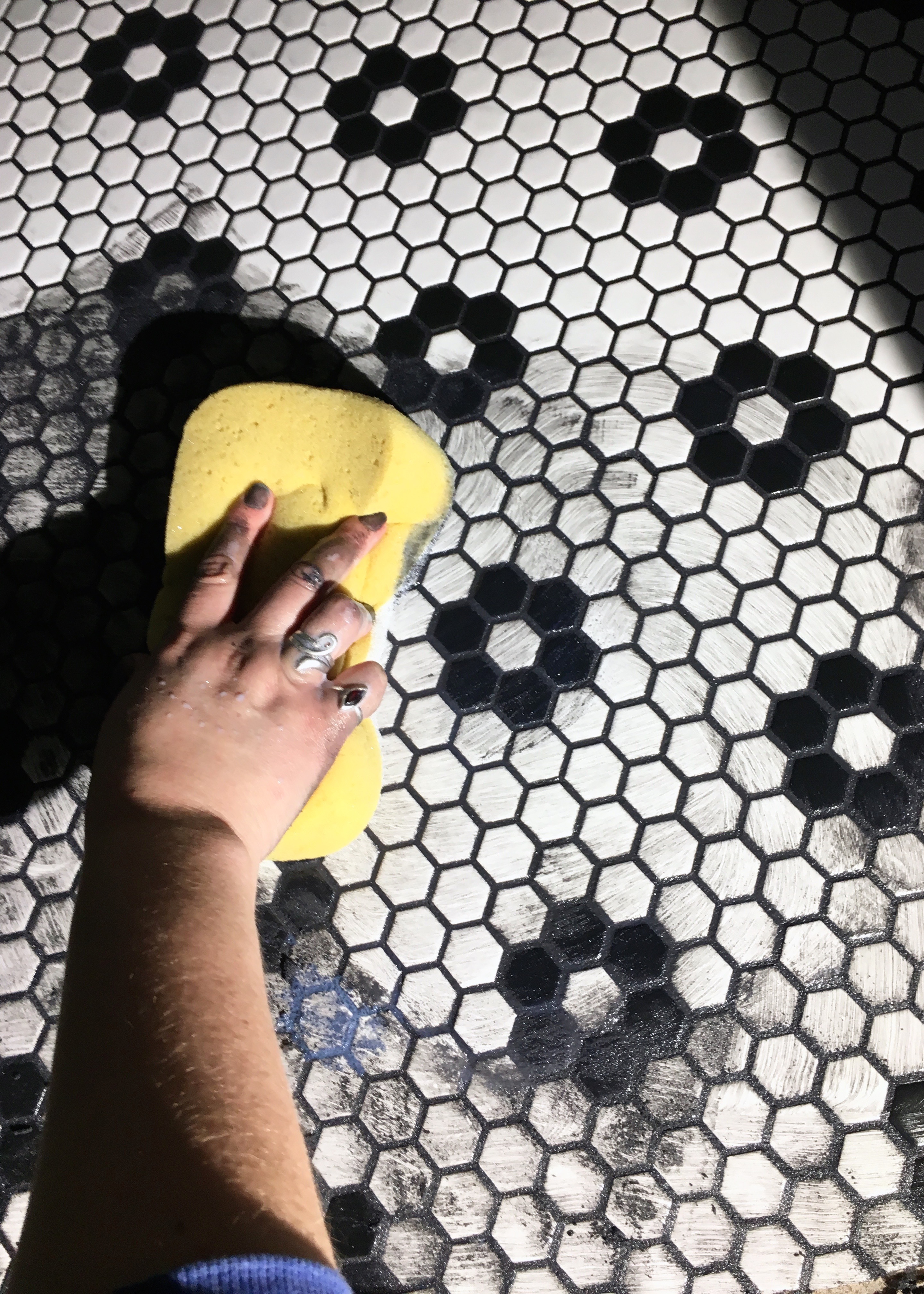
As I wiped with the damp sponge, it started looking like a real floor pretty quickly! If any water started to pool, I wiped it up with sponge and rung out the sponge again before making another pass.

Berrybrier | Wiping Grout

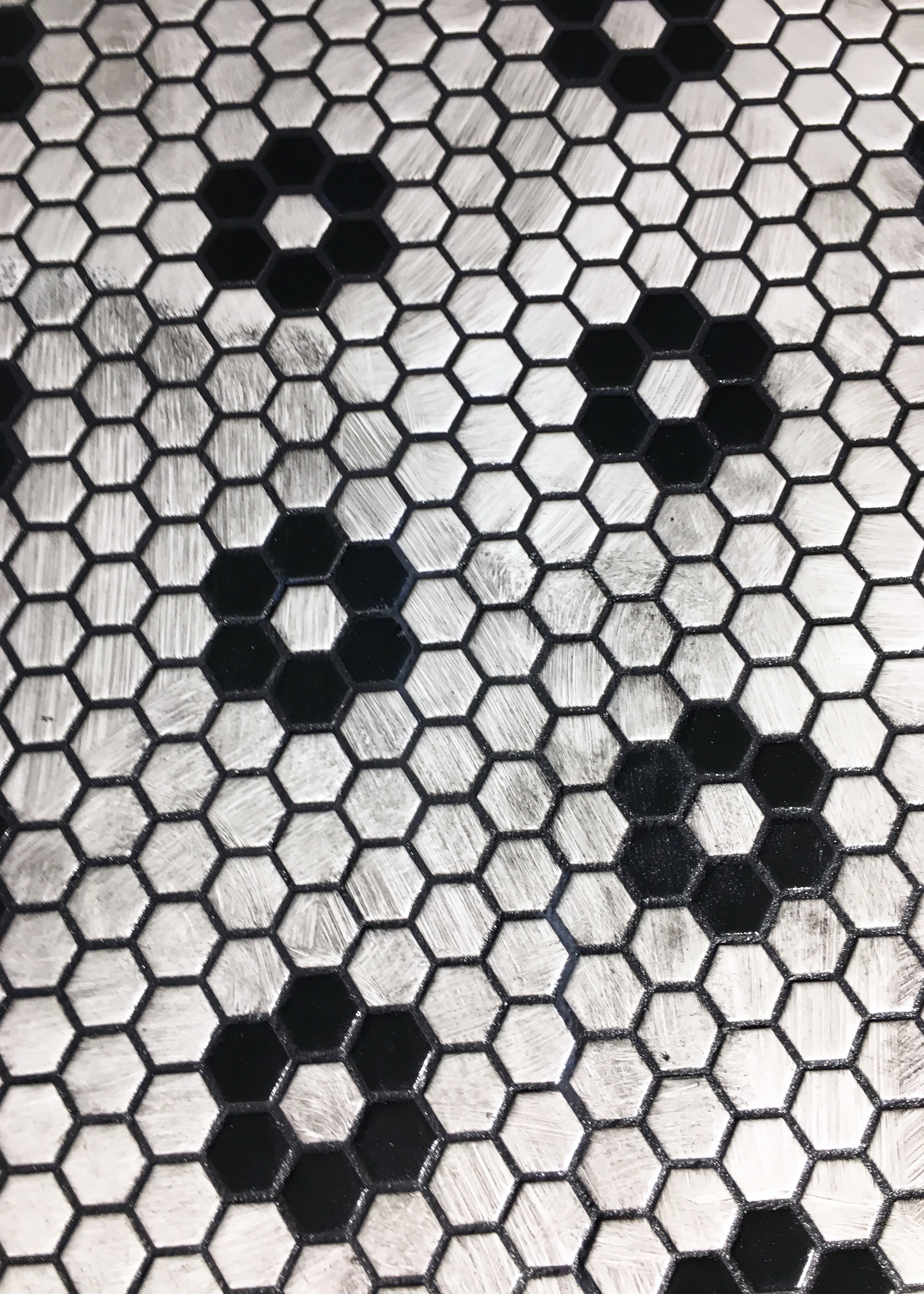
After the first wipe down, it looked better, but it definitely needed another go round. By getting the majority in the first pass with a slightly more than damp sponge, I found a damp sponge could get nearly all the rest of the grout haze on the second pass.

Berrybrier | Grout Cleaning

That second pass got 95% of the grout haze and all of a sudden the floors looked DONE! It was momentous for sure! I’d not had a proper bathroom in a long while at this time and no bathroom meant I couldn’t actually stay at the house since there was no where to shower! Sure there was still some grout haze on the tile, but I would get that after the grout and tile set fully. It was really looking close to done in here. Walls, tile, who needs paint and toilets anyways?

Berrybrier | Freshly Grouted Tile

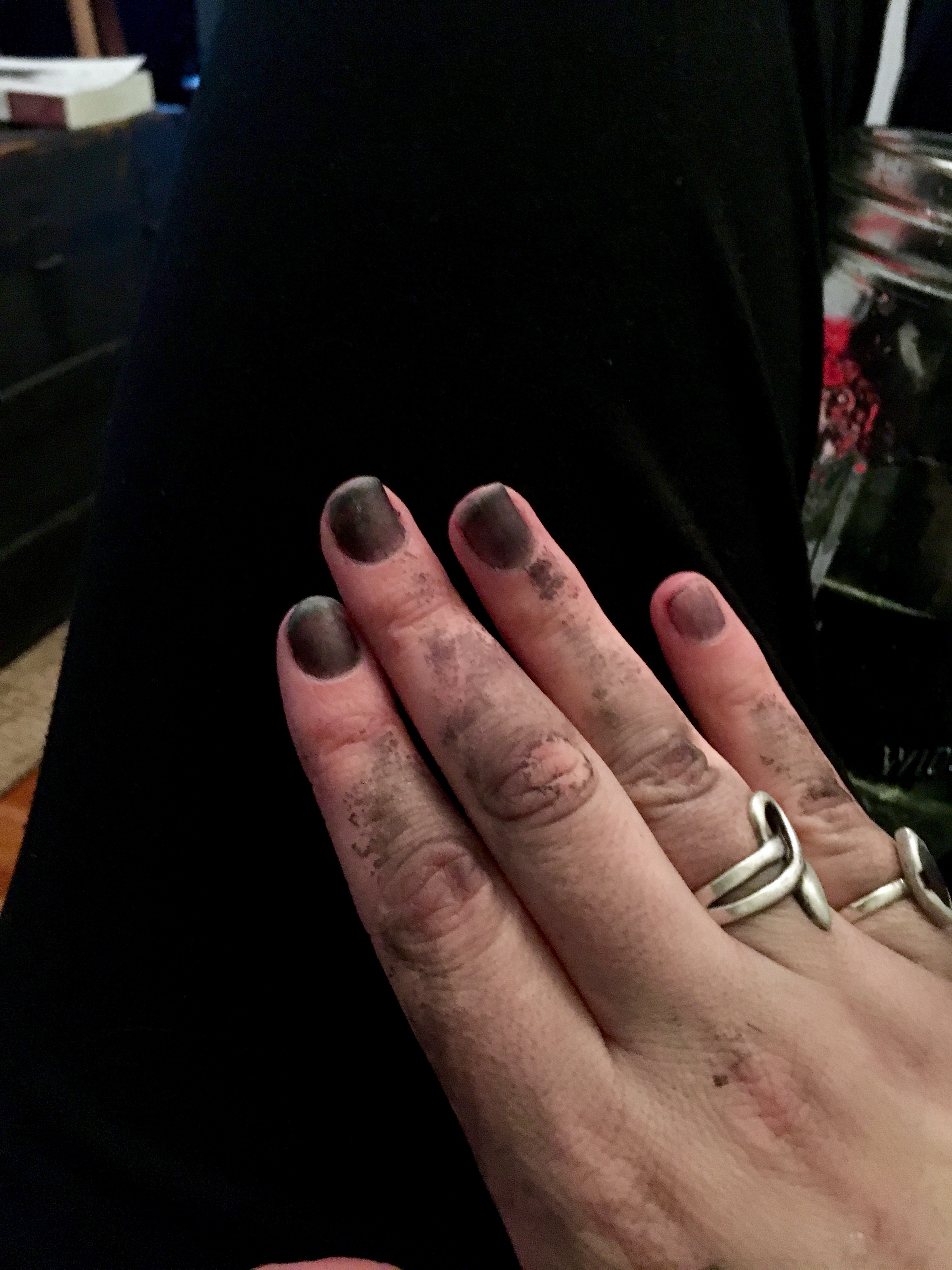
There was one casualty of the grouting though: my hand. If you’re using dark grout, wear gloves! The grout stained my hand and finger nails and no amount of soap and water could get it off. After a week though it slowly faded away… thankfully!

Berrybrier | Grout Hands

This felt like a small price to pay for floors that made me want to drool with happiness! I adored the high contrast look and classic feel. The dark grout was practical, but also seemed more contemporary. Overall, this project was a 2 night success! 5 out of 5 stars, would recommend. Significantly easier and less annoying than drywalling. And arguably, way more fun to pet! Because petting tile is a thing right?

Berrybrier | 1

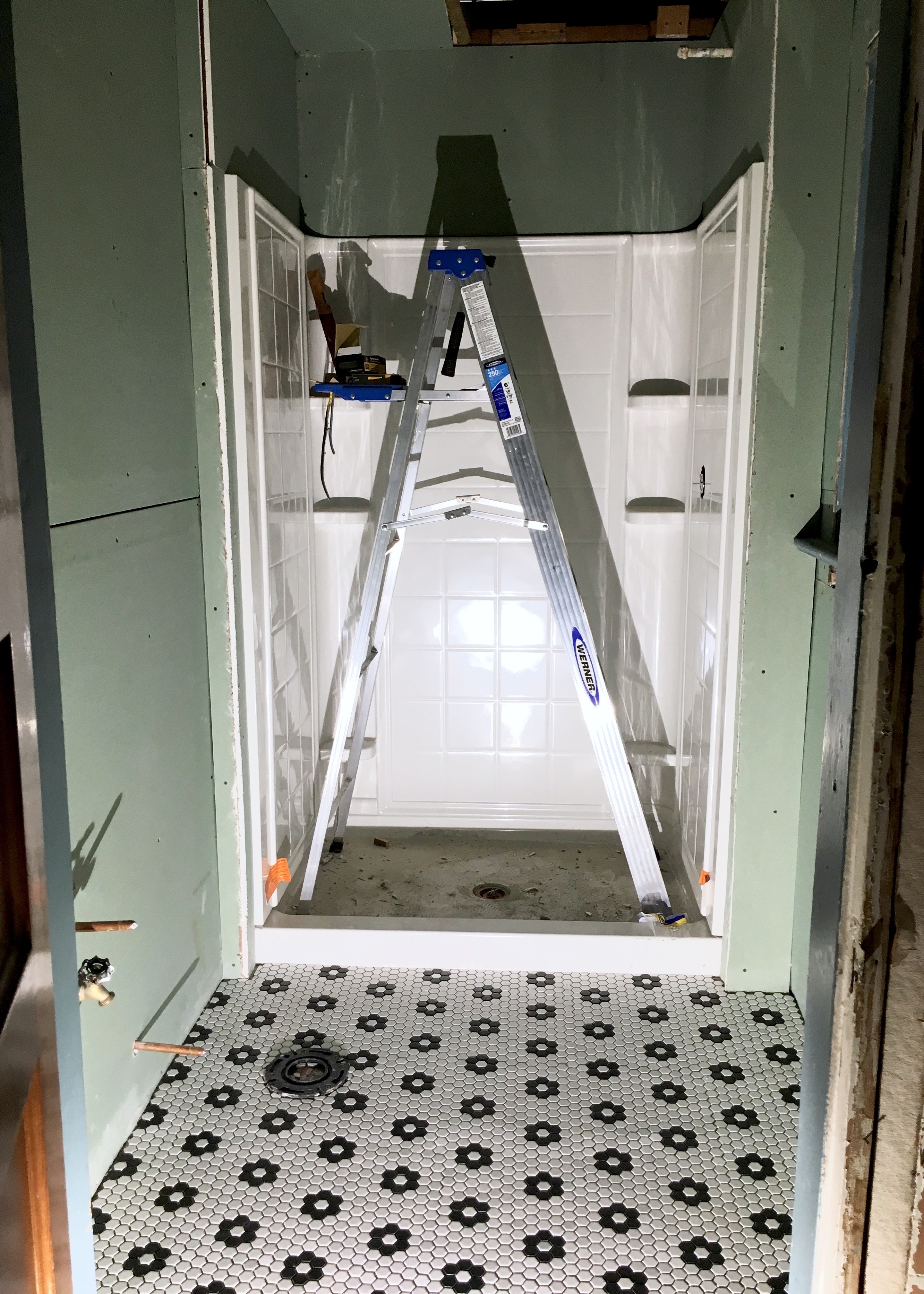
The high contrast floors feel so clean and classic don’t they? I just love black and white floors. Gwen’s kitchen floors makes me drool with envy. Black and white can go modern or traditional. Here I think it walks a nice middle line, just like me. This floor also reminds me of my Oma who had black and white hex floors in her Jack and Jill bathroom at her house in Berkeley. Hers was white with black dots only, forcing you to make the flowers with your brain. Something I have many memories of staring at that floor and doing! It’s funny how little things like this can remind you of someone. 20 years later, I’m still staring at hex floors. And loving it!

Berrybrier | White and Black Hex Flower Tile Floors.jpg

Have you ever tiled anything before? Did you think it was a difficult or easier DIY project? I really enjoyed it and can’t wait to tile more things soon! If you’re getting ready to tile, better check that thermostat though. Can’t have another one going rogue!

Installing Drywall in the Bathroom

Installing Drywall in the Bathroom

To properly read this post, go mix yourself a cocktail and drink every time you read the word “screw.” Also you should probably smirk every time you read the word too, since, you know, we have the sense of humor of 12 year old boys over here. Got your drink handy? Okay, let’s get into this.

Once the insulation was in I started trying to find a good friend to help me install the drywall in the bathroom. I knew there was absolutely no way whatsoever I could do the full install alone.  Lucky me, eventually a friend casually mentioned he worked a summer installing drywall in college. Bingo! He had no idea what he’d just gotten into with that comment. I immediately started talking about my upcoming project and dropping hints. With the floors now covered in HardieBacker It was time to whip the walls in shape. I just had to wait for the plumbing inspection to finish so I could drain the drywall pan!
Land of Laurel | Taped Hardiebacker

Luckily, I soon passed inspection and after dropping too many hints, went ahead and asked my friend Janik to come help me drywall. Before that could happen I was faced with the dilemma of how to actually get the drywall… because 4’x8′ sheets weren’t going to fit into my VW Tiguan! As usual, I was discussed this issue with my neighbor Erik. And because he is an angel child, the man volunteered to meet me at Home Depot with his truck the next Saturday to buy drywall. He had to go anyways to pick up a few things. At this point we were each going to Home Depot 3-4 times per week and we were picking up things for each other on 1/4 of those visits. You guys, my inbox of electronic receipts from Home Depot is over 200 messages. In just over 1 year!

Anyways, I drove to Home Depot that Saturday and looked at drywall stuff. Erik met me there and convinced me to buy a bunch of drywalling stuff and then told me the drywall was cheaper at Lowe’s. We got into our respective vehicles and drove 10 minutes to Lowe’s. But when we were there, they only had normal 1/2″ mold resistant green drywall board. HomeDepot carried the ultra-light version of the same product. So back in our cars we went and back at Home Depot I purchased the sheets and tools which we then slid into the back of Erik’s truck. At my house, Erik helped unload the sheets of drywall into my kitchen storage room where I was staging everything for the bathroom remodel. I was glad we went back for the ultra-light drywall at that point considering how dang heavy the ultralight version was!

Janik was coming over the next weekend, so I was able to fully assess my supplies and read up on the tutorials on hanging and mudding drywall on younghouselove.com. I gathered everything I had purchased and double checked I had everything I needed a couple of times.

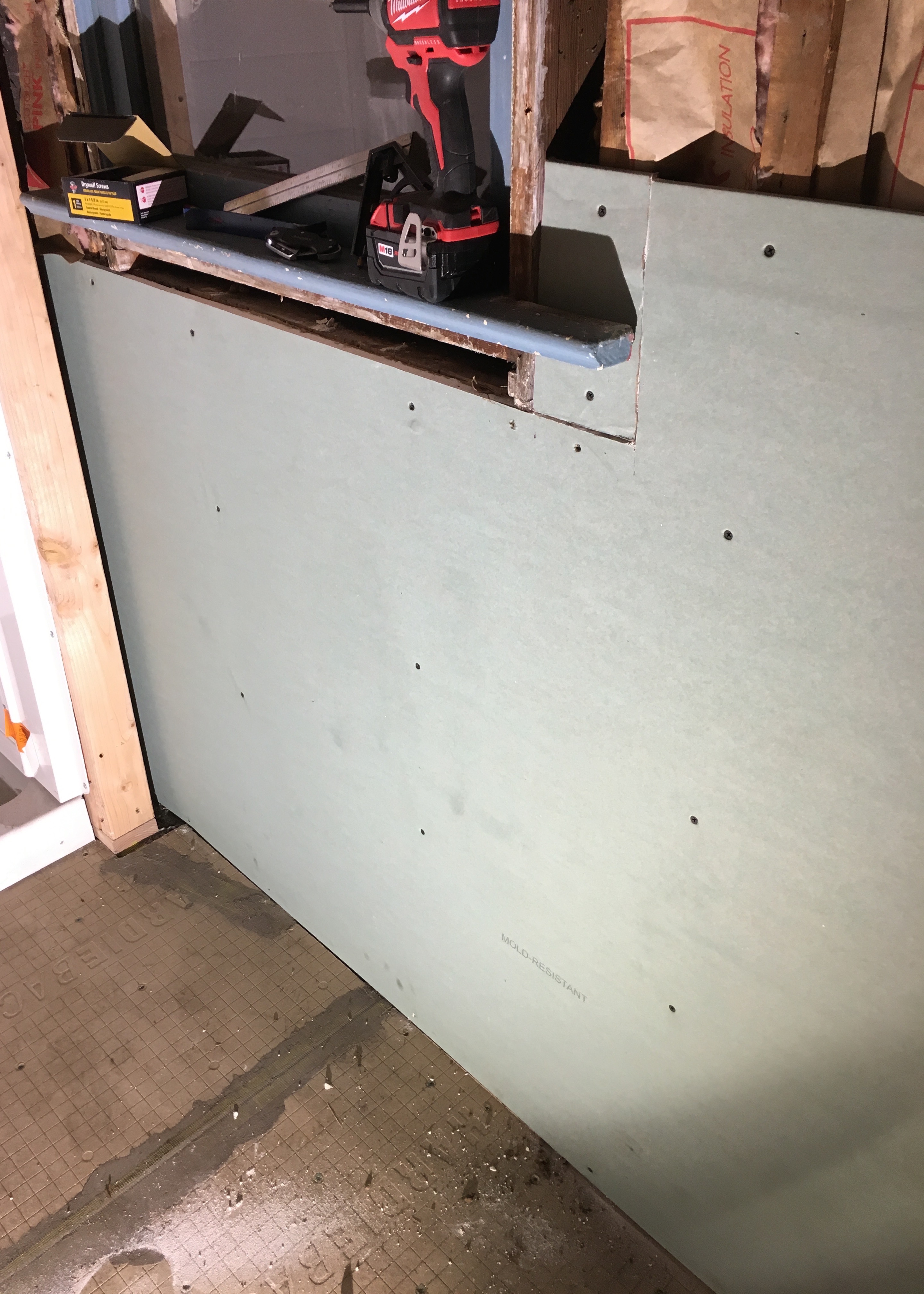
I started with the easiest piece of drywall on my own: the lower part of the exterior wall, just to see how quickly this could go. After I measured the wall a couple times, I scored the paper outside of the drywall with my boxcutter and snapped it neatly along that line. I cut a second piece to fit around the window frame and then shoved the whole thing against the wall and screwed in drywall screws every 16″ with my handy new impact driver.  The whole piece took 20 minutes tops, so I figured the whole room would go very quickly. Ha!
Berrybrier | Drywall First Piece

Now they make special drill bits for hanging drywall that prevent you from screwing through the paper and I eventually tried them, but I didn’t care for them as they prevented me from seeing and feeling the screw go in. It’s important to sink the screws just enough to recess their heads, but not enough to break through the paper. Here’s an example of a perfectly sunken screw.
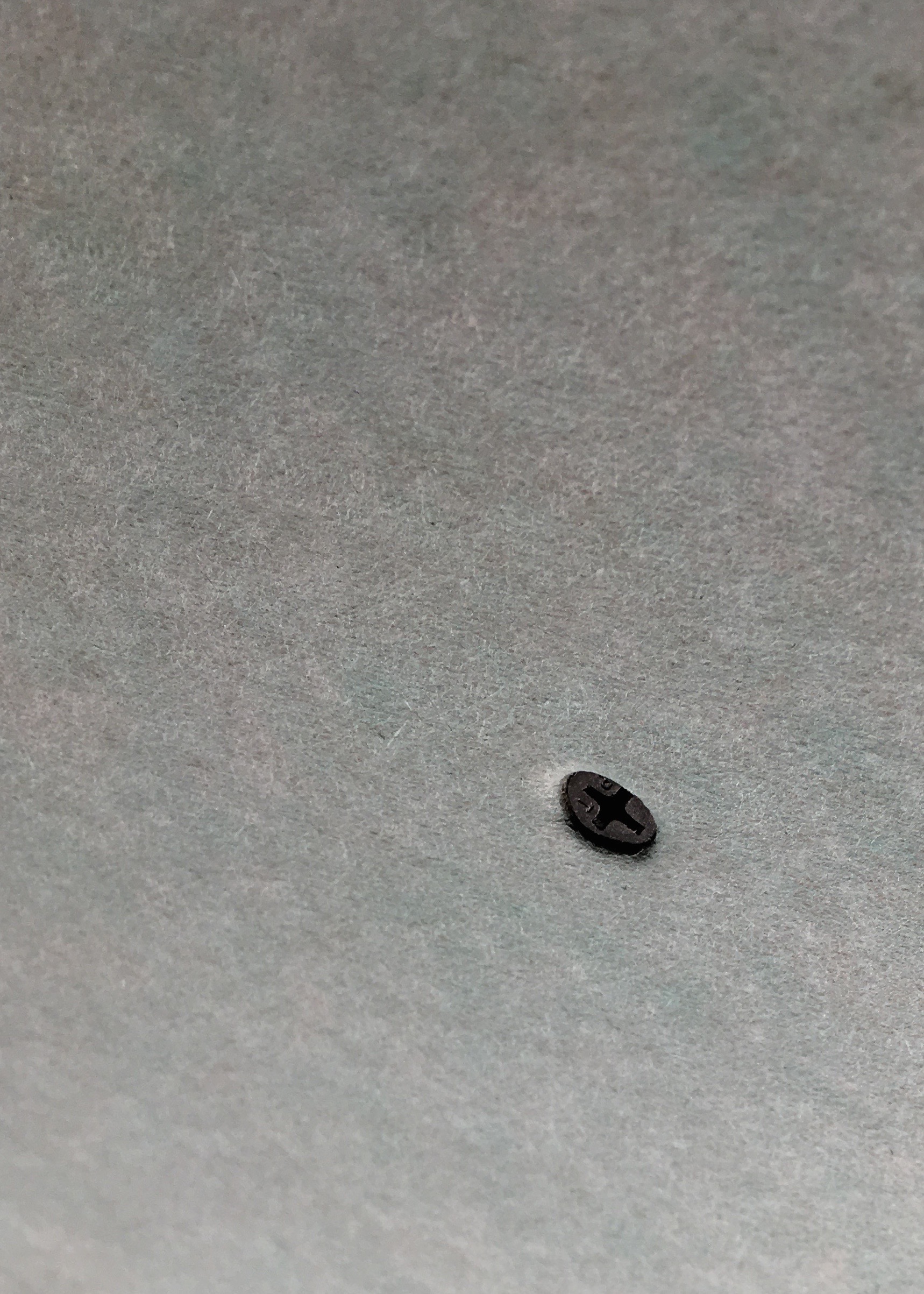
Berrybrier | Drywall Proper Screw

Because the strength of drywall really comes from the paper, it’s super easy to cut (much easier than the hardiebacker!) and once the paper is cut the rest snaps very easily. This means screwing in the boards is a bit sensitive, since if you break through the paper, your screw is no longer holding on to anything at all. Here’s where my screw went in a little too far, you can see the rough edges. It’s a delicate balance of trying to get the screw to sink juuuust right. But once you get the hang of it, screwing into the drywall is pretty easy and if you mess up, you just sink another screw near the first. No big deal.
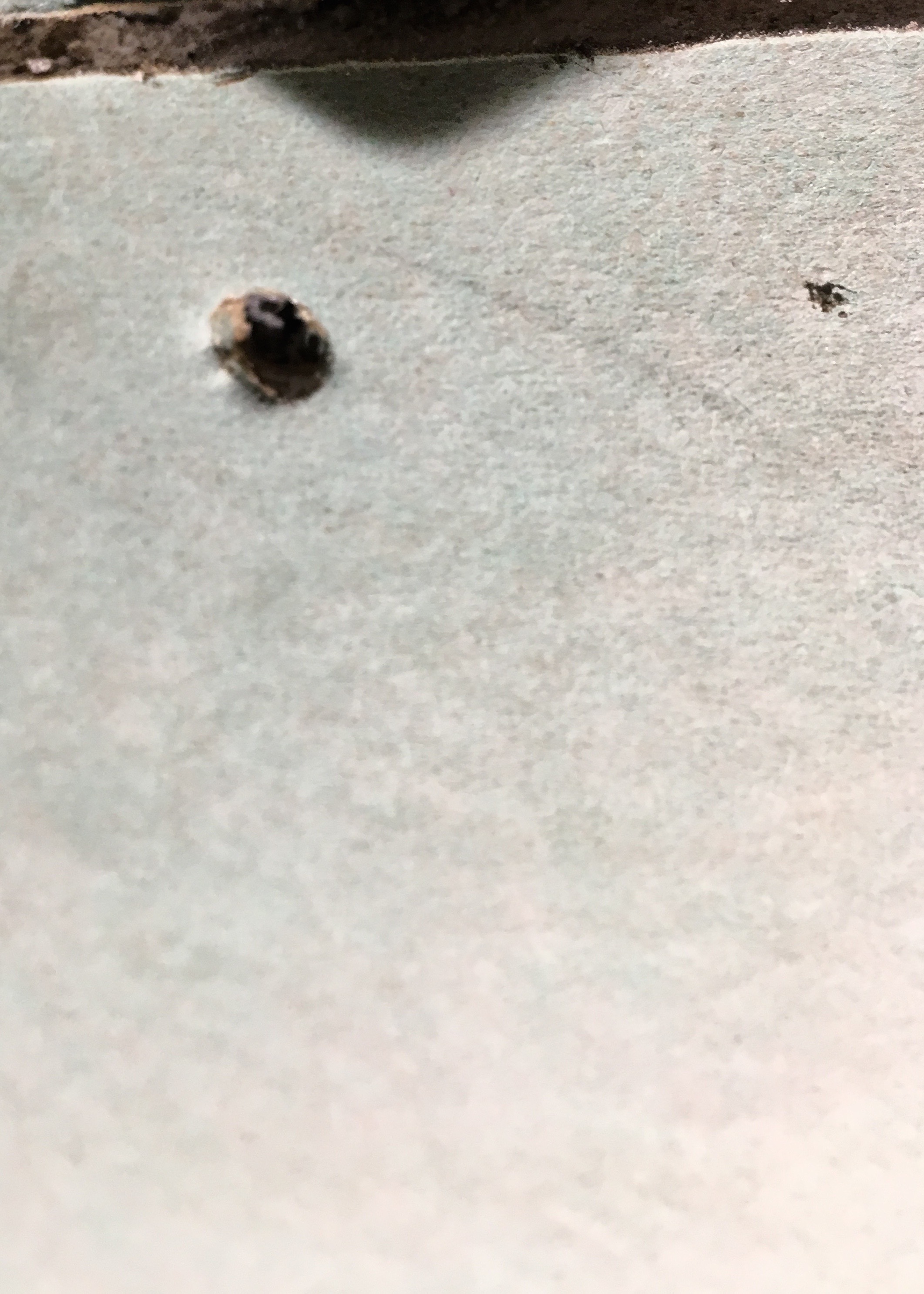
Berrybrier | Bad Screw

Later that week Janik arrived at my house ready to help hang the rest of the drywall. We got right to work templating the places to cut holes into the drywall sheets on the opposite side of the room. I took some primer that was nearby and dabbed it all over the edge of the sconce electrical box edge. Then we simply cut our sheet to the correct length and pressed it against the wall and electrical box. The primer left a nice circle on the sheet and I cut that out with a jagged edge drywall knife and gave the sheet a tight fit around the box.
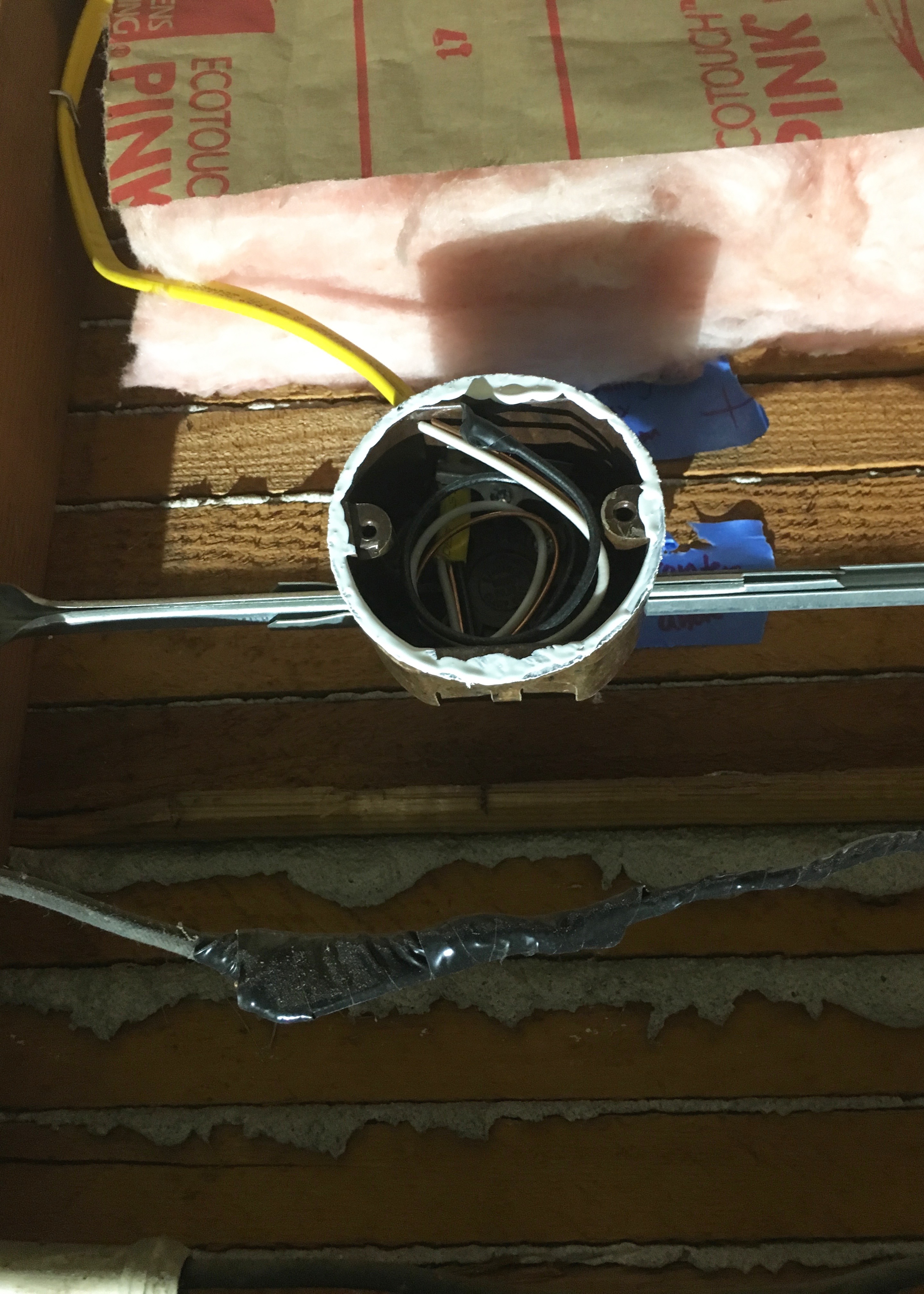
Berrybrier | Templateing Holes

Piece after piece the walls came together and the bathroom became room-like again! It worked well to have two people on this job as one person could hold the sheets and the other person could screw. That sounds dirty, but you know what I mean! We made a good team since Janik is much more of a precision type person and I am a “well, it’s good enough” kinda person so the drywall job ended up right in the happy middle of those two as we worked efficiently around the room. I was particularly grateful for a second person when we started the ceiling since our arms were both screaming waiting for the other person to finish screwing in the sheets above our heads.
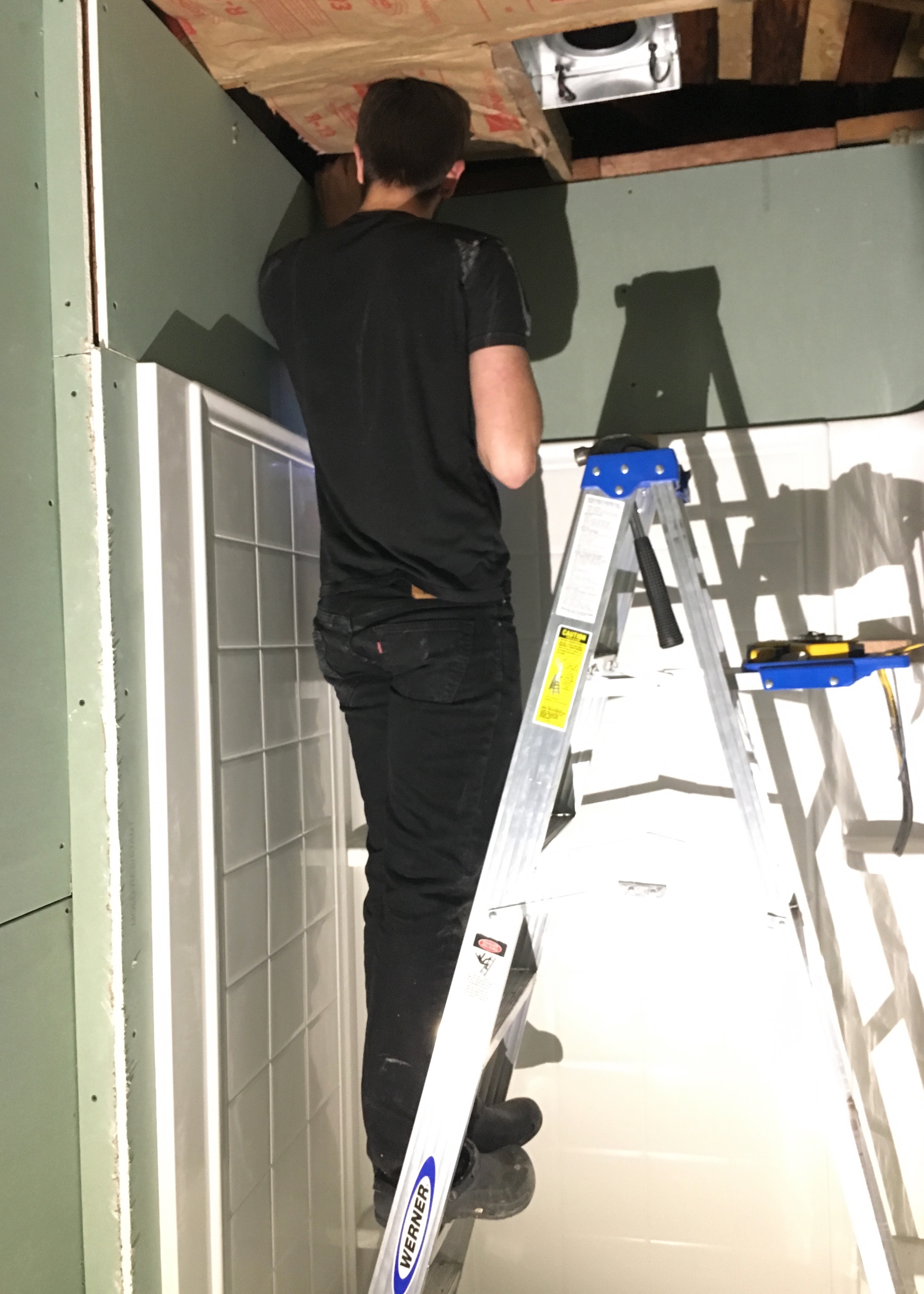
Berrybrier | Drywall Second Person

I had Janik wear an extra pair of crocs that were lying around Berrybrier since crocs are the shoe of choice for this renovation. I’m sure he appreciates this being memorialized on the internet.

The ceiling was absolutely the hardest part since this is an old house and nothing is perfectly square. Holding a sheet of drywall up above your head while another person tries to figure out what needs to be cut an an angle in order to make it all fit is exhausting and really a great arm work out. But I hate arm work outs, so I was all for cutting a bit deeper and mudding a bit more.
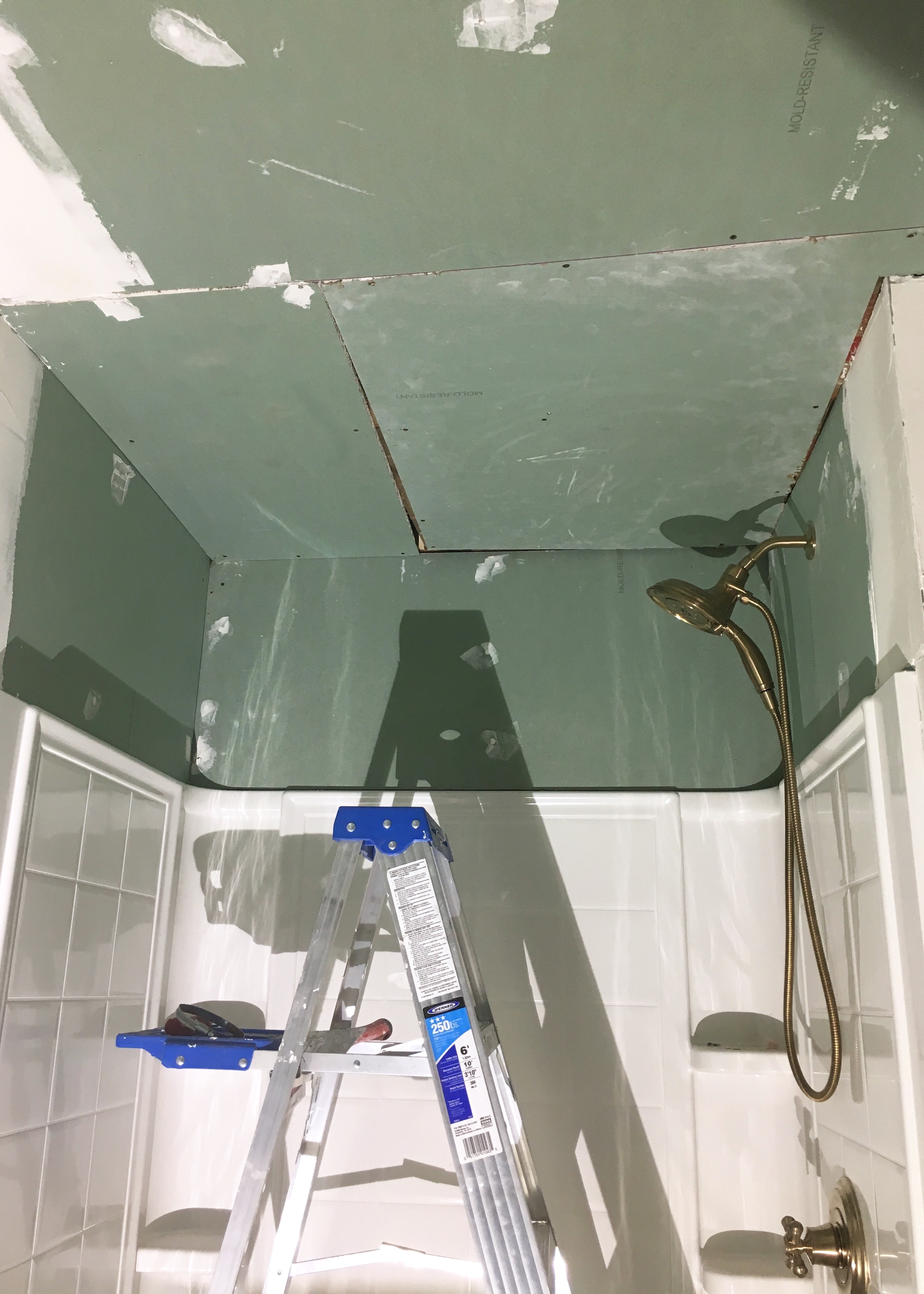
Berrybrier | Ceiling Mud

We diligently worked around the room and ceiling cutting out for the plumbing pipes and medicine cabinet with the same technique we’d perfected with the electrical box, though we some how messed up on at least one plumbing pipe hole and made an extra hole. Otherwise, we just cracked joke after joke about screws and time passed pretty quickly. All of a sudden it was 2am, 8 hours after we started and we finished screwing in the final piece of drywall in the ceiling and paused to get water in the kitchen. As soon as we stopped my body rebelled and I was ready to collapse with exhaustion. But the bathroom had walls again!!!
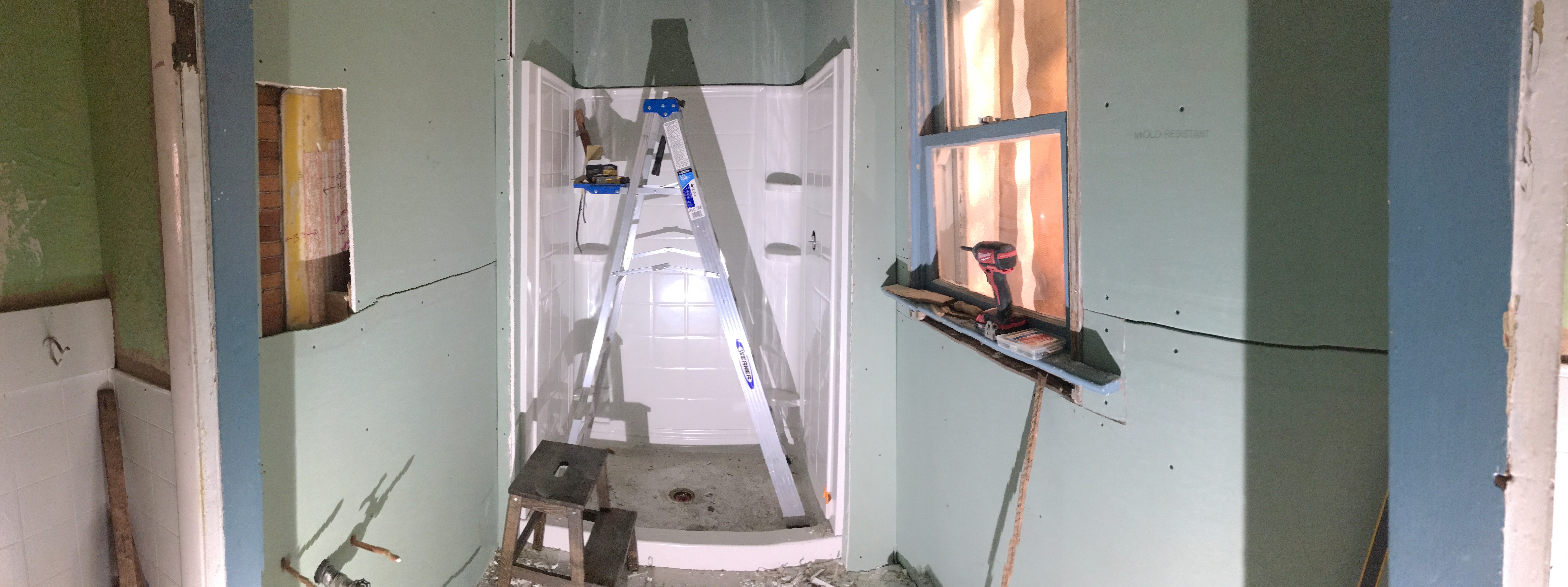
Berrybrier | Drywalled Bathroom

I took a few days to let my arms recover from the first real arm workout I’d done in 5 years. But there’s no real rest for the weary round here. It was time for some mudding, the hard and dirty part of drywalling. I was not looking forward to it. But I psyched myself up with chai lattes and the promise of actually being able to shower. That tends to work for me!

First I taped down rosin paper to protect the floors from stray drywall compound. Then, I started out by filling every single one of the ten billion screw holes with a bit of drywall compound, before moving on to the more challenging parts. I continued with the next baby step: the seams along the middle of the walls. I spread a thin layer of joint compound in the seam with my 6″ knifeand laid the paper tape on top, then gently pressed it into the seam with a tad bit more mud. I spread slightly more mud over the tape working with the 8″ knife. After this first coat those seams looked pretty rough, as expected.
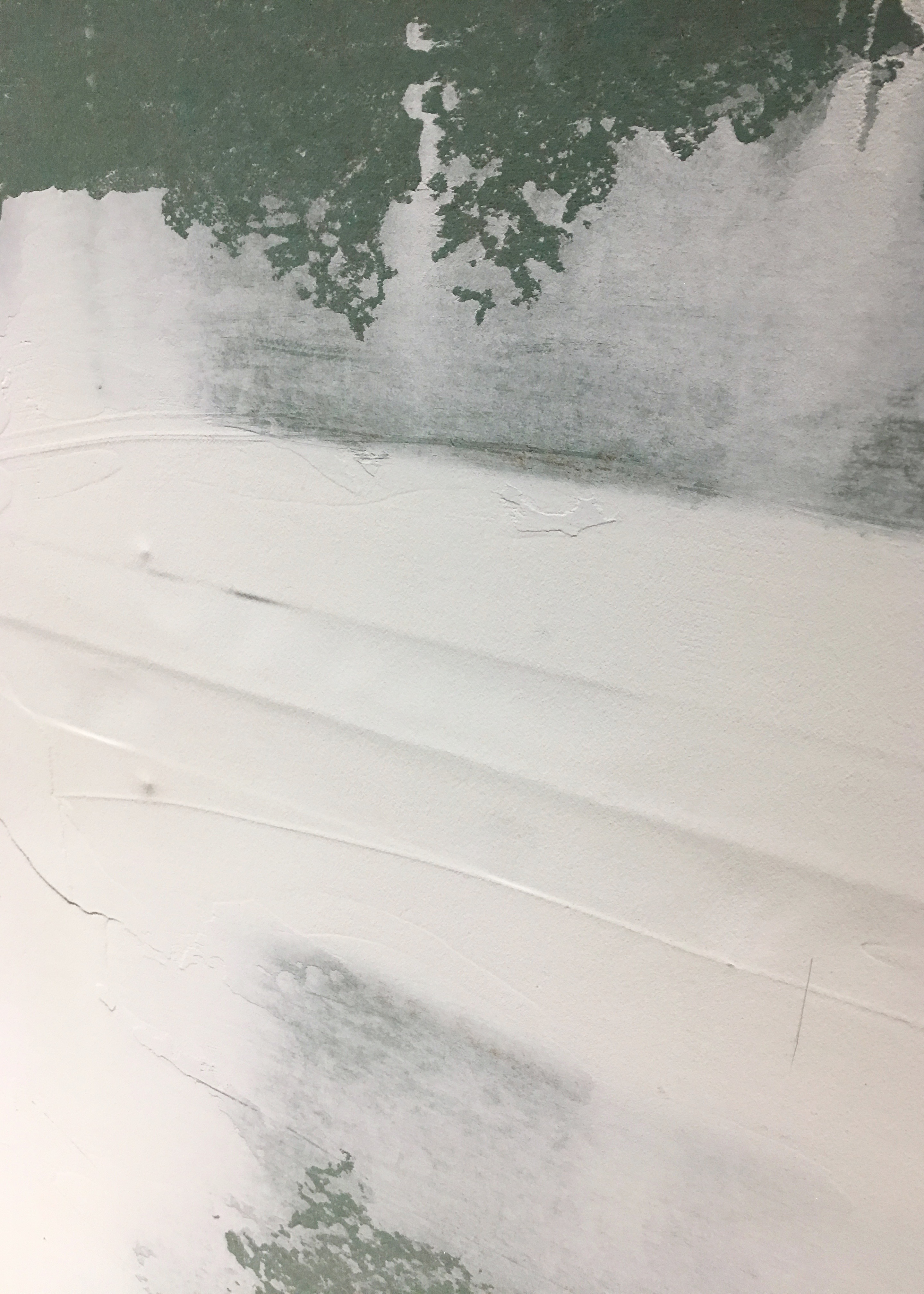
Berrybrier | First Coat of Mud

I moved from there to the outside corners framing the shower surround. I cut the outside corner metal strips to length and screwed them into the drywall, working from the top down. You can get rounded corner or 90° angle metal strips, I chose the former since they were better suited for this style house.
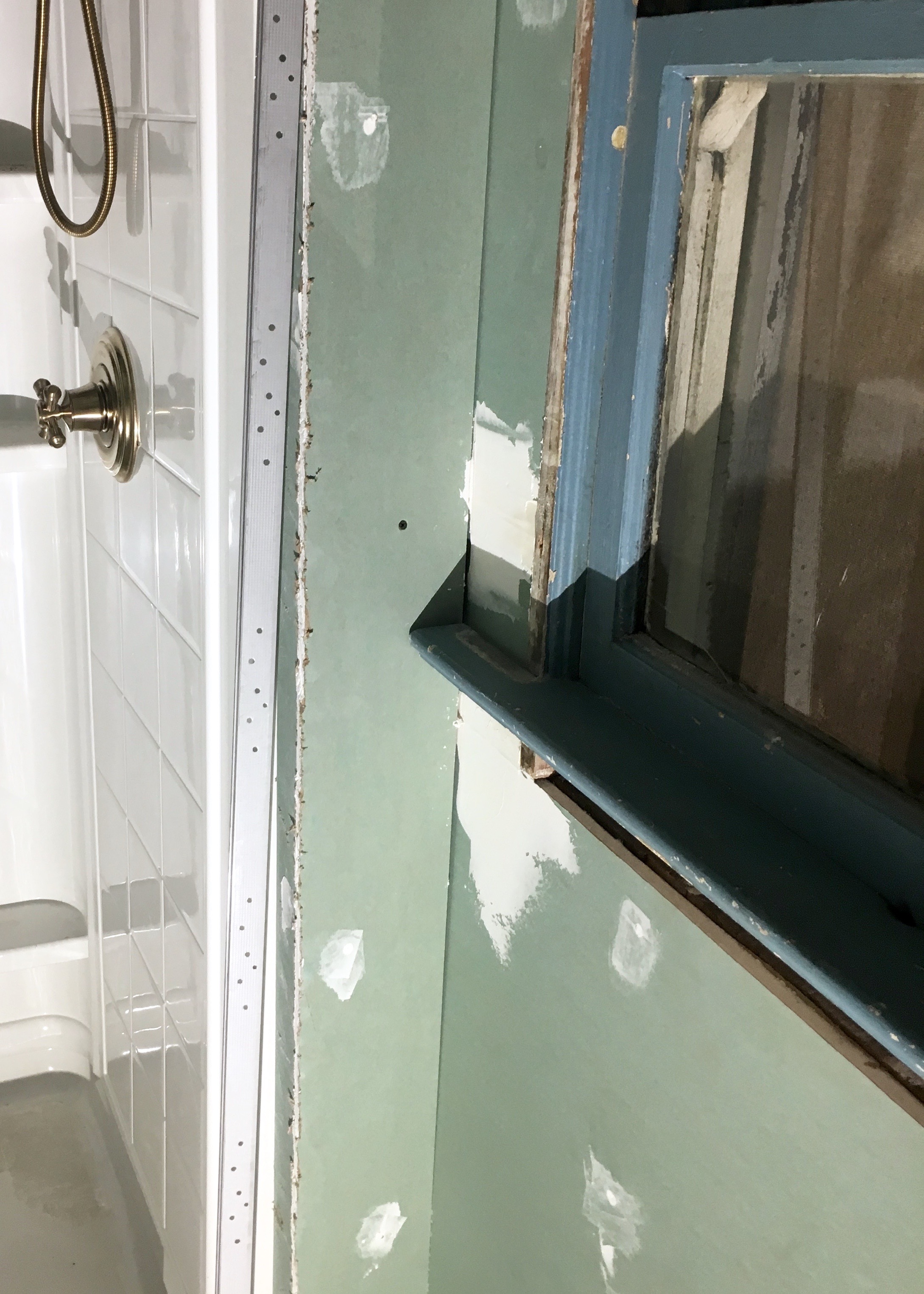
Berrybrier | Outside Drywall Corners

Once it was screwed on, I globbed on a whole bunch of the drywall compound with my 6″ knife. It was a challenge to smooth the mud on one side of the tape without shoving the excess mud onto the other side of the corner. I did my best and moved on to the inside corner seams around the room, folding my paper tape into a 90″ angle and working it into the seam as I had on the flat seams.Berrybrier | Outside Corner Mud Coat 1
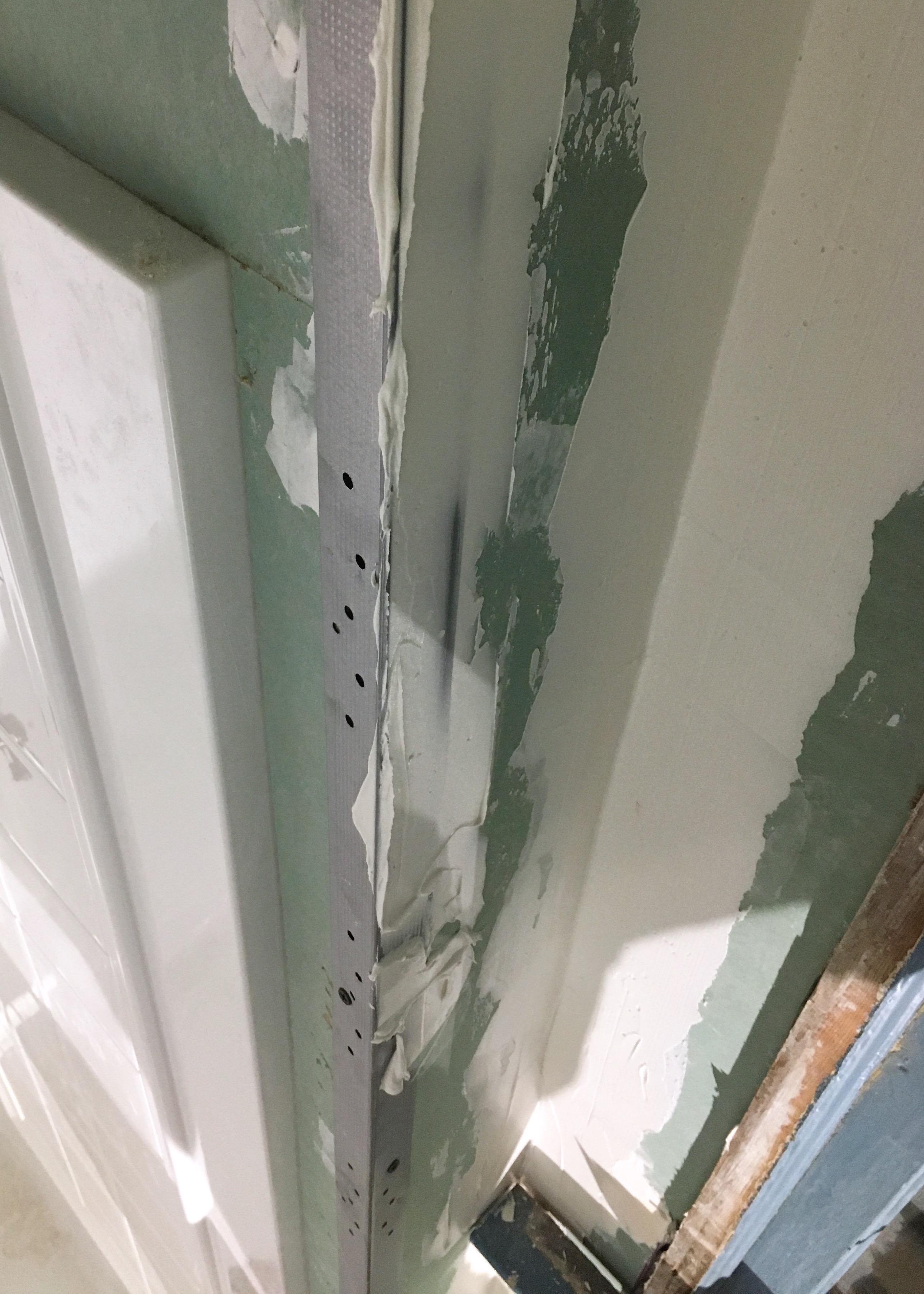
I used SO MUCH mud for the first coat. I worried I’d run out of my 4 gallon bucket of joint compound before finishing this small room. It was later November at this point and it was cold! I still had not turned on the heater in the house and was sleeping at my cousin Kristen’s after working on my house all evening, every evening. Because the house was so cold, the thick first layer of mud took several days to dry and cracked a bit in the inside corners. Since it was the first coat, it wasn’t a big deal that it had cracked, but I knew I needed to get that furnace tuned up and running asap!

I had the HVAC guys come out the day after Thanksgiving to fill up my tank with oil and give the 1920s furnace a good tune-up. Once that was cranking, the house stayed a tad bit warmer and the drywall compound dried a bit more quickly on the next coats.

I knocked off the higher bits and lines with a 6″ knife before starting the second coat of drywall mud and then used my corner, 8″, 10″ and 12″ knives to spread out the mud from the corners and seams as thin as I could. After that dried for a couple days I did my third coat, creating a heavy layer of mud, that was probably more than is recommended, but worked out just fine. Here’s that same outside corner by the shower surround after the second coat of mud. The last coat went on the smoothest and I thinned the mud slightly with some water in a second bucket to allow for a thinner coat.
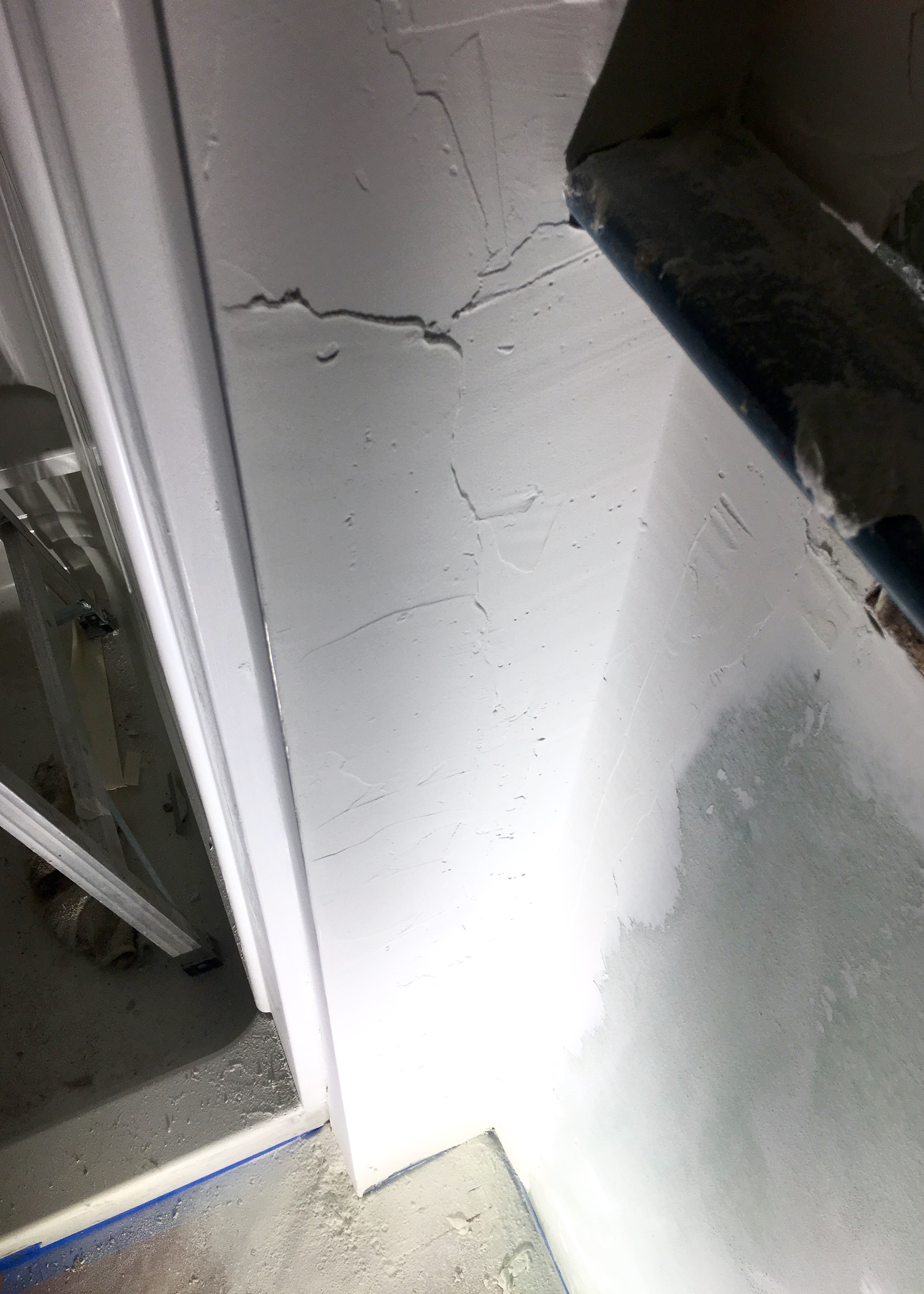
Berrybrier | Outside Corner Mud Coat 3

Then it was time for sanding. SO MUCH SANDING. I sanded this room for weeks, ya’ll. I was sanding still in mid-December. Sanding and sanding and sanding. I used the sanding blocks and then borrowed a sanding screen from Erik which worked more quickly, but left more of a linear pattern than the sanding blocks. Drywall dust was in my pores and my skin was dry dry dry, but the room was looking more and more room-like and this corner was looking ready for primer.
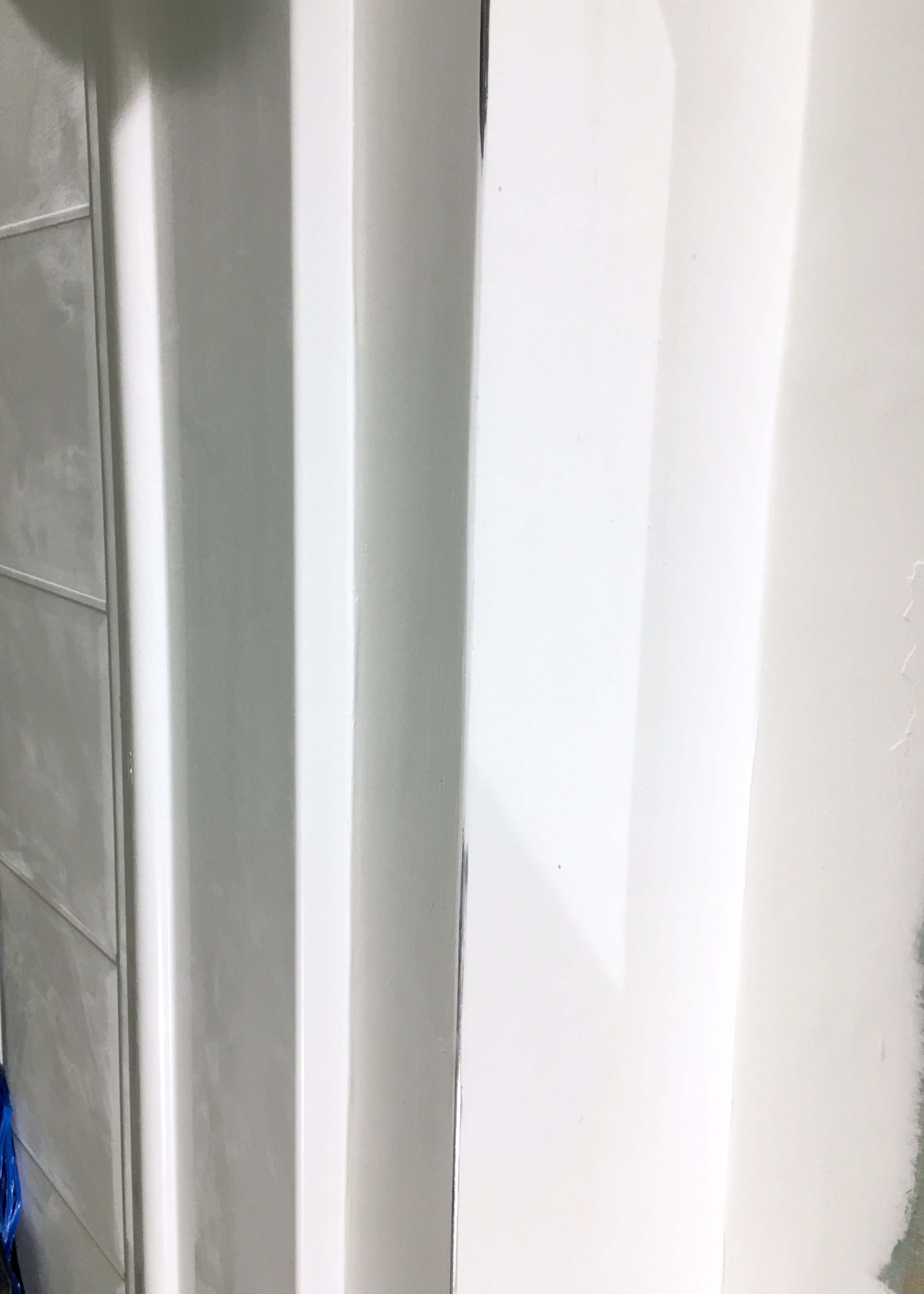
Berrybrier | Sanded Outside Corner

The walls got really smooth and the edges of the outside corners felt really good too. The ceiling was much more difficult and I honestly, just decided after a couple hours of sanding, it was plenty good enough, because I wasn’t sanding above my head any longer. See comment above about my “eh, it’s good enough” attitude.
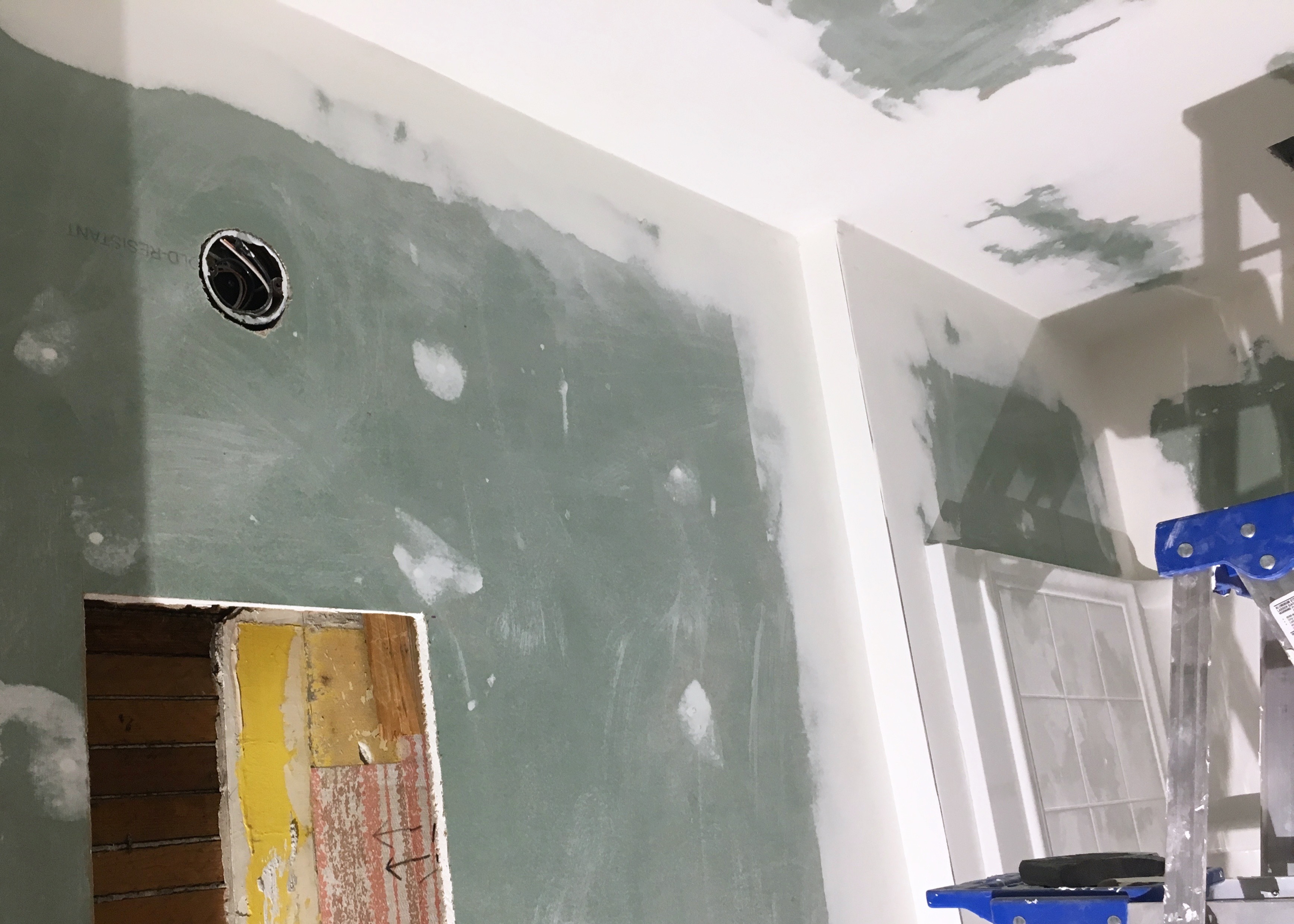
Berrybrier | Sanding Corners

Eventually, after I don’t even know how many hours of sanding, the bathroom was smooth as a baby’s bottom and ready for primer and paint! At last! My showerhead had been installed and as soon as the room was primed, I could shower again. Boy was I looking forward to living in my own house again. My 10:30pm 15minute sprints back to my cousin’s to shower and sleep were getting old quickly. I needed to be staying at Berrybrier full time to get through the push! But here we were with a bathroom with ACTUAL WALLS AGAIN!
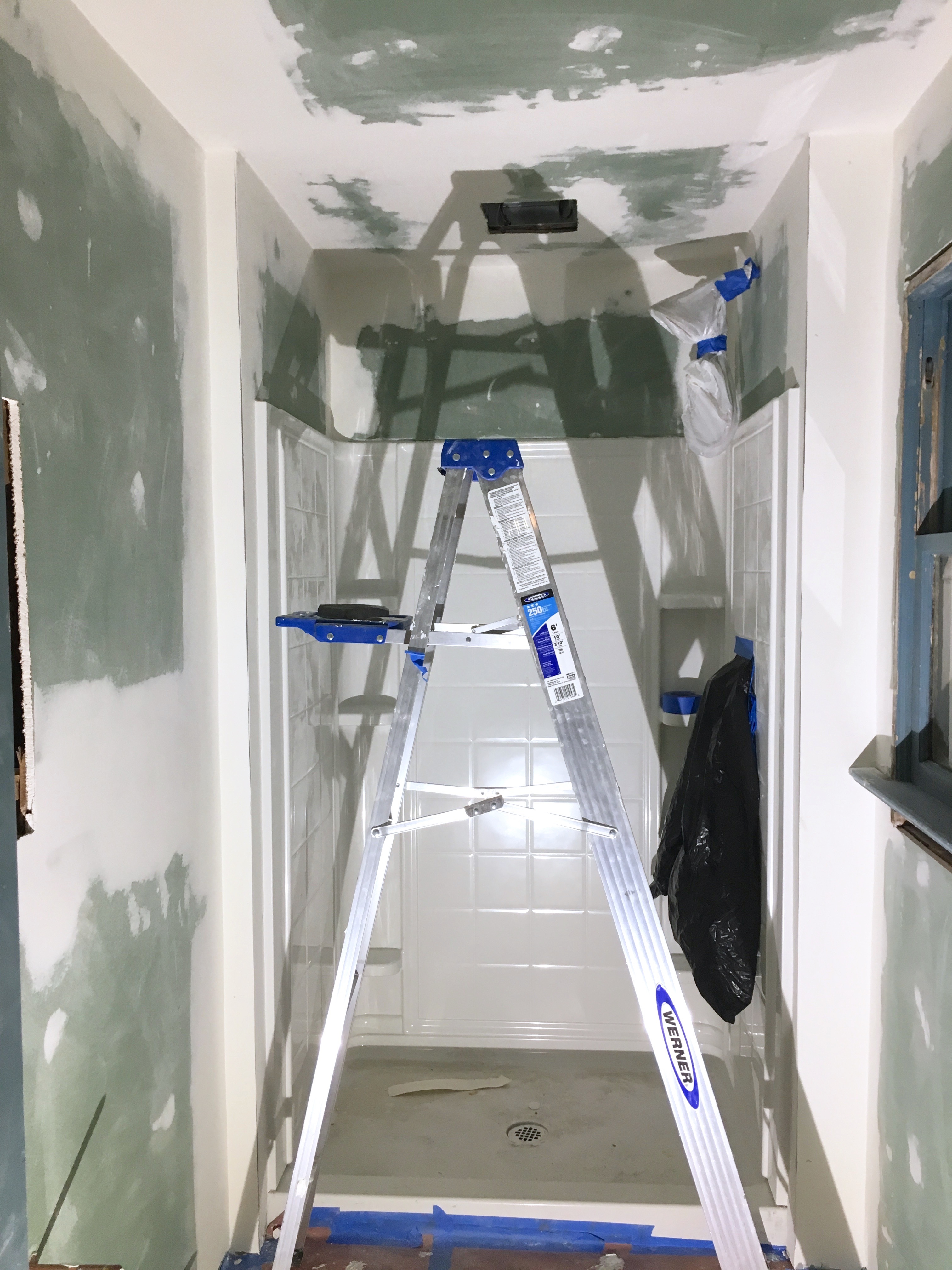
Berrybrier | Sanded Bathroom Drywall Mud

Already this room was looking one million times better than where it had started and even with the drywall dust, I was happier to walk in here now than before! Now the room was taking shape and the new layout was feeling real for the first time. Boy did it look more comfortable than sneaking around the sink and gross tub to get to the toilet!
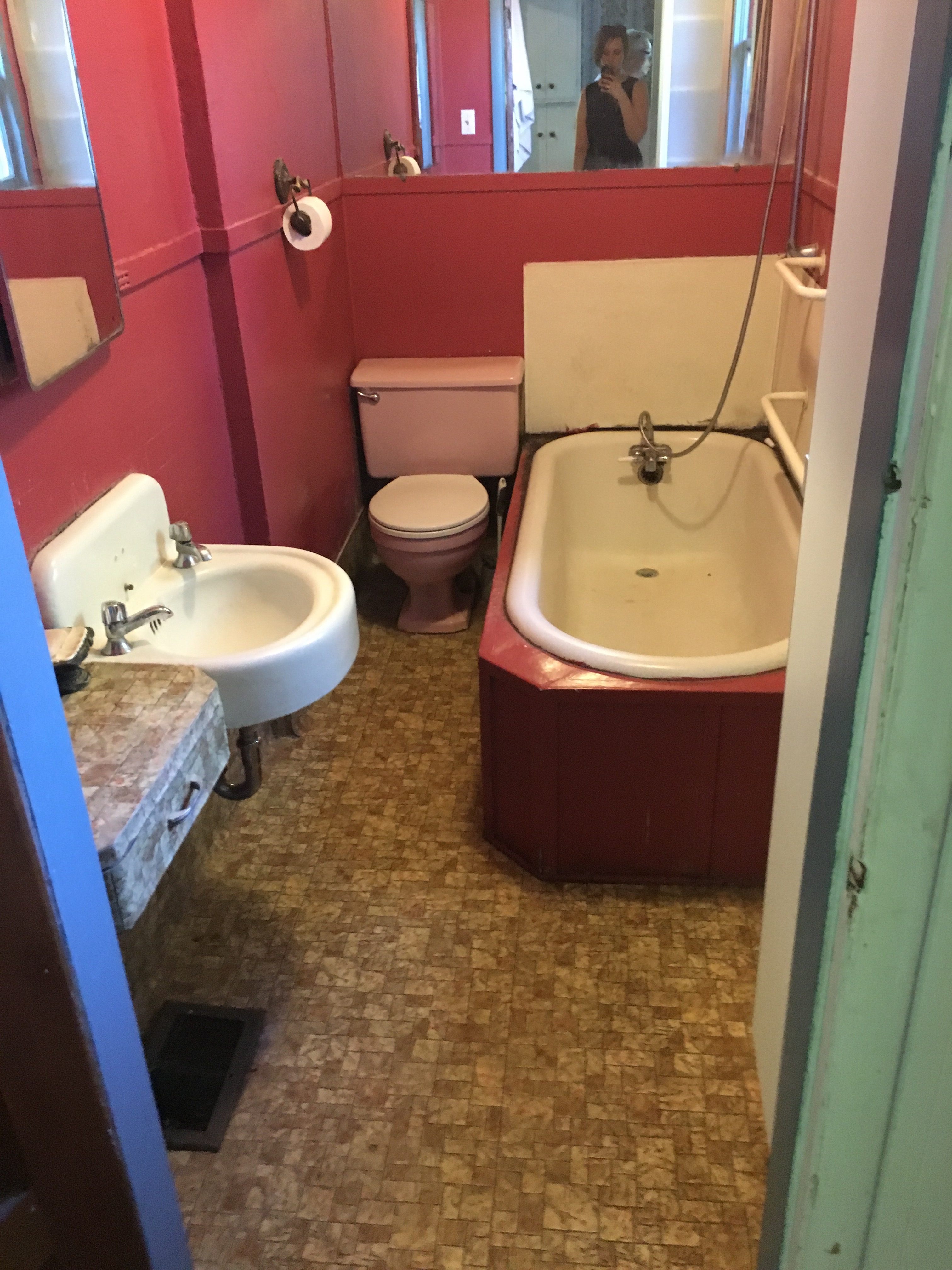
img_9039

Great progress had been made and I was so freaking excited for the next steps: paint and tile! Have you ever drywalled a space before? Was the ceiling the worst part for you too? Did you think you were going to be sanding forever? Would you ever do it again? Commiserate with me in the comments!
Tiling Prep and Relocating a Heater Vent

Tiling Prep and Relocating a Heater Vent

Gotta keep chugging through this bathroom renovation to get to the pretty afters ya’ll! It’s a big change! But before I can show you that fun stuff, let’s go through the nitty gritty of the renovation. This is a real life blog. Let’s look at the ugly.

Before I could go much further in my bathroom, I needed to get a few things done. Post-insulation, my next step really should have been to drywall, but that was going to take more than just one set of hands, so I turned to the next item on my to-do list: prepping for tile! The original disgusting and uncleanable sheet vinyl floor was doing no one any favors. It wasn’t as bad as the kitchen (which was somehow disintegrating), but boy was it gross.

img_9039

Here’s a close up picture from demo so you can appreciate it EVEN MORE! IMG_0154

It was gross and it wasn’t staying. I had debated one hundred different mini-hex tile patterns before setting on a much more simple option from Home Depot. This shot of the overall bathroom palette really showcases the tile too. That high contrast has me all kinds of giddy!

img_0129

Before tile, comes prep though. It was time to conquer those vinyl floors! For that I headed out for more supplies. I picked up the following at Home Depot one evening.
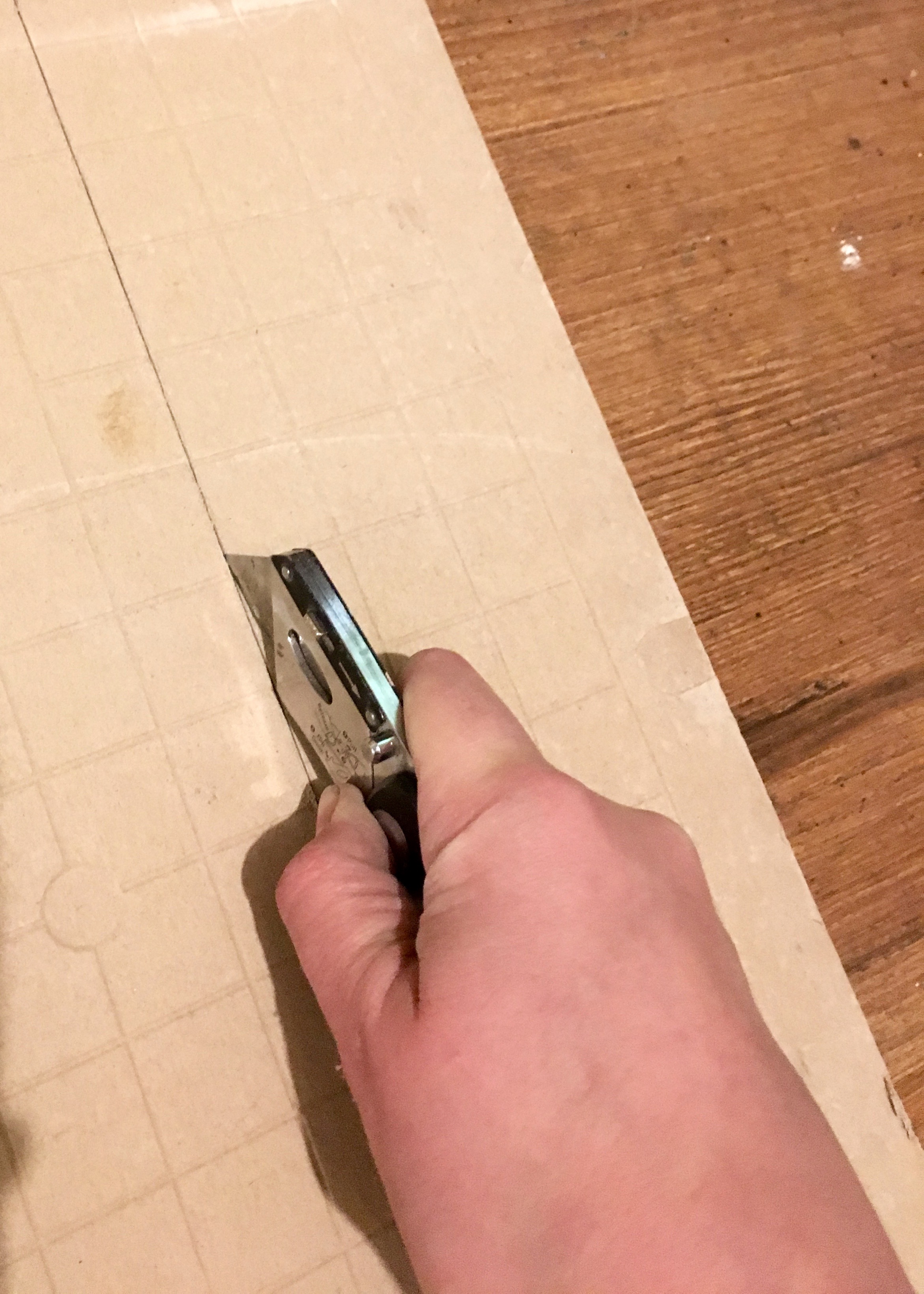
First I cleaned out the bathroom of tools and random junk and swept the entire space to start with a clean slate! I measured my concrete board and cut of the excess length using a box knife again. If I could go back I would have used a circular saw and speeded things up, but at the time I didn’t own one. By going over the cut a few times with a box knife I was able to create a weak point which allowed me to then snap that section off.
Land of Laurel | Cutting HardieBacker

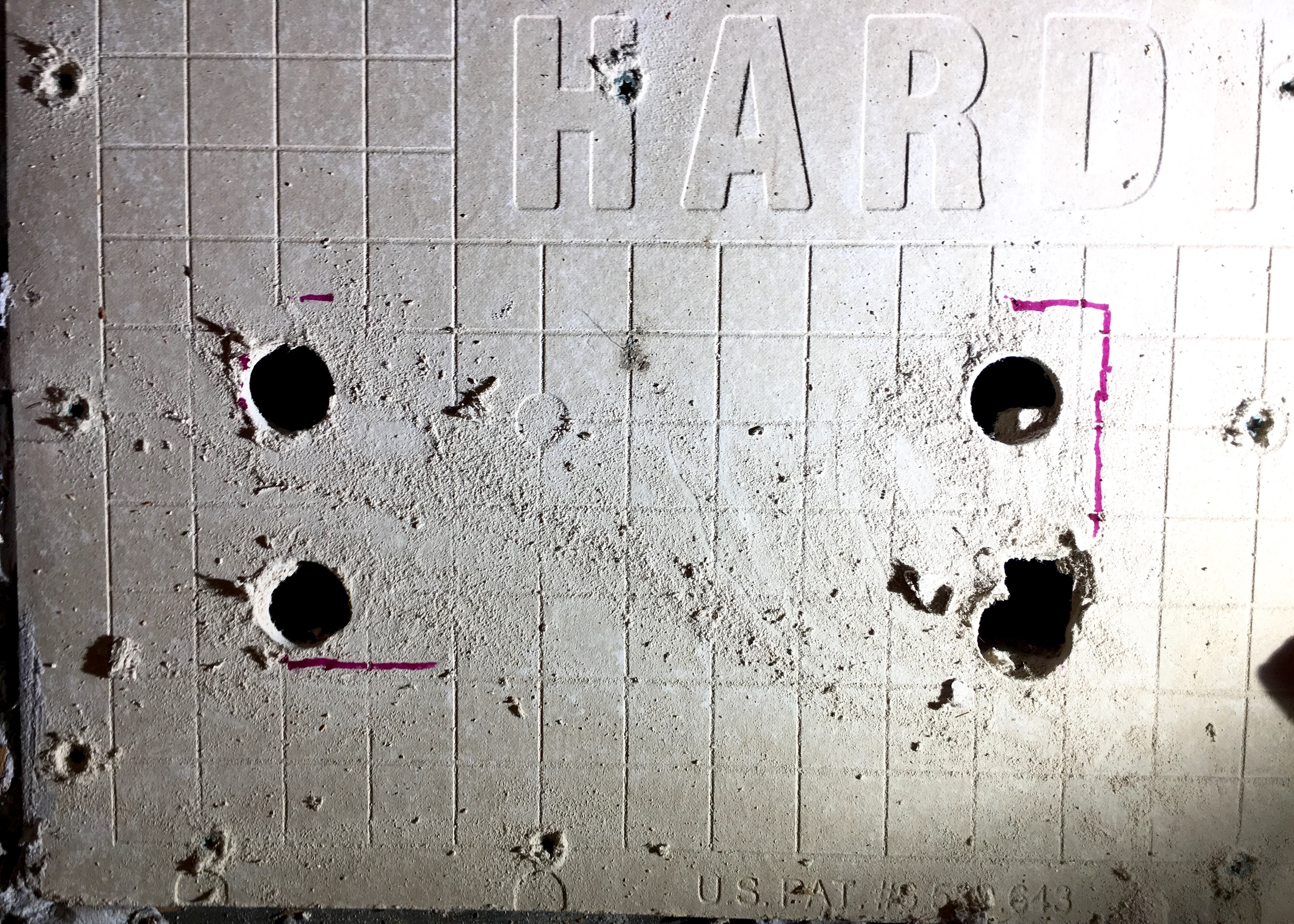
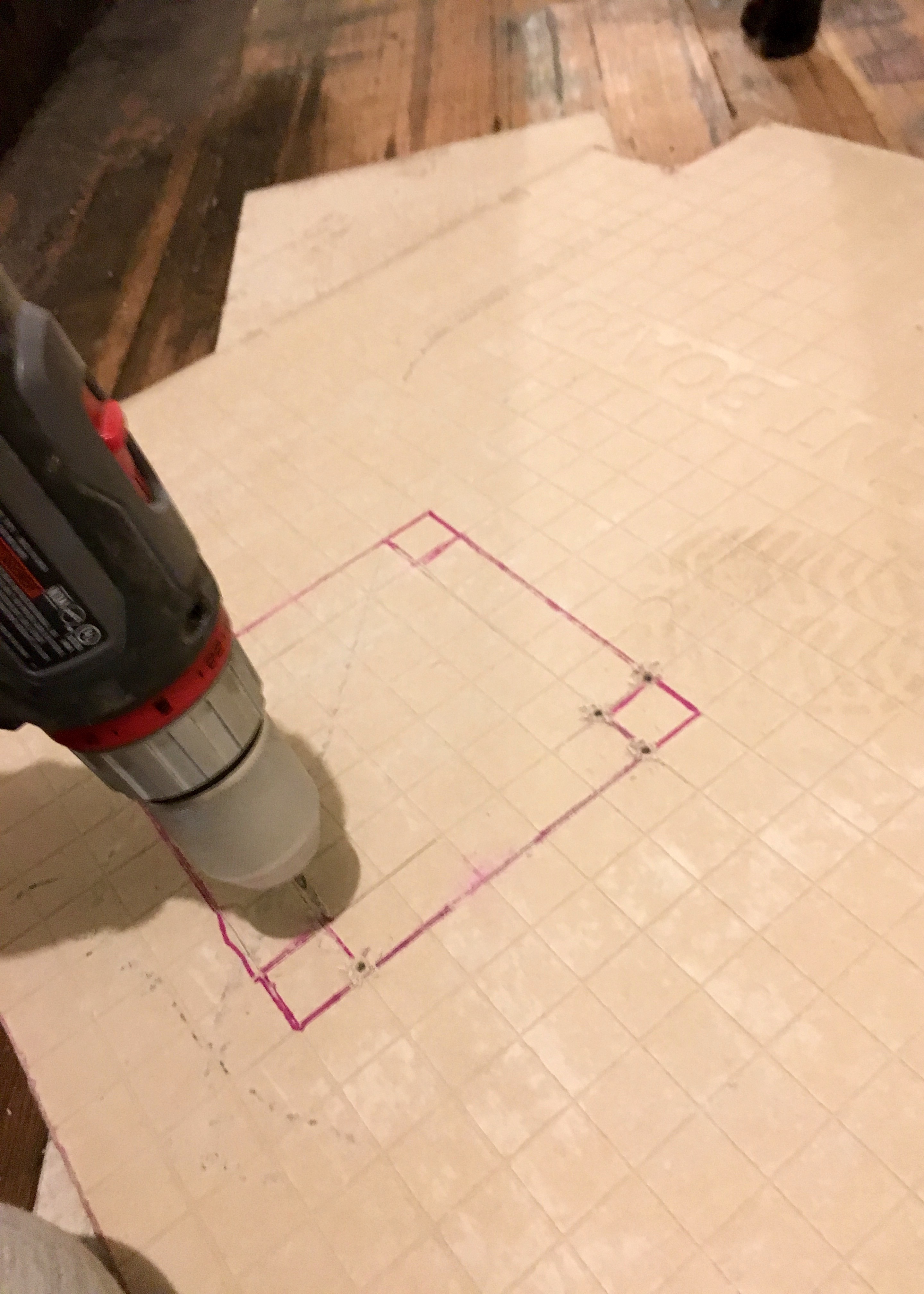
Then I had to cut a hole for the toilet. First I measured where that lined up on my sheet of concrete board and drew an outline. I took out my drill and drilled some holes in each of the corners.

Land of Laurel | Drilling Hardiebacker

Then I took out the box knife again to cut the rest of the hole out. Spoiler alert: I still snapped the HardieBacker in an unfortunate place that wasn’t my intention . Oh well! Just another seam to cover! That first piece was fairly easy to lay down in place though, but before I could move on to the second piece, I had some other work to do!

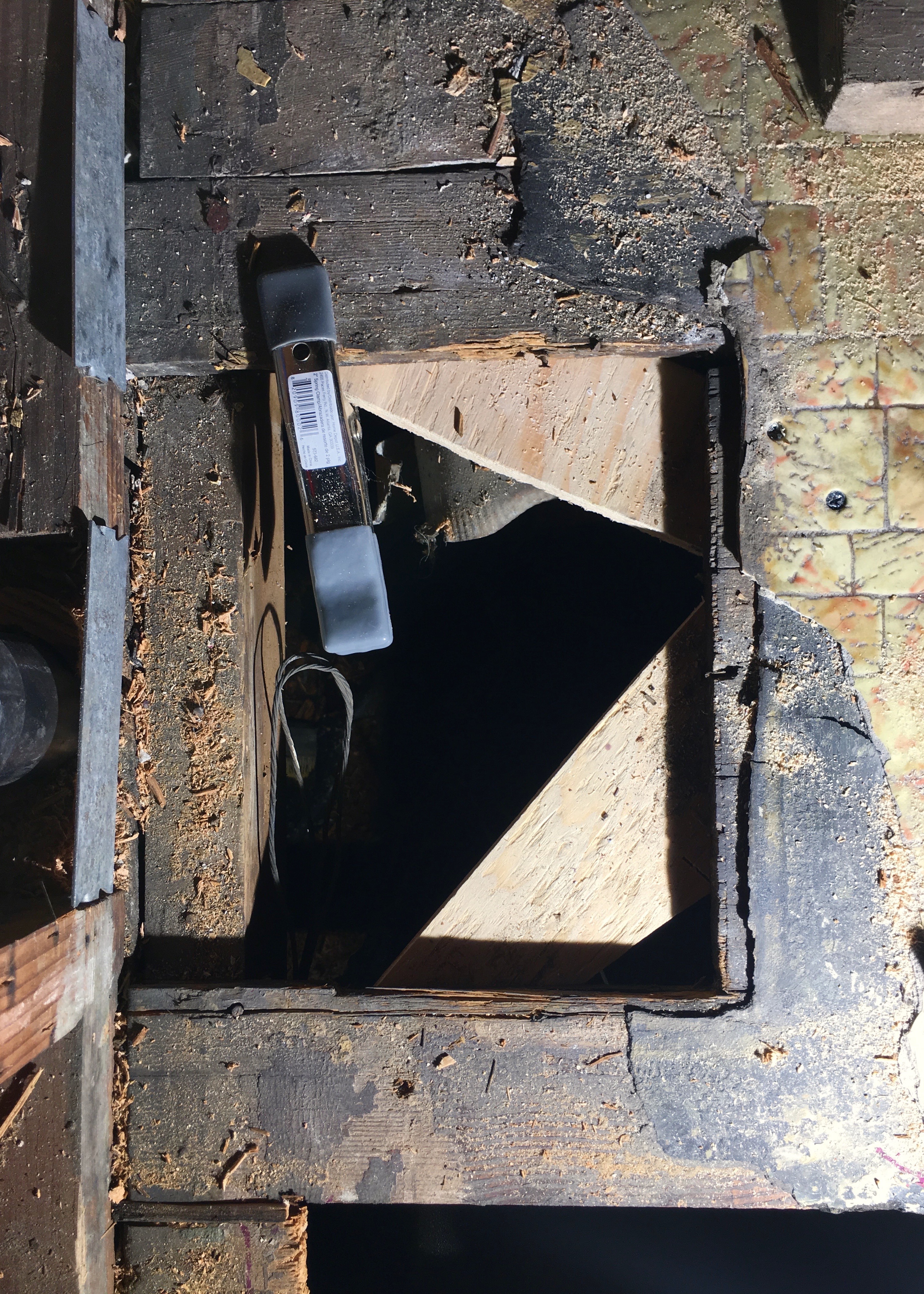
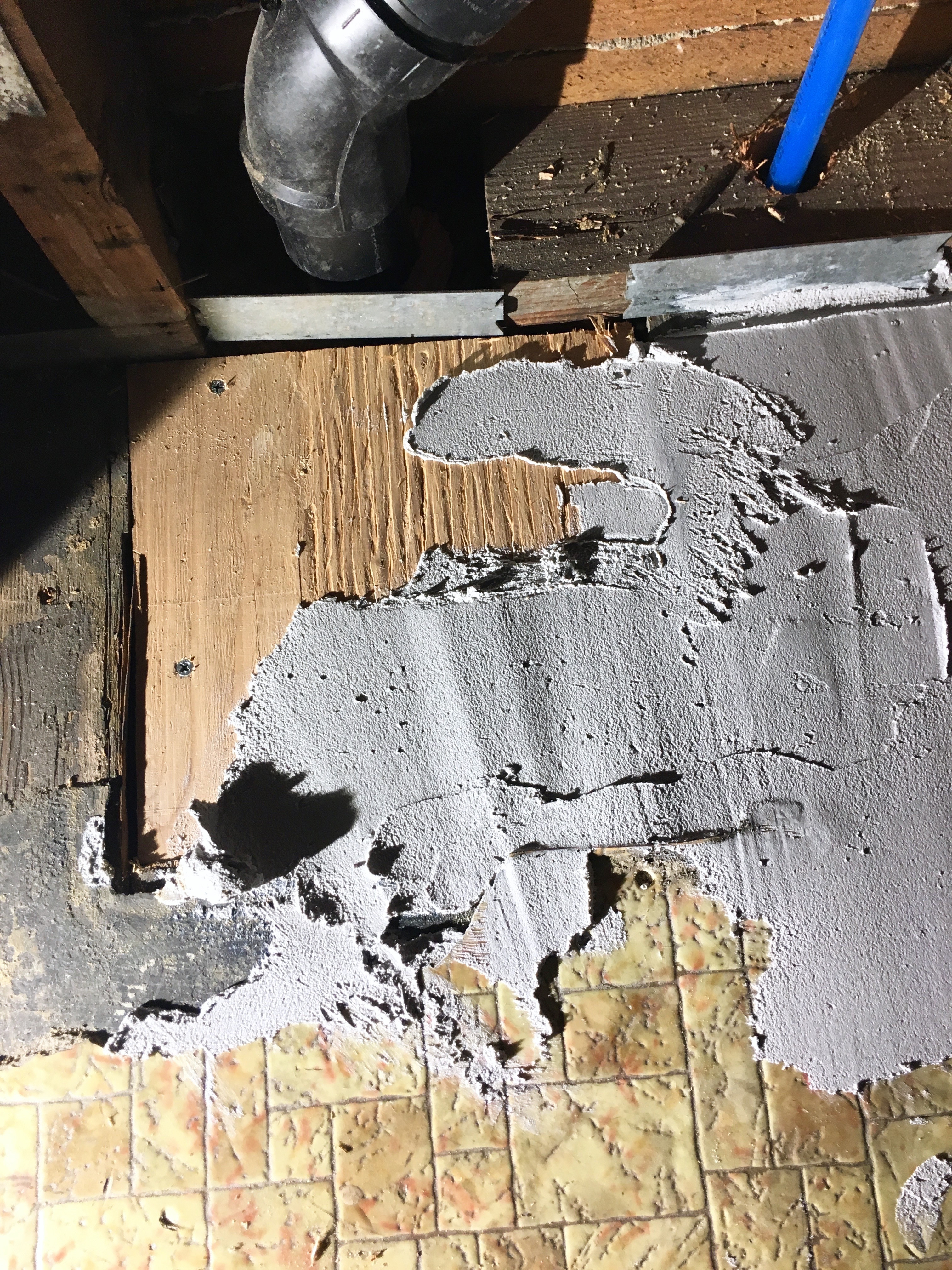
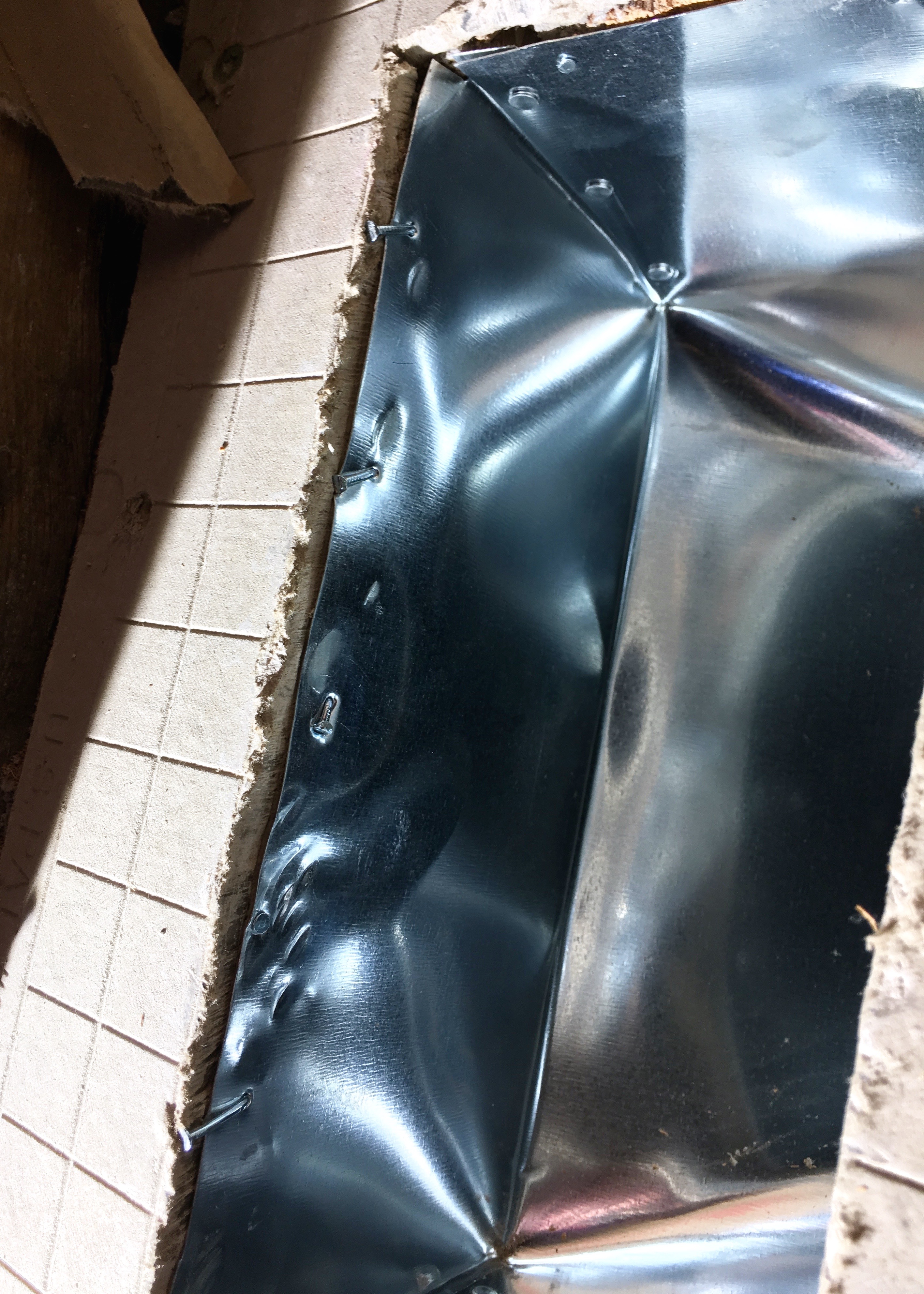
I originally planned to place a pedestal sink in this room and that sink was going to go right where the oddly almost square heater vent was. Well that wasn’t going to work! When I filed my mechanical permit for my new bathroom vent fan, I added on two quick HVAC ducting tweaks to the permit. This was one of them! I picked up more supplies from Home Depot (I was averaging 2-5 Home Depot visits per week for all of November and December!): a 90° angle turn register box, a couple of flexible angle pieces, and some foil duct tape (actual duct tape!). I used a small battery powered circular saw (borrowed from my neighbor Erik of course!) to cut a new hole the size of the register box in the floor and through the subfloor. Because there is a crawl space beneath the bathroom, I was able to climb around in there and use the new ducting pieces to extend the existing ducting about 1 foot so a new normal sized duct register would be closer to the bathroom entry wall and parallel to that wall.  I secured it all together with the foil ducting tape (NOT regular duct tape!) but waited to attach the register box until the HardieBacker was done.

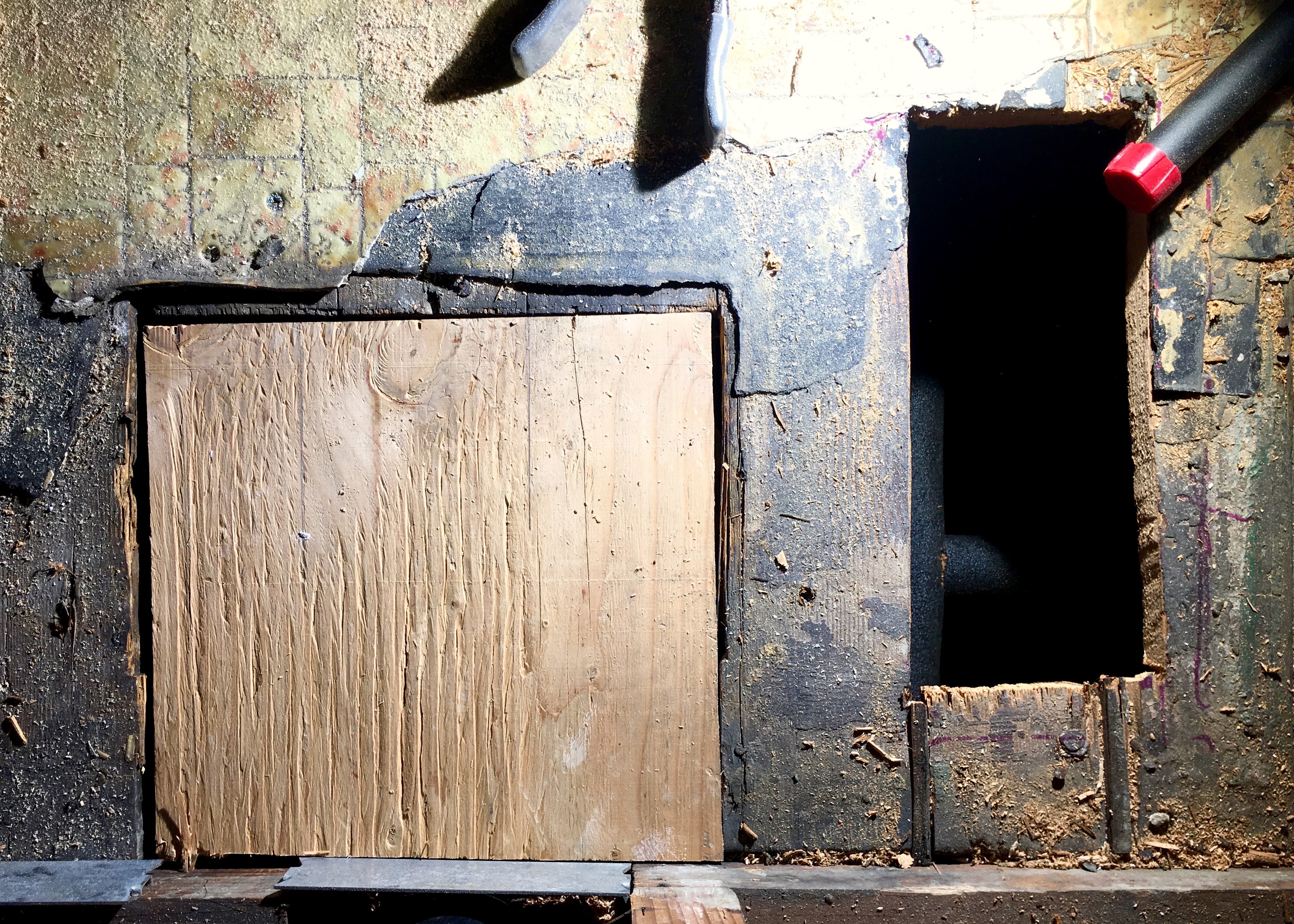
I was exceedingly proud of myself for extending the ducting too! But then came the hole patching part of this job. I was trying to avoid going back into the basement crawlspace, because it’s gross down there and I hate it, so I was determined to patch the floor from above. I used some clamps I already owned to secure a couple of scrap wood boards in place and aligned with the level of subfloor. Then I just used my drill to tighten some screws through the floor and into those boards.

Land of Laurel | Patching Hole in Floor

I cut a piece of plywood to the dimensions of the missing floor and then screwed that into the new supports as well as an exposed floor joist. An easy floor patch! It seems crazy to put in this effort to move the vent 3″ over, but by turning the vent 90″ and using a modern size I was able to save a lot of floor space. This would have allowed me to have a pedestal sink too, but I later switched to a wall mounted sink and in this spot now lives a big basket of toilet paper.

Land of Laurel | Patched Hole in Floor

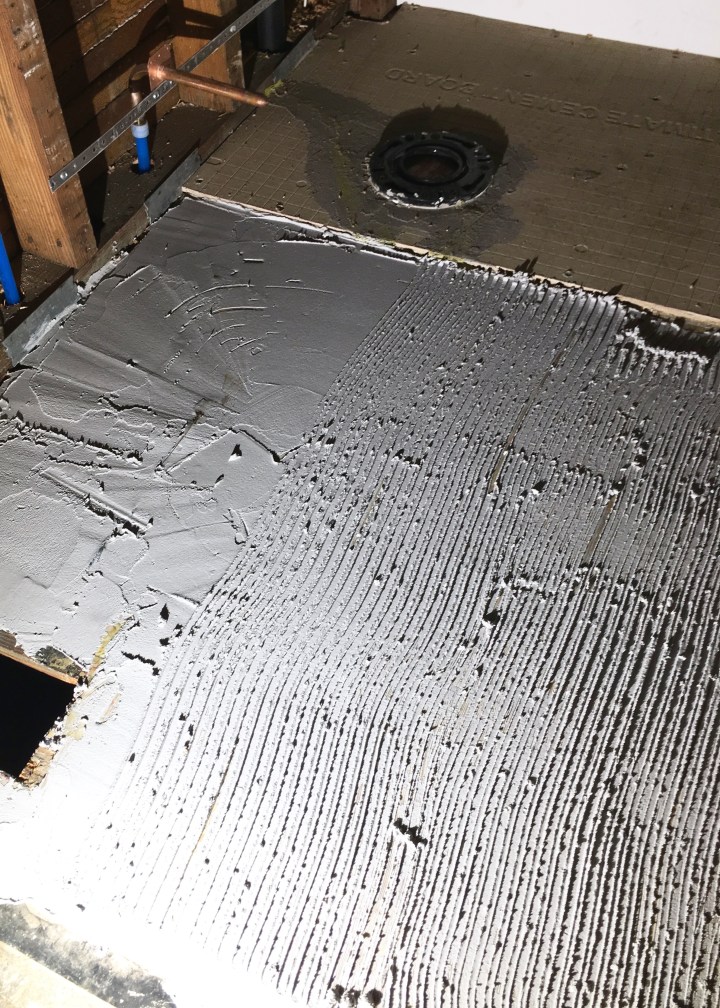
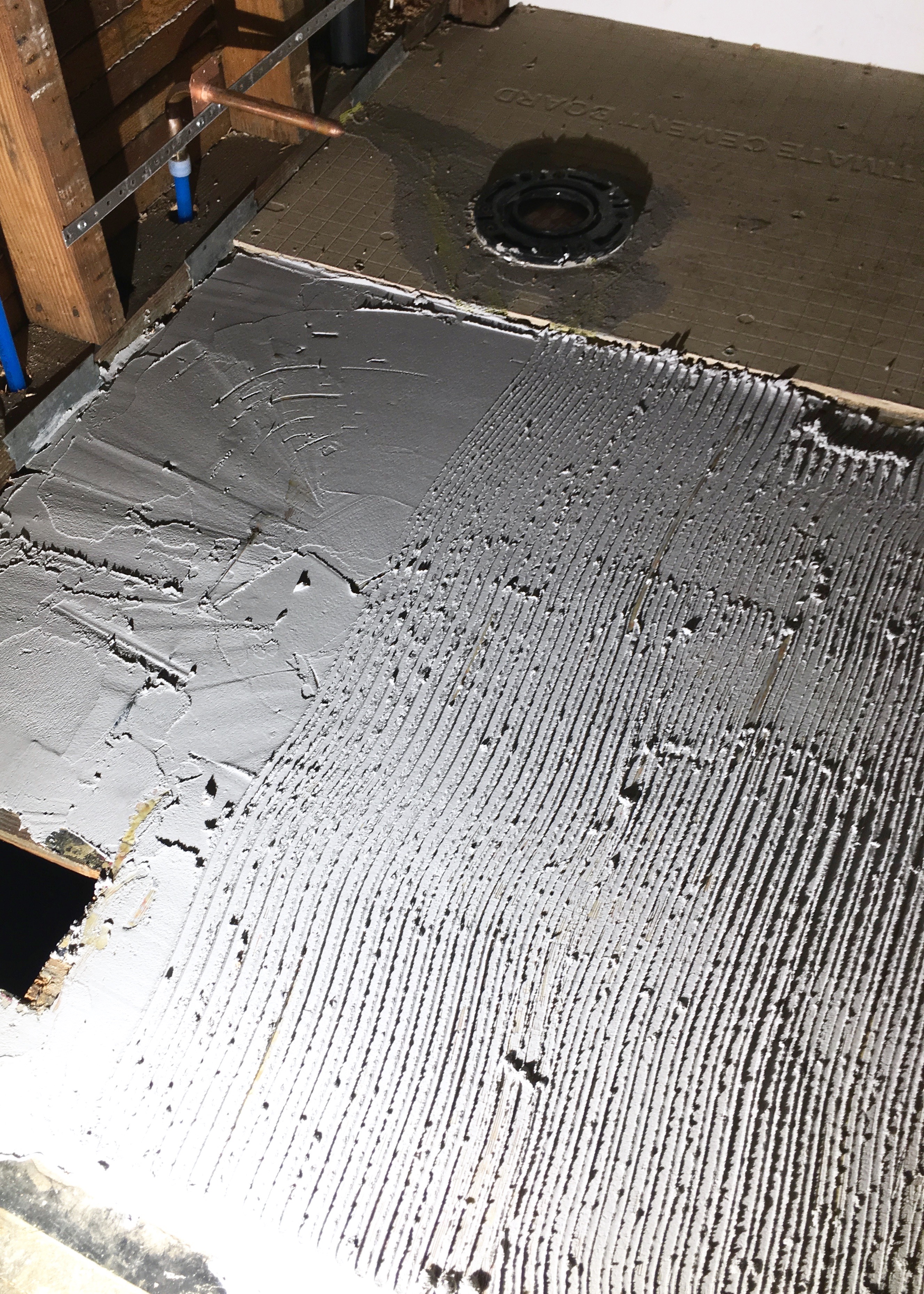
Once the floor was patched and the new register vent in (combined a two hour project), I was able to finish laying the HardieBacker! I cut the board to size and noted where the new vent location was. I made sure to dryfit the board before I grabbed the thinset again. I used the flat side of the float to glob a bunch of thinset onto the floor and then smeared it all around.

Land of Laurel | Spreading Mortar

It covered the floor patch job pretty easily and helped mitigate any change in height between my patch job and the existing floor. I then spread the thinset all over a 2 foot deep section of the floor until it was about 1/8th inch thick.

Land of Laurel | Thin Coat of Mortar

A quick switch to the square grooved side of the float allowed me to then make some nice lines in the mortar. This helps to establish some suction once the HardieBacker is laid on top. My grooves didn’t have to be perfect or straight, they just had to be there! See how you can no longer tell where my floor was patched? That’s the end goal! I had laid the piece by the toilet the night before and then returned then next day to do the remaining section. You can see above where I accidentally broke the backerboard trying to cut the toilet hole! Whoops…

Land of Laurel | Making Grooves in Mortar

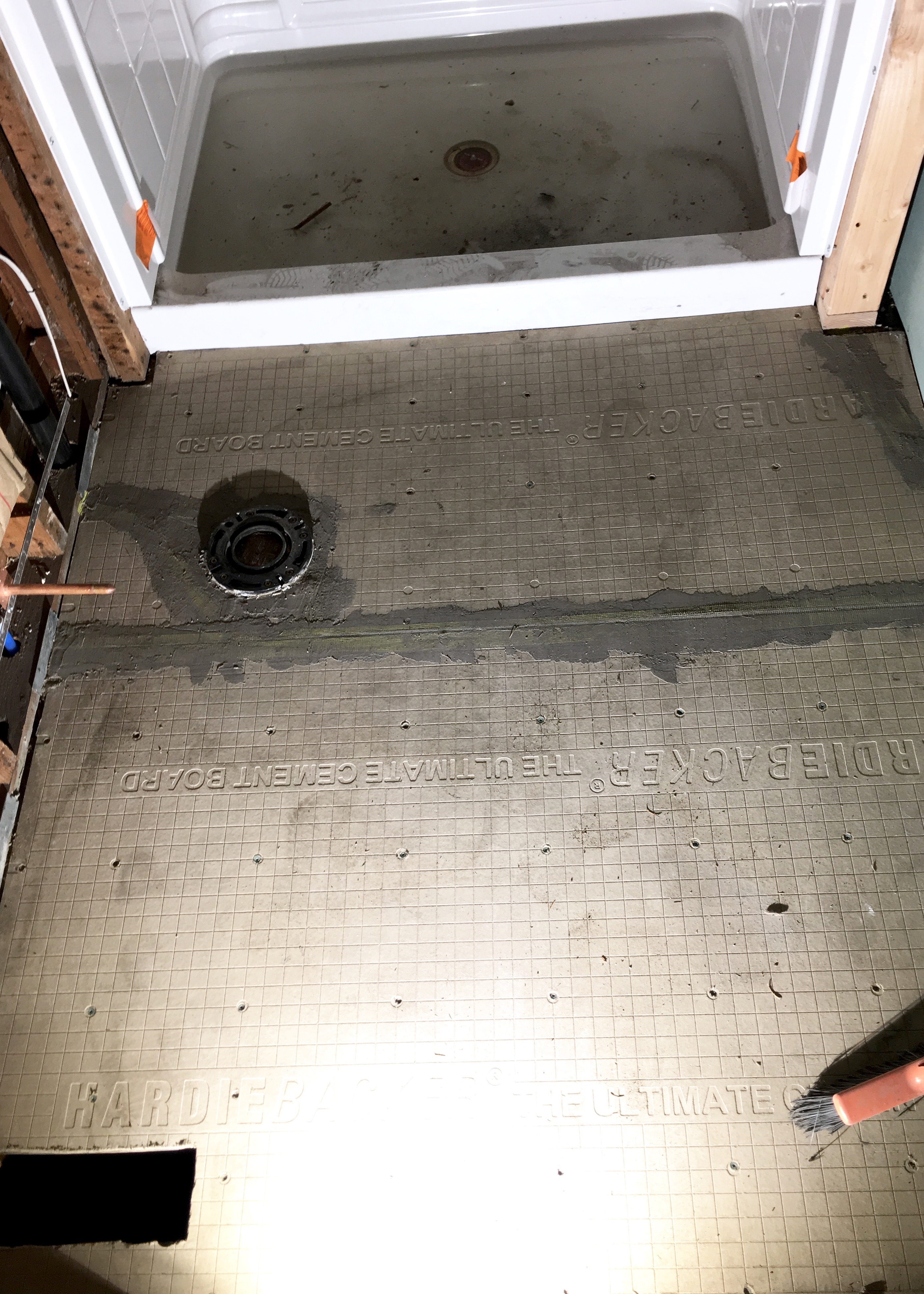
Once the floor was covered with thinset grooves I was able to take my sheet of backerboard and lay it on top pretty easily. I left the boards in place and allowed the mortar to dry overnight, before returning the following evening to finish up. I took more mortar and smooshed it into the gap between the sheets of HardieBacker, wiping away any excess. Then I cut strips of the mesh tape to length and gently smoothed it over the mortared seam with my hand. The goal is to close the gap and then smooth the thinest layer of mortar over the tape. You can see below too that all this went down before the plumbing inspection was finalized so my new shower pan was full of gross water!

Land of Laurel | Taped Hardiebacker

At this time I also took out my drill and screwed the special HardieBacker screws into the floor. The screws kindly came with a special drill bit so I didn’t even have to worry about that. The HardieBacker needs to be screwed in every foot so further strengthen it’s connection to the subfloor. You can see how many screws that adds up to quickly! Unfortunately, I have the arm strength of a 2 day old newborn child and I couldn’t get any of the screws to recess into the HardieBacker! It was so frustrating, because this is essential to having a nice flat tile floor! I went over to my neighbor Erik’s house where he was working on his kitchen and borrowed his impact driver for an hour. With that, I was able to get all my screws in place with minimal effort. Seriously, ladies and gents, go buy an impact driver. If you ever need to screw anything in, a drill is just not up to the task! It’s better for making holes not filling them. The impact driver prevents me from stripping all my screws and makes screwing things in much easier. After seeing the difference between using my drill and Erik’s impact driver, you can bet your bottom dollar I bought myself an impact driver the next day. Shout out to Jeff Senn at Home Depot who spent a good hour with me debating the best model and brand of impact drivers. I landed on this Milwaukee combo kit which threw in a hammer drill and had some extra oomph to make up for my baby arm muscles. I’ve yet to use that hammer drill though, so perhaps I should have gone with a single tool…

I wasn’t done with the floor underlayment after I got all those screws drilled in though. I had measured during my dry fit of the second board where the new vent location was, but waited to cut it out a until after the HardieBacker was installed. Now it was time to knock this off the to-do list as well! I clued in this time and used a larger 1″ drill bit to make bigger holes in the corner of the vent this time and then cut from those. Then I cut it off from there with a circular saw borrowed from my contractor neighbor Erik.

Land of Laurel | Drilled HardieBacker

It came out much more quickly than using a box knife, I’ll tell ya that! then I got out a good ole hammer and some baby brad nails and drove them through the register box into the wood subfloor, securing it all together.

Land of Laurel | New Floor Register

Luckily it all worked out and then new matte black vent cover I picked up from Home Depot fit perfectly! I was more proud of this duct work than any other work in the bathroom thus far. It felt so very adult to do this quick switch! Woot woot! This room was coming together now!

Land of Laurel | New Vent Opening

And just like that, I felt I could walk barefoot in one more room at Berrybrier! Not needing shoes to protect your feet from gross bathroom floors is pretty amazing, let me tell you! Now this room was ready for tile and drywall and all the other bathroom renovation steps. It felt so good!

Have you ever prepped for tile? Thinking about getting started? You can totally do this. It’s EASY! I was shocked by how easy it was!